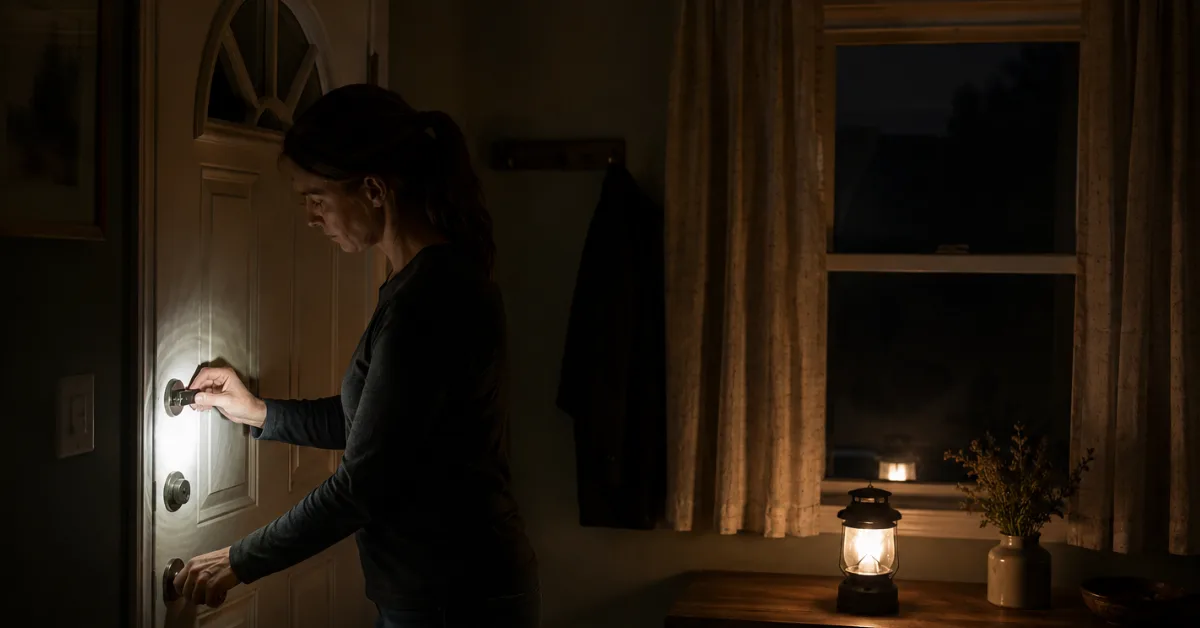
A power cut does not automatically make a home a target. However, dark streets, failed outdoor lighting, inactive cameras and silent alarm systems can make suspicious movement harder to notice. Burglary prevention during a blackout should therefore be based on a simple plan, not fear.
Prepare the main entry points. Before an outage, check that the front door, flat door, patio door, windows, cellar entrance and garage close securely. Loose fittings, weak strike plates or windows that are easy to force should not first become apparent in the dark. Keep mechanical keys accessible because electric door releases, garage doors and smart locks may stop working without power. Everyone in the household should know how to lock doors manually while keeping escape routes usable.
Use light in a controlled way. One well-positioned LED lantern in the living area is better than a window that is brightly lit from edge to edge. Close curtains or shutters so people outside cannot see which supplies, equipment or occupants are in the room. Battery-powered or solar motion lights can illuminate entrances and yards. Do not rely on a single lamp. Keep torches in fixed locations and check their batteries regularly.
Check which security equipment continues to work during a power cut. Some alarm systems, routers, cameras and electronic locks have only limited battery backup. Write down roughly how long the batteries last and which functions fail without internet access. A small uninterruptible power supply can run a router or control unit for a while, but it does not replace physical security. Test the system in advance rather than changing settings during the outage.
Do not advertise what you have. A running generator, loud conversations about supplies or open doors while moving water and food can attract attention. Operate generators outdoors only and well away from doors and windows. Secure them against simple theft without blocking ventilation. Valuables, cash, medicines and important documents should be kept out of sight in a fixed and preferably locked place.
Organise the household. Agree who checks doors, who looks after children or people needing care, and who follows official information. Do not open the door carelessly to strangers. Speak through the locked door, use a door viewer or look from a safe distance through a window, and do not announce that you are alone. For supposed technicians, officials or helpers, request identification and verify the organisation using a telephone number you found independently.
Neighbours provide an important layer of protection. Coordinate with trusted neighbours, agree brief check-in times and report suspicious observations calmly. Do not form armed patrols or chase anyone. Anyone hearing noises at a window or noticing an attempted break-in should keep their distance, move to a secure room and contact the police or emergency services as soon as communication is possible. Personal safety matters more than property.
Have a retreat plan. A lockable room with a phone, power bank, torch, whistle and important numbers can buy time in an emergency. Know at least two safe exits, but never barricade fire escape routes. Document damage only after the danger has passed. Keep police, building management, neighbour and insurer contact details on paper because mobile and internet services may fail temporarily.
The key rule is: deter, observe and report — do not confront. Good locks, discreet lighting, clear routines and dependable neighbours provide better protection than risky improvisation.
Guides
General
17.07.2026
Burglary prevention during a blackout: Secure your home without panic
Dark streets, failed outdoor lighting and silent alarm systems can create opportunities for intruders. A calm security plan protects doors, windows, family and neighbours without putting you in danger.