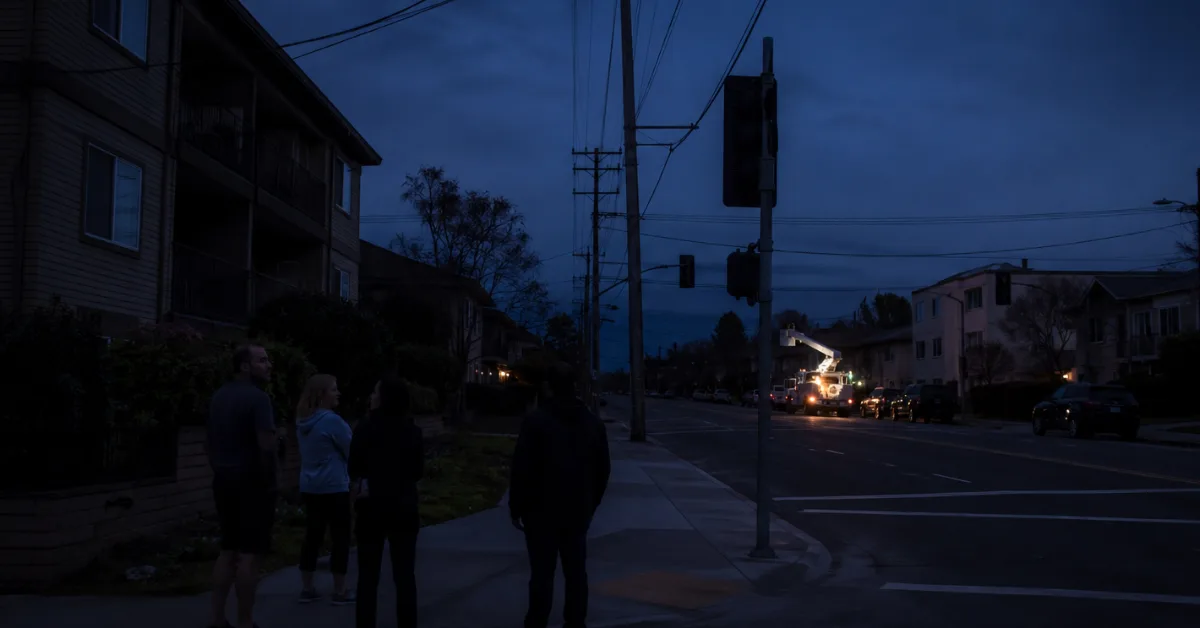
More than 6,000 connections suddenly went dark: an unplanned power outage struck parts of Contra Costa County in California on Thursday afternoon, 16 July 2026. According to Pacific Gas and Electric Company, known as PG&E, the disruption was reported at 3:50 p.m. local time. By 4:20 p.m., 6,033 customers were without electricity. Behind that number were homes, businesses, traffic lights, refrigerators and people forced to improvise within minutes.
The timing made the outage particularly explosive. Earlier the same day, PG&E had said warnings about possible Public Safety Power Shutoffs were over. These precautionary shutoffs are used when strong winds, low humidity and dry vegetation increase the risk that damaged power lines could ignite wildfires. Only about 70 customers in Contra Costa had previously been listed as potentially affected. Instead of a small, controlled shutoff, an unplanned outage then cut electricity to more than 6,000 connections.
At the time of the first reports, the cause was still unknown. PG&E sent crews into the affected area and said the electrical system was being assessed to locate damaged sections and carry out repairs safely. No reliable time for full restoration could initially be given. Those affected therefore had no clear answer as to whether power would return within minutes or much later.
Outages like this are not limited to dark living rooms. Checkout systems can fail, electric doors and lifts can stop, mobile phone sites switch to backup power and junctions without signals become dangerous. At the same time, the clock starts ticking for refrigerators and freezers. The longer an interruption lasts, the greater the economic damage and organisational problems become, even without an immediate disaster.
The weather provided a tense backdrop. According to the utility, the strongest winds had eased, but winds of 10 to 20 miles per hour and gusts of up to 35 miles per hour were still expected during the afternoon. The US National Weather Service also warned of elevated fire-weather conditions as stronger winds met vegetation that was nearly critically dry. However, it had not been confirmed that weather caused this outage.
PG&E also said that 781 of 788 circuits in areas at high wildfire risk were operating with enhanced safety settings. This technology shuts lines down more quickly when sensors detect a possible fault or hazard. It can prevent fires, but it can also mean that even a brief disturbance suddenly disconnects a larger area from the grid. Officials did not confirm such a link in this incident.
The episode shows how quickly an apparently calm situation can change. During the afternoon, residents were told that the threat of planned shutoffs had passed. A short time later, thousands were sitting in the dark anyway. For households and small businesses, the message is clear: warnings help, but they do not replace personal preparedness. Charged lights, power banks, drinking water, a battery-powered radio and a plan for refrigeration or medical equipment should be ready before the lights go out.
Source: San Francisco Chronicle, “More than 6,000 PG&E customers lose power in Contra Costa County”, 16 July 2026; PG&E Corporation, information on possible safety shutoffs dated 14 July 2026; PG&E Outage Center. Accessed 17 July 2026.
Latest updates
General
17.07.2026
California suddenly goes dark: 6,033 PG&E customers lose power
Soon after PG&E ended warnings about possible safety shutoffs, an unplanned outage cut electricity to more than 6,000 connections in Contra Costa County.