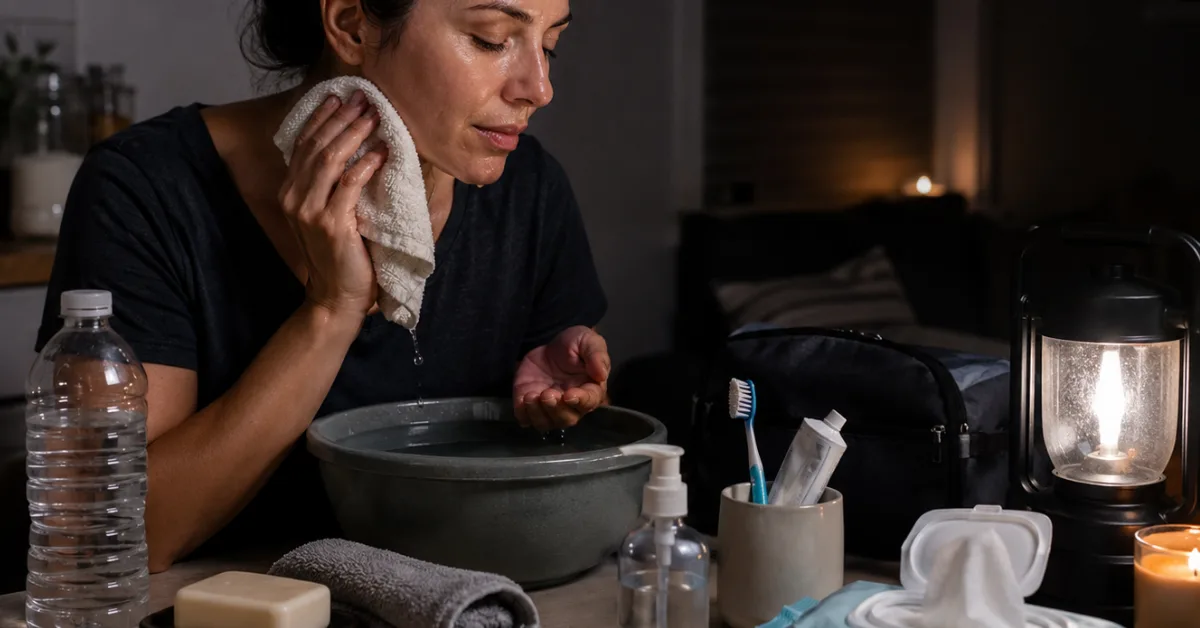
A prolonged power cut can disrupt more than lighting and refrigeration. If the water supply also fails or tap water is released only with restrictions, daily personal hygiene quickly becomes a challenge. The aim is no longer the usual shower, but clean hands, protected skin and a sensible order of priorities. With a small hygiene supply, a great deal of water can be saved without neglecting important areas.
Hands always come first. Wash them especially after using the toilet, before preparing or eating food, before treating wounds and after contact with rubbish. Use soap and safe water and rub your hands for at least 20 seconds. A water container with a tap, a squeeze bottle or a small ladle uses considerably less water than a running tap. If safe water is unavailable, a hand sanitiser containing at least 60 per cent alcohol can help temporarily. However, it does not replace washing when hands are visibly dirty or greasy.
For washing the body, a small bowl, a flannel and a little lukewarm water are sufficient. Moisten the flannel, apply a small amount of mild soap and work from the cleaner areas towards the more contaminated ones. Start with the face, neck and upper body, followed by the armpits and skin folds. The genital area, buttocks and feet come last. Ideally, use a second flannel for these areas or at least another clean side. Do not repeatedly dip a dirty flannel into the entire water supply. It is better to take out water in small portions from a clean container.
The areas needing daily attention most are the armpits, groin, genital area, buttocks, feet and skin folds. Dry these places thoroughly after washing, because persistent moisture can encourage skin irritation and fungal problems. Underwear and socks should be changed as regularly as possible, and worn items should be hung up to air. Hair does not need to be washed every day during a short emergency. Brushing it, tying it back and keeping the scalp dry are usually sufficient for a while.
Water can also be saved when brushing teeth. Put only a small amount of safe water into a cup, wet the toothbrush and avoid rinsing for longer than necessary. Never use water of unknown quality for brushing teeth. Babies, people who are ill, older people, open skin areas and intimate hygiene require greater care. Particularly clean water should be used in these cases, and official instructions must be followed exactly when warnings are issued.
Moist cleansing wipes can be useful as a supplement, but they are not a complete substitute for water and soap. Choose fragrance-free products where possible, and do not apply disinfectants over large areas of the face, mucous membranes, genital area or damaged skin. Menstrual products must be changed with clean hands and used according to the manufacturer’s instructions. Waste belongs in a tightly sealed bag, especially when toilets or rubbish collection are not functioning normally.
Before the next power cut, prepare a small hygiene kit: mild soap, two flannels per person, small towels, a toothbrush and toothpaste, hand sanitiser, fragrance-free wet wipes, menstrual products, rubbish bags, and extra underwear and socks. Store drinking water and water intended for personal washing separately and label both clearly. This prevents valuable drinking water from being wasted accidentally or unsafe water from being used for the mouth, hands or wounds.
Personal hygiene with little water does not mean cleaning every part of the body equally thoroughly. The key is to deal with the areas that matter most for health first, remove water hygienically and avoid spreading contamination. During a power cut, a brief wash in a clear order is more sensible than an improvised full-body wash that unnecessarily uses up the entire supply.
Source note: Centers for Disease Control and Prevention, “Guidelines for Personal Hygiene During an Emergency”; World Health Organization, information on water, sanitation and hygiene in emergencies.
Guides
General
12.07.2026
A flannel instead of a shower: Personal hygiene with little water
When a power cut also disrupts the water supply, the order of priorities matters. This is how to keep hands, skin and sensitive areas clean without wasting stored water.