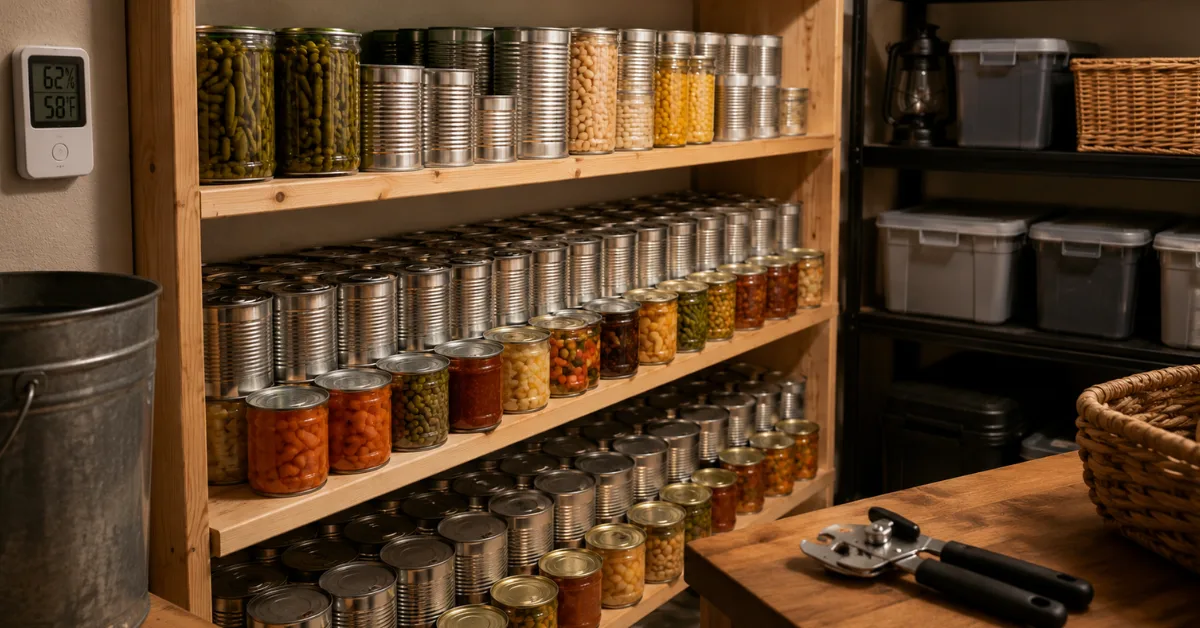
After a major power cut, it becomes very clear which supplies actually help. Pasta, rice and flour are useful, but tinned food has one big advantage: it can be eaten quickly, does not need refrigeration and can still provide a meal when the cooker, supermarket, card payments and freezer are out of service. That is why tins belong in a sensible blackout supply.
The first mistake often happens during storage. Putting tins in a hot storage room, on a balcony, beside the cooker or directly on a damp cellar floor is not a good plan. The best place is cool, dry, dark and well ventilated. Tins should not be exposed to constant heat, freezing temperatures or moisture. Moisture encourages rust, heat reduces quality, and strong temperature swings are bad for long-term storage.
Organisation matters more than many people think. Put new tins at the back and older tins at the front. Write the purchase month or best-before date clearly on the top of the tin. Your supply should not become a museum of forgotten cans. It should be a system you use in everyday life and refill. Twenty tins that you know and rotate are better than eighty tins that disappear untouched in the cellar for years.
Check your supply at least once a month. Tins with bulging tops or bottoms, leaks, heavy rust, deep dents on seams or rims, strange smells, spurting liquid or visible damage should be discarded. Do not taste, do not try to save them and do not argue with yourself. With tinned food, false economy can become dangerous. A damaged tin is not an emergency hero; it is a risk.
Think in practical meals, not just single ingredients. Beans, sweetcorn, tomatoes, fish, meat, soups, vegetables, fruit and ready-made stews can be combined into simple meals. Keep a manual tin opener directly with the supply, not hidden somewhere in a kitchen drawer that you have to find in the dark. Even better: keep a second opener as a backup.
Tinned food is not luxury and it is not panic shopping. Stored correctly, it is a quiet, reliable part of your preparation. If you keep it visible, dry, clean and sorted by date, you have more than food at home in an emergency. You also have a calmer head.
Sources: USDA FSIS, guidance on shelf-stable foods and warning signs in damaged tins; Ready.gov, recommendations for emergency food and a manual tin opener.
Guides
General
07.07.2026
Storing tinned food properly: the quiet supply that matters in a power cut
Tinned food only becomes a useful emergency supply when it is stored cool, dry, visible and checked regularly.