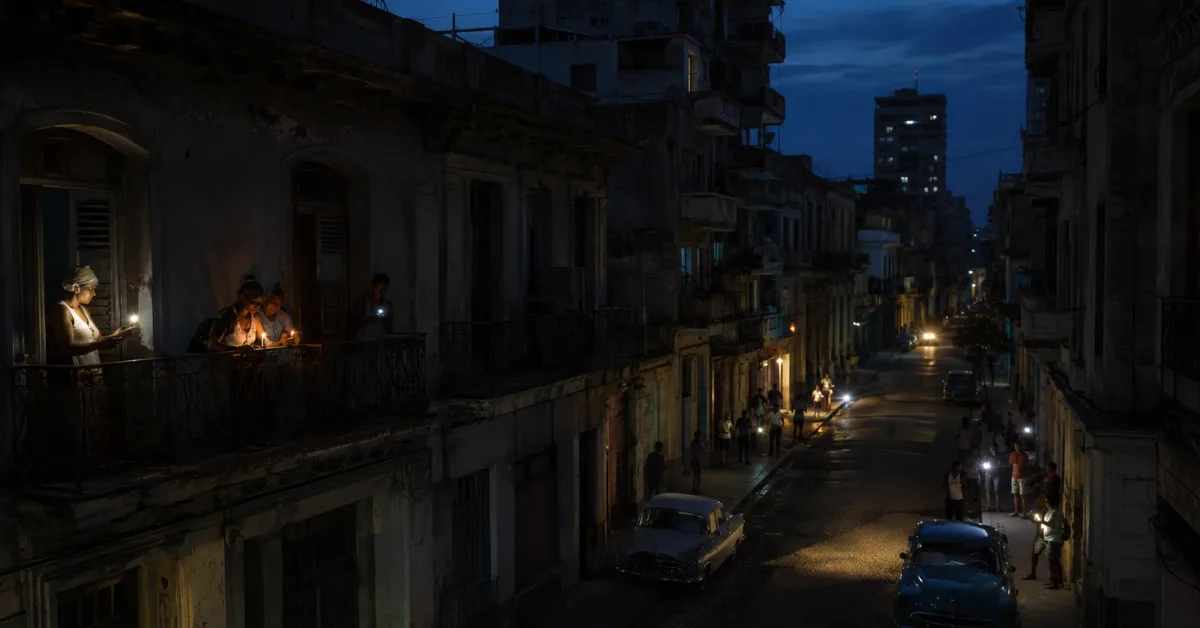
Cuba is in the dark again. On Monday, 6 July 2026, according to international media reports, the island nation’s national power grid collapsed. This was not just one neighbourhood, not just one province, but practically an entire country of almost ten million people. For many Cubans, the moment was no longer a shock. It was the next bitter round in everyday life already marked by power cuts, heat, fuel shortages and uncertainty for months.
A blackout like this hits the capital Havana particularly hard. Reuters reported that power there was only slowly being restored late on Monday afternoon and that only a tiny fraction of demand could be met. Essential services such as hospitals and food production centres were given priority. For normal households, that meant waiting, sweating and improvising. No fan, no air conditioning, often no water from electric pumps, no reliable internet, very little light and the worrying question of whether the food in the fridge could still be saved.
The cause of the collapse was still being investigated at first. But one thing is clear: Cuba’s electricity system has been operating close to the edge for a long time. AP reported dwindling fuel reserves, an ageing grid and controlled shutdowns that had already become part of daily life for many people. Some outages last many hours, sometimes more than a day. When the whole grid then tips over, a familiar burden suddenly becomes a national crisis.
The dramatic part is not only the darkness. In tropical heat, homes quickly become stuffy, food spoils, mobile phone cells and routers fail, water pumps stop and small shops lose stock. Anyone caring for older relatives, babies, chronically ill people or neighbours needing support immediately notices how thin the safety reserve in daily life really is. A power cut is then no longer merely inconvenient. It eats through the kitchen, bathroom, communication, health and safety.
For people on the ground, this is not about abstract energy politics. It is about rice on the stove, medicine in the fridge, water in the tank, charged phones and sleep in tropical heat. That is exactly why this case also matters for households outside Cuba. A blackout rarely announces itself politely. It comes when grids are overloaded, fuels are scarce, technology is old or several problems happen at once.
The lesson is simple, but uncomfortable: anyone who starts planning only after it is dark is already late. Water for several days, simple food that does not need refrigeration, battery lighting, power banks, a small radio, cash, important medication, a cooling plan for hot days and agreements with neighbours are not scaremongering. They are the difference between chaos and being able to act.
Cuba once again shows how quickly a power grid can turn from an annoyance into a matter of survival. And while technicians try to bring back the light, millions of people sit in the dark and hope the next outage is not already waiting at the door.
Source: Reuters, Associated Press, Al Jazeera. Status: 7 July 2026.
Latest updates
General
07.07.2026
Cuba in the dark: nationwide blackout hits millions in the heat
Cuba’s national grid collapsed again on 6 July 2026. For millions of people, the power cut meant heat, darkness, improvised cooking and one nervous question: when will the lights come back?