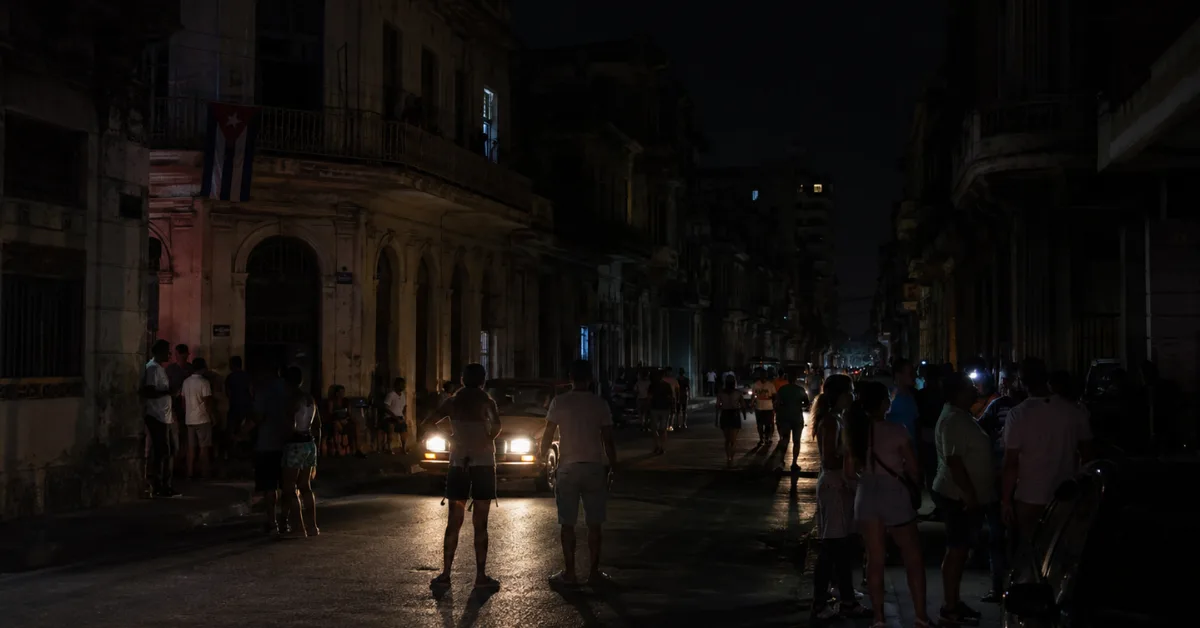
Cuba cannot escape the darkness. While engineers were trying on Monday, 3 August 2026, to rebuild the electricity system after a nationwide blackout, the grid collapsed completely again during the afternoon. The second failure in less than 24 hours wiped out part of the progress already made and left millions of people without a dependable electricity supply.
According to state media, the National Electric System became disconnected once more. A television journalist reported that a major fluctuation had triggered the collapse. The state utility Unión Eléctrica later said adverse weather conditions had affected the transmission network during restoration work. Generating units that had already returned to service were also disrupted.
At first, there had been signs of cautious progress. Several units at Energas Jaruco had been restarted, while substations around Havana were gradually being reconnected. Rebuilding a completely failed electricity system, however, is a dangerous balancing act. Power stations, transmission lines and consumers must be connected in carefully controlled stages. If generation and demand fall out of balance, frequency can fluctuate and the newly formed section of the grid may collapse again.
For residents, the technical explanation offers little comfort. In oppressive summer heat, fans, air conditioners and refrigerators remain silent. Electric water pumps may stop, mobile phones can only be charged occasionally and many shops once again lose goods and income. Hospitals, water utilities and communication facilities depend on emergency power, but generators only work while fuel remains available.
The latest setback shows how little reserve capacity Cuba’s electricity system still has. Many power plants are decades old, spare parts are scarce and fuel shortages have forced the operator to impose daily outages for a long time. Three nationwide failures within nine days in July had already shown how quickly a single disturbance could pull the entire grid down. Now even the attempt to rebuild the system after the latest total blackout has failed.
The government has for years blamed United States sanctions for fuel shortages, restricted financing and a lack of spare parts. Critics also point to decades of underinvestment and poor maintenance of state-owned facilities. For ordinary people, this political argument changes very little: when the grid falls, lighting, cooling, water and communication disappear at the same time.
Most alarming is the speed with which conditions deteriorated again. Residents could hardly trust that electricity, once restored, would remain on. Anyone cooling food, pumping water or charging a phone had to expect another interruption at any moment. In Havana, people sought relief outdoors at night while blocks of homes stayed dark and only vehicles, torches and scattered generators provided light.
Engineers must now once again build small island networks, start power stations step by step and give priority to essential facilities. Even if this work succeeds, it will not mean normal service has returned. After earlier collapses, electricity came back at very different speeds from one region to another while controlled outages continued. Every fresh fault can push the painstaking recovery back to the beginning.
Cuba is therefore facing more than another ordinary power cut. The country is trapped in a downward spiral of fuel scarcity, ageing equipment and a grid without adequate safety reserves. For millions of people, the anxious question is no longer only when the lights will return. They are asking whether the electricity will stay on at all this time.
Source: Reuters, 4 August 2026.
Latest updates
General
04.08.2026
Cuba trapped in power chaos as grid collapses again during restoration
While engineers were still rebuilding Cuba’s electricity system after a nationwide blackout, the grid collapsed for a second time. Millions remain caught between heat, darkness and uncertainty.