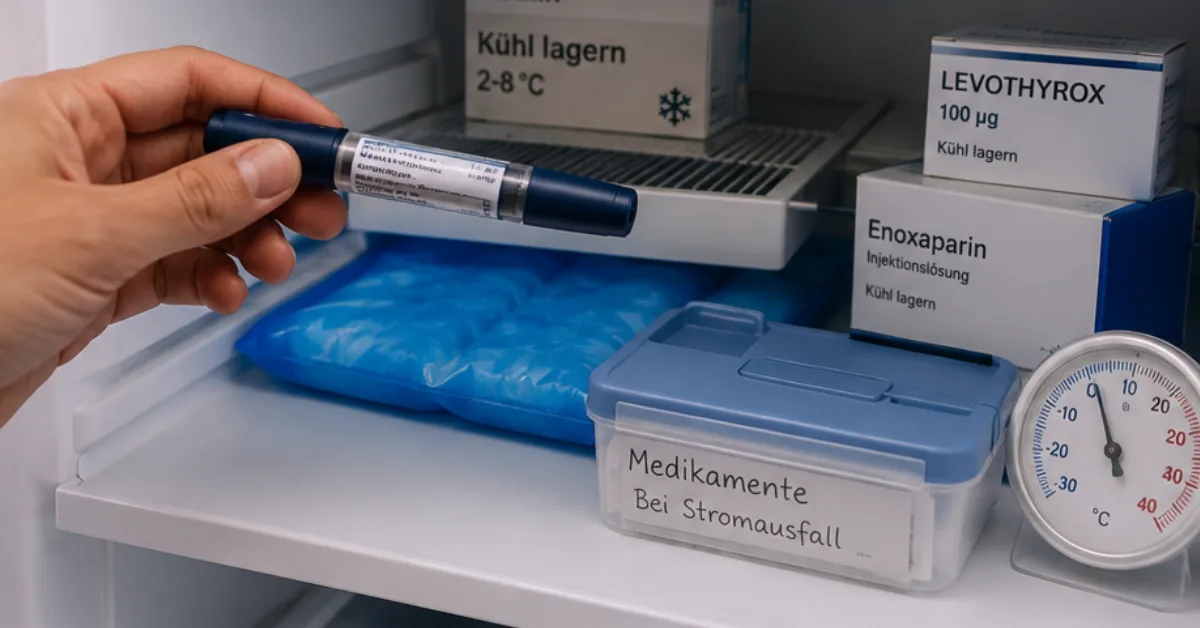
During a power cut, many people first think about lighting, their phone and the refrigerator. For people who need insulin, certain eye drops, liquid antibiotics, biologic medicines or other products that require refrigeration, however, loss of cooling can quickly become a health risk. Every household using such medicines should therefore have a medication cooling plan.
First check the package leaflet and ask your pharmacist, doctor or the manufacturer about the permitted temperature range. Not every medicine has to remain between two and eight degrees Celsius at all times. Some products may be kept at room temperature after opening or for a limited period. That period differs from one product to another. Never rely on a general number, and do not change the dose or the medicine on your own.
Prepare a small insulated bag or cool box. Include frozen gel packs, a clean towel or other barrier, an accurate thermometer if possible, and a list containing the medicine name, dose, storage instructions, pharmacy, doctor and manufacturer contact details. Never place the medicine directly on ice or a frozen pack. Excessive cold can be just as damaging as heat. Insulin in particular must not freeze; insulin that has frozen should not be used.
Label the cooling bag clearly and keep it where every adult in the household can find it quickly. Check the gel packs and thermometer regularly. Anyone using an electric medicine cooler should test in advance how long it operates from a power station or vehicle socket. An untested device is not yet an emergency plan. Also keep a paper copy of the prescription, medication schedule and important telephone numbers because internet and mobile service may fail.
When the power goes out, keep the refrigerator door closed at first. Open it only when the medicine genuinely has to be removed or checked. Record when the outage began. During a longer interruption, transfer the medicine to the prepared cooling bag, separated from the frozen packs. Check the temperature regularly without repeatedly opening the bag. Direct sunlight, a hot car, windowsills and areas near cooking appliances are unsuitable.
Plan a second safe location as well: neighbours with backup power, a pharmacy, medical practice, clinic, aid station or public building with reliable electricity. Arrange this before an emergency. For long outages, an appropriate and safely operated backup power source may also help. Because of carbon monoxide, generators must never run inside homes, garages or other enclosed areas.
After power returns, do not guess whether a product is still usable. Record how long it was stored and the temperatures involved, then ask a pharmacist, doctor or the manufacturer. The CDC advises generally replacing refrigerated medicines after an outage lasting a day or more unless the label says otherwise. If a life-sustaining medicine cannot yet be replaced, the CDC says it may be used only until a replacement is obtained. Product-specific rules apply to insulin; the FDA notes that many insulin products can remain usable at room temperature for a limited time but must be protected from heat, sunlight and freezing.
Important: This guidance does not replace individual medical advice. The label, package leaflet and information from a doctor, pharmacist or manufacturer always take priority.
Sources: CDC, Refrigerated Drugs; CDC, Managing Insulin in an Emergency; CDC, Prescriptions; FDA, Information Regarding Insulin Storage and Switching Between Products in an Emergency.
Guides
General
13.07.2026
Refrigerated medicines during a blackout: store safely, do not improvise
Insulin and other temperature-sensitive medicines need a clear emergency plan. Protect them from heat, freezing and incorrect storage.