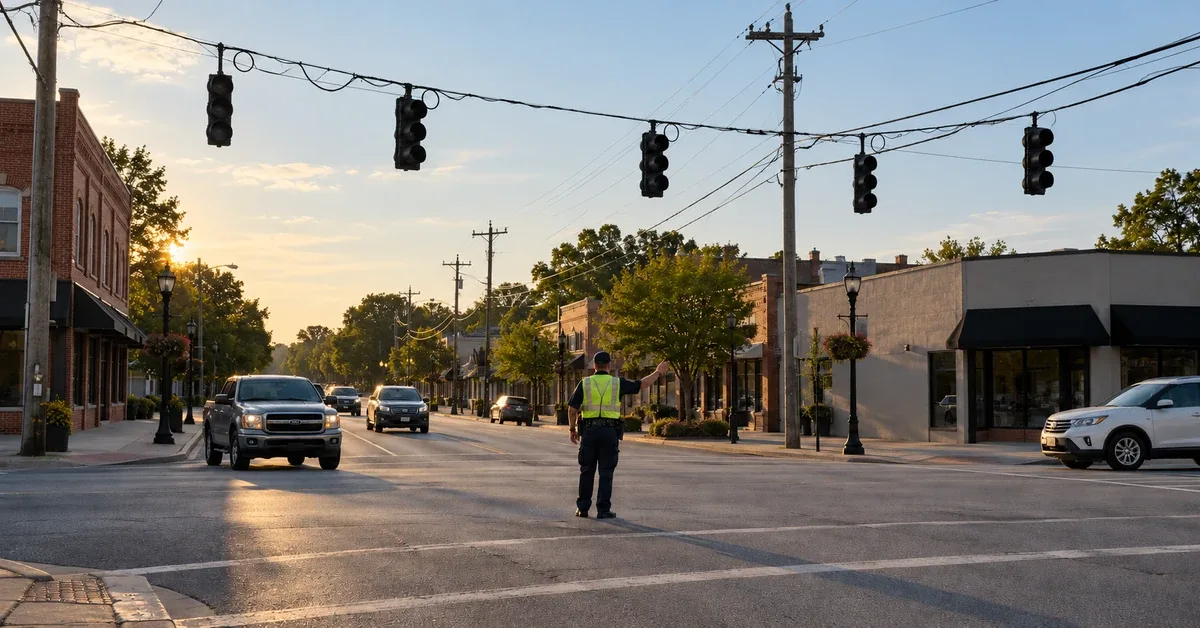
A local power outage in Landis, North Carolina, disrupted road traffic on Monday, October 5, 2026. At 5:30 p.m., the town reported outages at several locations around U.S. Highway 29, Old Beatty Ford Road, and West Fifth Street. The interruption affected more than buildings: according to the town administration, traffic signals were also no longer working in the affected area.
Landis police were on scene directing traffic. The town urged anyone traveling through the area to exercise particular caution. Technical crews were heading to the affected locations to restore service. At that stage, officials could not provide an estimated restoration time. The initial notice therefore described an active response without promising that the interruption would end at a particular moment.
An update followed at 6 p.m., announcing that all power had been restored. Residents still experiencing an outage were asked to contact the town. The two published times are thirty minutes apart. This does not establish that every affected address was without electricity for exactly thirty minutes, however, because the notice does not specify when the interruption actually began.
The reviewed announcements also do not give a cause or a number of affected customers. A technical failure, accident, or weather event should therefore not be presented as an established explanation. Nor do these notices support claims of a widespread or nationwide blackout. What they confirm is a local interruption to electricity supply that affected traffic control as well as nearby premises.
That connection makes the incident relevant to preparedness. Dependence on electricity extends beyond the front door. Someone heading out to shop, collect a relative, or return home during an interruption may encounter intersections without their usual signals. This is a general consequence of possible signal failures; the reviewed Landis notices did not report specific crashes or additional damage resulting from this incident.
For households, the practical question is which journeys are genuinely necessary during a disruption. An agreed pickup point, a familiar alternative route, and some extra time can reduce hurried decisions and improvised trips. Such preparations do not replace local traffic rules or instructions from responding officers. They simply make arrangements easier when a familiar journey suddenly works differently from what people normally expect.
The announcements also illustrate the importance of clearly timed information. The first notice describes the outage and response, while a later update reports restoration. Sharing only an earlier screenshot could unintentionally portray a resolved incident as ongoing. Whenever information is passed on, its location, publication time, and latest available status should accompany it, so recipients can distinguish a current warning from an older report.
Landis provides a limited but concrete example of the connection between electricity and mobility. The sequence of official notices supports a measured assessment without exaggerating the event. Useful preparation includes considering essential journeys in advance, postponing unnecessary travel, and checking municipal updates. After restoration, isolated remaining problems should be reported separately rather than assuming that one dark home means the entire area remains without power.
Source: Town of Landis, October 5, 2026 outage notice at 5:30 p.m. and restoration announcement at 6 p.m., local time. Editorial reference date: October 6, 2026.
Latest updates
General
06.10.2026
Landis: power outage disables traffic lights; supply restored that evening
An October 5 outage affected several locations in Landis. Police directed traffic, and the town announced that power was restored at 6 p.m.