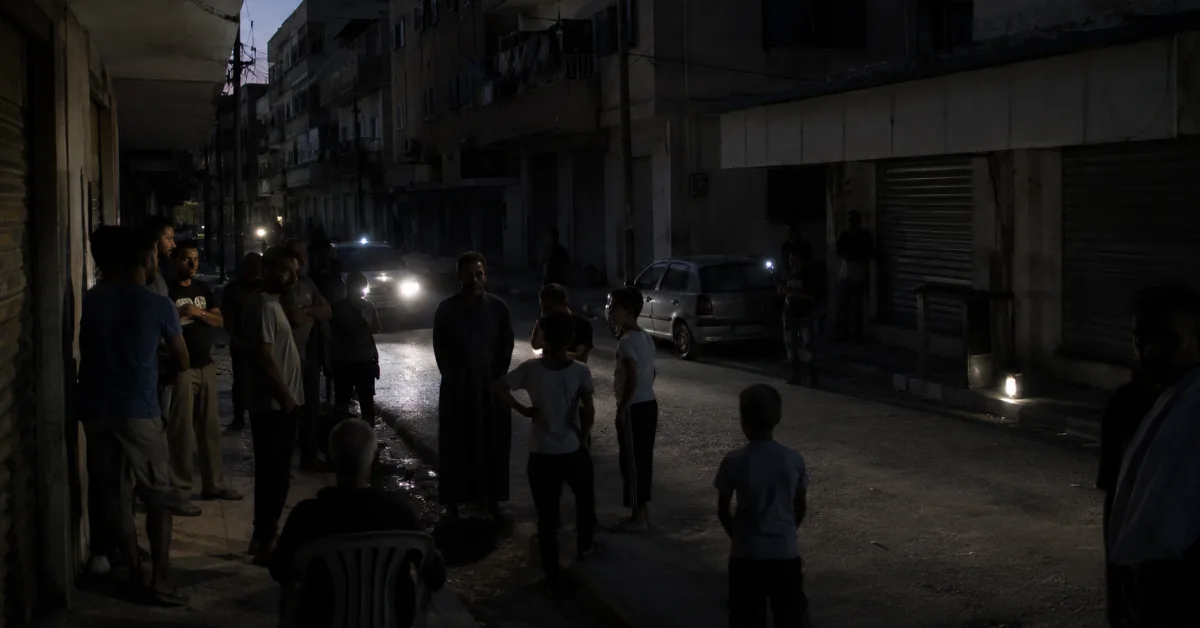
Libya has slipped into another severe electricity crisis in the early hours of Saturday. On 1 August 2026, the power supply across the east and south of the country failed completely. Initial reports said that some areas in western Libya were also affected. Cities and regions that had already endured weeks of lengthy cuts suddenly went dark at the same time. The full scale of the outage was not immediately clear.
The cause had not been officially established by Saturday morning, and no reliable timetable for complete restoration was available. That uncertainty makes the latest blackout particularly alarming. In a stable grid, faults can usually be isolated. In Libya, however, the disruption has struck a system already under heavy pressure from extreme heat, technical failures, shortages of fuel and gas, and political conflict.
The heatwave is making the situation even more dangerous. When air conditioners, fans and electric water pumps stop, homes can become unbearably hot within a short time. Cold chains for food and medicines come under pressure. Mobile phone towers, shops, cash machines and fuel stations can continue only while their batteries or generators have enough energy. Older people, children and patients who depend on electrically powered medical equipment face the greatest risks.
The national background is explosive. Since the beginning of July, western and eastern parts of Libya have reported daily power cuts lasting several hours. In some regions, residents say the interruptions are considerably longer than officially announced. Anger over the crisis recently triggered protests in Tripoli, Zawiya, Misrata and other cities. Demonstrators blocked roads and government facilities while demanding a better electricity service and accountability for those responsible.
On 28 July, protesters even entered the strategically important Mellitah oil and gas complex west of Tripoli. Gas lines supplying power stations were temporarily shut. The state oil company warned that several generating units were losing the fuel and gas they required. Security forces later regained control, gas supplies resumed and the grid was gradually stabilised. There was initially no confirmation that those events were connected to the new outage on 1 August.
The effects can reach far beyond dark homes. During an earlier major outage in July, wellfields and pumping stations belonging to the Great Man-Made River system stopped working. This vast pipeline network supplies water to many Libyan cities. No comparable damage had been confirmed for the latest blackout by Saturday morning. The previous incident nevertheless shows how quickly an electricity failure can develop into a water crisis.
People on the ground are now waiting again: for power, for information and for an explanation. Generators are running where fuel is available. Families are trying to charge phones, secure water and save food that could spoil. At the same time, every hour of intense heat increases pressure on hospitals and other critical facilities.
Libya has enormous oil and gas reserves, yet reliable electricity remains one of the country's most painful weaknesses. The new blackout suggests that very little reserve capacity may be left. As long as the cause and restoration time remain unclear, concern will grow that a regional collapse could once again develop into a national crisis.
Source: Xinhua, “Total power outage hits E. and S. Libya”, 1 August 2026; Associated Press, report on protests and the interruption of gas supplies at the Mellitah complex, 28 July 2026; Reuters, reports on Libya's electricity crisis and the resumption of energy supplies, 28 and 29 July 2026; Libya Observer and Libya Herald, reports on earlier electricity and water outages in July 2026.
Latest updates
General
01.08.2026
Libya in darkness: Total blackout hits east and south
In the middle of a heatwave, electricity has completely failed across eastern and southern Libya. The cause and restoration time were initially unknown.