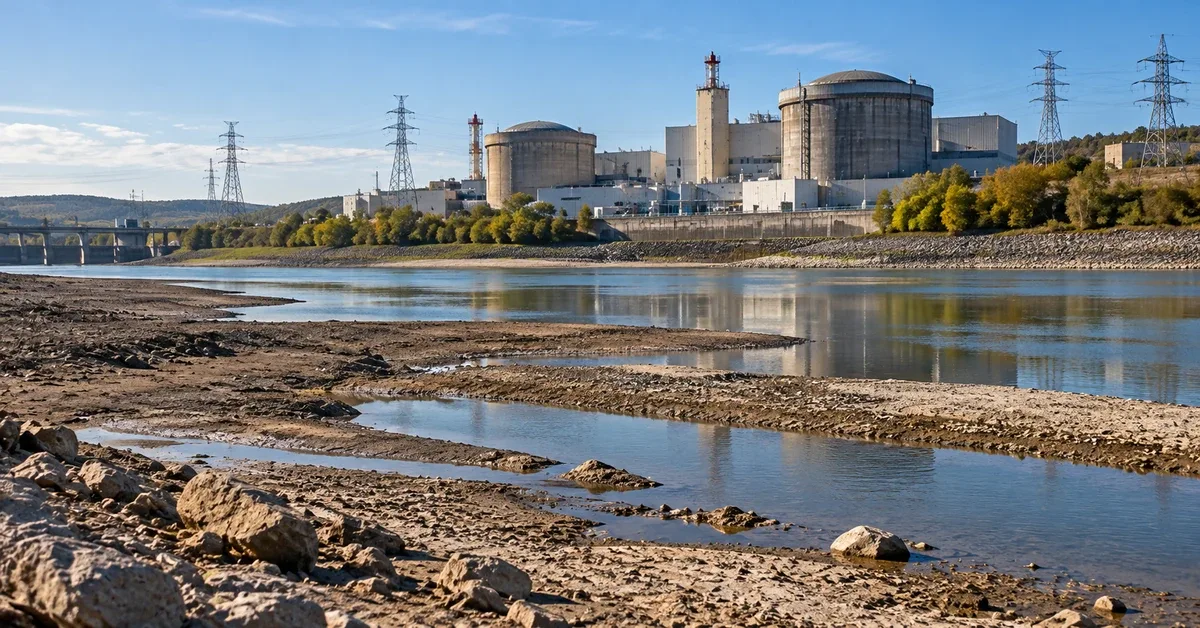
Romania has extended energy-security measures as exceptionally low Danube flows keep the Cernavodă nuclear power plant offline. Under normal conditions its two reactors provide roughly one fifth of the country's electricity, but safe operation depends on sufficient river water for cooling.
For October, the government expects evening peak demand to reach as much as 8,000 MW. Forecasts also point to limited rainfall and heavy cloud cover, reducing contributions from hydropower and solar generation. The most sensitive period is expected between 6 p.m. and 10 p.m., when demand rises while less flexible generation is available.
The government therefore approved temporary electricity-market safeguards and tasked transmission operator Transelectrica with maintaining system balance through measures that can include additional generation, imports and demand reduction. The decision does not order general household power cuts. That distinction matters: Romania is not experiencing a nationwide blackout. Authorities are managing a tight supply situation to prevent it from developing into a wider problem.
The central issue remains the Danube. River levels have been exceptionally low for months. Both Cernavodă units were shut down in a controlled manner during the summer. River works and technical emergency measures were prepared to improve the water level at the cooling intake, but current forecasts do not provide a reliable prospect of restarting even one unit during October.
The regional situation adds another constraint. When several countries simultaneously have weak hydropower output, high demand or unavailable generating units, electricity imports can become harder and more expensive to secure. A domestic shortfall cannot always be solved simply by buying power from neighbours. Grid operators therefore monitor cross-border capacity and regional reserves as closely as domestic generation.
For households, this is a useful example of how electricity scarcity can develop before any sudden grid failure. Warning signs can build for weeks through low river levels, reduced plant output, weather forecasts and operator notices. That is a sensible time to charge power banks, check batteries and lights, top up drinking water and shelf-stable food, and prepare essential equipment.
The state of alert does not mean a blackout is imminent. The safeguards are intended precisely to reduce that risk. The practical lesson is that electricity supply depends on several linked factors: water, weather, power stations, networks, imports and demand. When several move in the wrong direction at once, the safety margin becomes smaller.
Romania therefore illustrates how closely water and electricity can be connected. A prolonged drought can strain even a system with nuclear generation. Preparedness is not panic; it is recognising early when the system has less room for error than usual.
Sources: Government of Romania, TVR Info, Nuclearelectrica and Reuters. Updated: 2 October 2026.
Latest updates
General
02.10.2026
Romania extends energy alert as low Danube keeps Cernavodă offline
Low Danube flows keep Cernavodă offline as Romania extends temporary electricity-market safeguards.