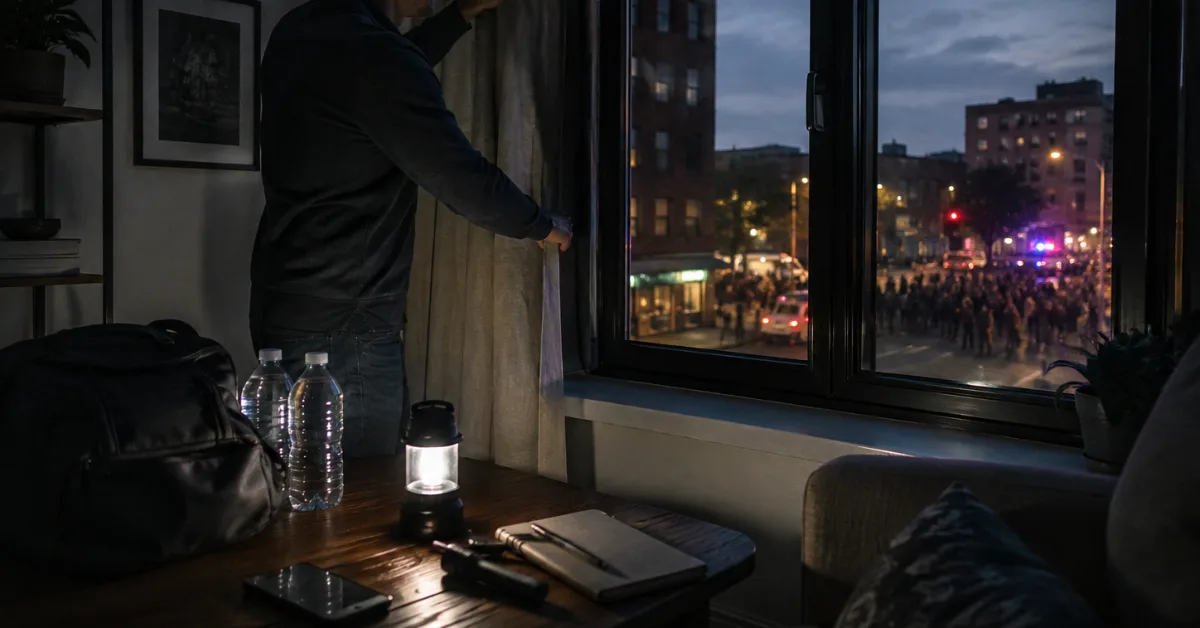
A blackout does not automatically lead to rioting. In most emergencies, people help one another. Even so, local protests, looting or violent groups may develop, particularly when rumours, supply problems and failed communications occur at the same time. Being prepared does not mean spreading panic or trying to intervene. The main objective is to create distance, remain inconspicuous and keep the family safely together.
Monitor emergency alerts, local news and instructions from the police, fire service or local authority. Do not rely on a single video or forwarded voice message. False claims about looted shops, roadblocks or alleged attacks can lead people directly into a danger zone. Save important radio stations, official telephone numbers and two reliable information sources in advance. Agree within the family who decides whether everyone stays at home or moves to a prepared alternative location.
As soon as a crowd becomes aggressive, do not drive or walk closer to film it. Turn around early and use a secondary route. Avoid areas in front of government buildings, police stations, petrol stations, supermarkets, shopping centres and transport hubs. Confrontations, long queues and road closures can develop particularly quickly in these places. Do not wear conspicuous political clothing, display valuables or argue with participants.
If you unexpectedly become caught in a crowd, stay calm, move with the general flow and work gradually towards the edge. Do not push against the crowd or stop to pick up belongings. Keep your arms slightly in front of your chest so that you can breathe. If there is immediate danger, enter a solid building only when access is safe. Stay away from windows, glass fronts and entrance doors, and identify at least two possible exits.
If you are in a vehicle, lock the doors, close the windows and turn around before the road is blocked. Never drive into a crowd. If people surround the vehicle, avoid sounding the horn, making threats or sudden movements; leave the vehicle only when a safe escape route is clearly available.
At home, close doors and windows, use outside lighting only when necessary and limit visibility into the building. Do not stand openly in front of the property with weapons or threatening gestures. This can escalate the situation and make you a target. Keep a fire extinguisher, first-aid supplies, torches, water and sturdy shoes ready. Charge telephones and power banks early and switch off unnecessary devices so that stored power lasts longer.
Agree on a short family code such as “all safe” and fixed check-in times. Text messages often work better than long calls when networks are overloaded. Choose a contact person outside the affected area to whom every family member reports their status. Children should know their full name, a telephone number and the agreed meeting point. Keep pets indoors or in carriers so that noise does not cause them to run away.
Observe curfews and official instructions. If you are stopped, remain calm, keep your hands visible and do not suddenly reach into pockets or bags. Do not photograph or film emergency personnel at close range. Call emergency numbers only for immediate danger, fire or a medical emergency. This keeps lines available for people who need urgent help.
Leave home only when remaining there becomes more dangerous, for example because of fire, smoke, people forcing entry or an official evacuation. Use a prepared route, take identification, medicines, water and a small emergency bag, and avoid the centre of the unrest. Safety comes not from confrontation, but from early information, clear agreements and creating distance in good time.
Sources: Ready.gov, guidance on emergency alerts and family plans; U.S. Department of State, safety advice for demonstrations and civil unrest; Florida State University Emergency Management, actions during civil unrest.
Guides
General
02.08.2026
Staying safe during unrest in a blackout: distance, not confrontation
Rioting is not inevitable during a blackout. If local conditions deteriorate, early information, a safe place, clear family arrangements and keeping your distance reduce the risk.