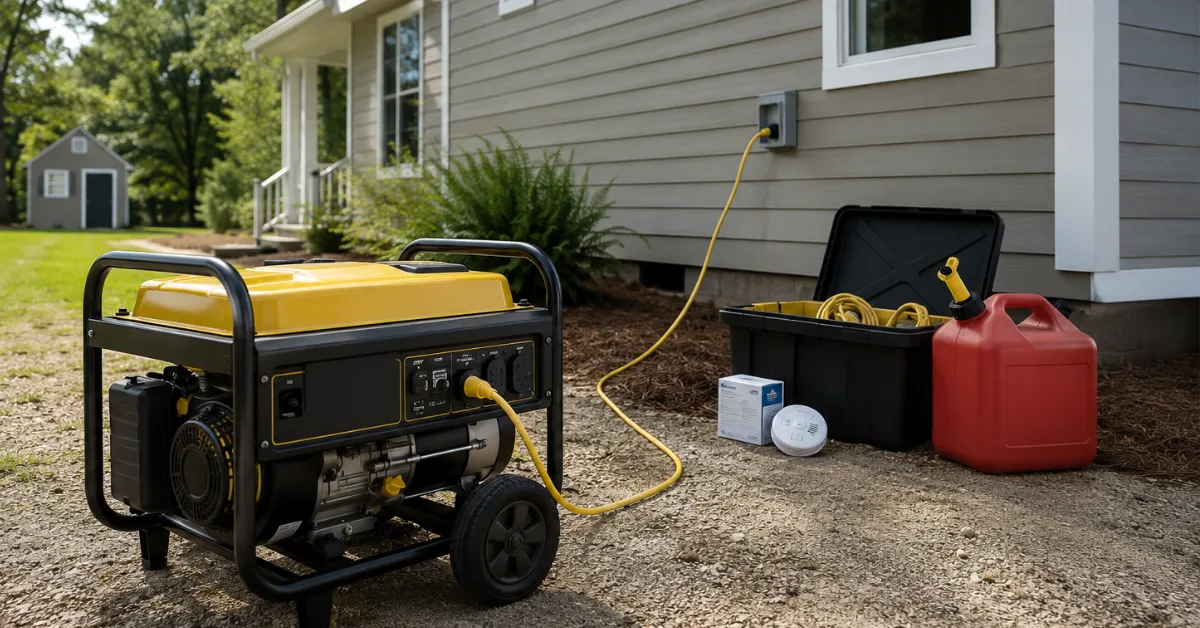
A generator can keep a refrigerator, freezer, lighting, chargers, a water pump or essential medical equipment running during a prolonged power cut. It is not, however, a machine that should be unpacked for the first time in darkness and connected to the house on impulse. Mistakes involving location, load or wiring can cause carbon monoxide poisoning, fire, electric shock or damaged appliances. Safe use therefore begins well before the blackout.
First decide what genuinely needs electricity. Write down the wattage of every essential appliance. Motors and compressors, including those in refrigerators, pumps and freezers, often require far more power at start-up than during normal operation. Do not simply add every rating plate and switch everything on together. Allow a safety margin and create groups: refrigeration first, then the water pump, followed by communications and lighting. Heavy loads such as electric cookers, water heaters, air conditioning or fan heaters can quickly overload a small generator and consume large amounts of fuel.
Test the generator with the intended appliances before an emergency. Check that voltage, frequency and sockets match the country of use and your equipment. Sensitive electronics may require a clean and stable supply. When in doubt, ask a qualified electrician whether the model is suitable. Label the correct extension leads and keep the manual, tools, engine oil and spare parts together in a fixed place.
The generator must always operate outdoors. A petrol-, diesel- or gas-powered unit must never run in a home, basement, garage, carport, shed or partly enclosed area. Open doors or windows do not make these places safe. Position it at least about six metres from doors, windows and air vents, with the exhaust pointing away from the building. Battery-powered carbon monoxide alarms are especially important near sleeping areas. Headache, dizziness, nausea, weakness or confusion can be warning signs: switch off the unit if this can be done safely, leave the area and call for help.
Protect the generator from rain and splashing water without enclosing it or blocking ventilation. Use only undamaged, correctly rated extension leads designed for outdoor use. Fully unwind cable reels under heavier loads. Plugs and connections must not lie in puddles and cables should not create trip hazards.
Never connect a portable generator to a wall socket using a homemade lead. This backfeeding can energise power lines, kill emergency workers or utility technicians, and cause fires or severe equipment damage when mains power returns. To supply fixed household wiring, a professionally installed changeover or transfer switch is required to isolate the utility supply from the generator. Earthing and protective measures must suit the generator design and local regulations.
Never refuel a running or hot engine. Disconnect loads, stop the generator and allow it to cool. Store fuel only in approved, labelled containers, outside living areas and away from heat, sparks and flames. Follow storage-life limits, local quantity restrictions and the manufacturer's instructions. During extended operation, regularly check oil level, cables, unusual noises and exhaust conditions.
A generator does not need to power everything continuously. A schedule is often enough: run refrigeration for a period, charge batteries, pump water and then shut down again. This saves fuel, reduces noise and creates inspection breaks. Keep a small operating log showing start time, running hours, fuel use and maintenance.
Run and service the generator periodically outside emergencies in accordance with the manufacturer's instructions. A generator is genuine preparedness only when its location, cables, fuel, load plan and safe shutdown procedure have already been settled.
Sources: Centers for Disease Control and Prevention, guidance on carbon monoxide and generators; Electrical Safety Foundation International, portable-generator and transfer-switch safety; Occupational Safety and Health Administration, grounding and safe use of portable generators.
Guides
General
25.07.2026
Using a generator during a blackout: Stay safe instead of improvising
A generator can protect refrigeration, water and communications. Without a load plan, a safe location and correct changeover equipment, it can become a serious hazard.