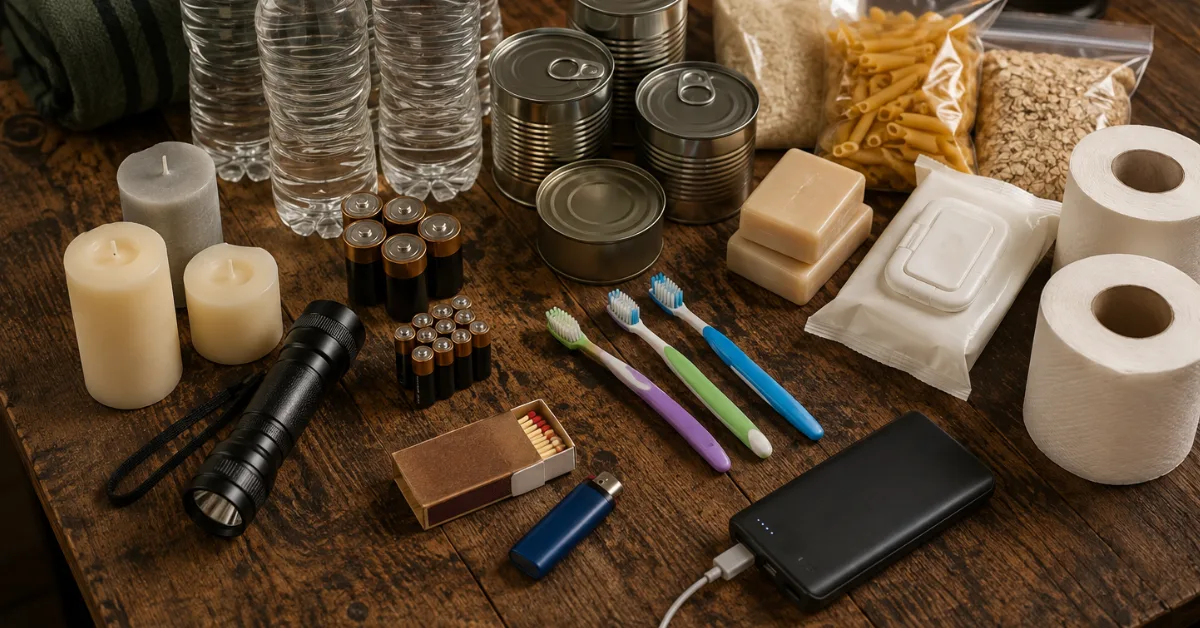
When a blackout lasts not only for hours but for several days, shops may remain closed, card payments may fail and cash machines may stop working. Neighbours or small local businesses may then begin exchanging goods directly. That does not mean households should build a “crisis trading stockpile”. Every household first needs enough water, food, medicines and hygiene products for its own needs. Only items that are genuinely spare should be offered.
The most practical barter goods are small, factory-sealed everyday products with a clear use. Examples include individual portions of shelf-stable food, salt, sugar, coffee, tea, long-life milk, canned food, pet food and clean drinking water in small bottles. Small units are easier to value, carry and divide fairly than large packages. Expired, damaged or already opened food should never be offered in an exchange.
Hygiene products can become particularly useful. Soap, toothpaste, toilet paper, wet wipes, rubbish bags, nappies, menstrual products and disinfectant can be stored for a long time and are needed every day. The same rule applies: pass on only unopened products. Personal medicines, prescription drugs and partly used medication should never be bartered. Dosage, interactions, storage requirements and legal rules make this dangerous.
For lighting and small devices, common battery sizes, fully charged power banks, simple torches, lighters and matches may be useful. A power bank should only be offered when there is a realistic way to recharge it later. Fuel, gas cartridges and other highly flammable materials may appear valuable, but storage, transport and decanting create serious risks. They are not simple barter goods and must be handled only in line with local safety and legal requirements.
Basic tools and consumables can also help: strong cord, adhesive tape, cable ties, work gloves, nails, screws, rubbish sacks, water containers and manual can openers. A small service may sometimes be worth more than an object. Someone who can make repairs, filter water, cook, transport something or charge devices under controlled conditions should decide in advance what can be offered without endangering personal safety or essential supplies. Reliable information about open distribution points or safe routes can also help a neighbourhood, but it should never be invented or “sold” in exchange for necessities.
Keep possible barter goods separate from the household’s real emergency reserve. A small labelled box helps prevent essential supplies from being handed over by mistake. Take only the agreed quantity to an exchange and never reveal the full stock. Trade during daylight where possible, do not go alone and choose an open, visible location. Normal price lists are of little use; current need, condition and available quantity matter more. Agree clearly what each side will receive before anything changes hands.
Cash in small notes and coins remains useful for as long as people accept it. During a prolonged outage, electronic payment systems and cash machines may fail while cash can still be used directly. Barter should therefore be a backup option, not the centre of an emergency plan.
The most important rule is simple: never trade away water, food, medicine or equipment that your own household still needs. Good preparedness means independence and cooperation, not profiting from another person’s hardship. Fair agreements, small quantities and mutual help create more security in a tense situation than a large collection of supposed “crisis currency”.
Source: German Federal Office of Civil Protection and Disaster Assistance, “Preparing for Crises and Disasters” and preparedness checklists; Ready.gov, “Build A Kit”, “Power Outages” and financial preparedness guidance; Government of Canada, emergency kit and power outage checklists.
Guides
General
01.08.2026
Barter goods during a blackout: What is actually useful
When card payments and cash machines fail, direct exchange may help. The key is small, useful goods without risking the household’s own emergency supplies.