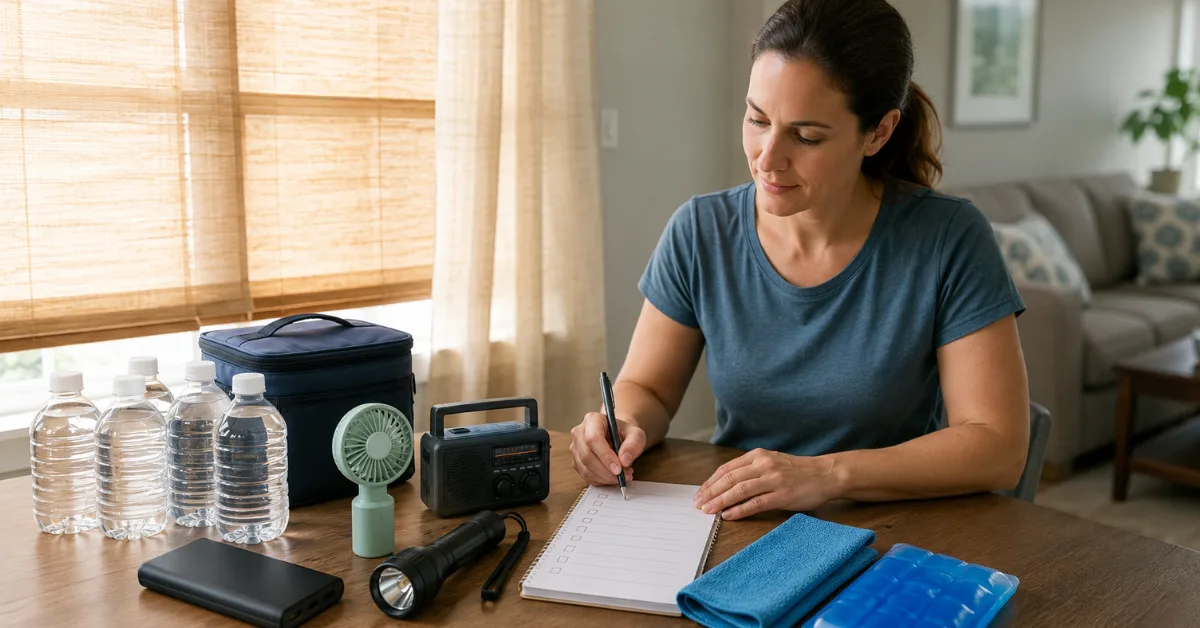
When a grid operator activates emergency measures because of heat and high demand, it is no longer just an ordinary energy-saving message. It means many homes, air conditioners, refrigerators, businesses and public systems are pulling power at the same time. At that point, a local fault, an overloaded line or a thunderstorm can be enough for the power to disappear. The most important tip is simple: do not wait until everything is dark. Prepare as soon as heat is forecast and public calls to reduce electricity use appear.
Start with the basics. Fully charge your phone, power bank, battery lamps and battery radio. Put a torch, spare batteries, important medicines, some cash and drinking water in one fixed place. If someone in your home depends on medical devices, refrigerated medicines or special care, you need a clear plan in advance: who can help, where can you go and which phone numbers must be available even without internet?
Keep your home as cool as possible while electricity is still available. Ventilate early in the morning, then close windows, curtains and blinds. Avoid unnecessary heat sources. Ovens, dryers and long cooking times heat the home from the inside. If the grid operator asks people to reduce demand, move washing machines, dishwashers, pool pumps and charging tasks to cooler hours. That does not just help the grid; it helps you, because preventing an outage is better than improvising afterwards.
If the power goes out, open the refrigerator and freezer as little as possible. A closed refrigerator can keep food cold for about four hours, and a full freezer can stay cold much longer. Write down the time when the outage started. This helps you decide later what may still be safe. Perishable food, baby food and medicines need special attention. When in doubt, caution is better than food poisoning.
During heat, cooling is more important than comfort. Drink water regularly, reduce physical work and move to shade or the coolest room available. Fans only help while indoor temperatures are not dangerously high. If your home becomes unsafe, have a plan to move to a cooler place: neighbours, family, a shopping centre, library, community building or an official cooling centre.
One point is non-negotiable. Generators, gas cookers, charcoal grills and camping stoves must never be used inside the home, basement, garage or near open windows. Carbon monoxide cannot be seen or smelled, but it can kill. Candles also create unnecessary fire risk, especially with heat, children or pets. LED lamps are safer.
The best summer tip against blackout stress is a small heat-outage plan: water, light, battery power, cooling, medicines, a contact person and a cooler place to go. This is not panic. It is everyday life with a safety net.
Sources: Ready.gov, Power Outages, accessed 4 July 2026. CDC, About Heat and Your Health, accessed 4 July 2026. BBK, Vorsorgen für Krisen und Katastrophen, accessed 4 July 2026.
Guides
General
04.07.2026
When heat puts the power grid under pressure: prepare before the lights go out
Heatwaves can push power grids close to their limits. A few simple steps can reduce your risk and make a summer outage easier to handle.