During a major power outage, the first hour matters. Not because you must solve everything at once, but because this is the time when unnecessary mistakes can be avoided. Many people immediately grab their phone, open the refrigerator, drive away or search frantically for information. That wastes battery, cold air, safety and nerves.
First, stay calm and check how large the outage may be. Are neighbouring homes dark? Are streetlights off? Does the mobile network still work? Write down the time when the power failed. This helps later with food safety, medication, batteries and your own assessment.
Then save energy. Switch off devices you do not need and unplug sensitive electronics. Leave one lamp switched on so you notice immediately when power returns. Do not open the refrigerator or freezer out of curiosity. Every opening costs cold air.
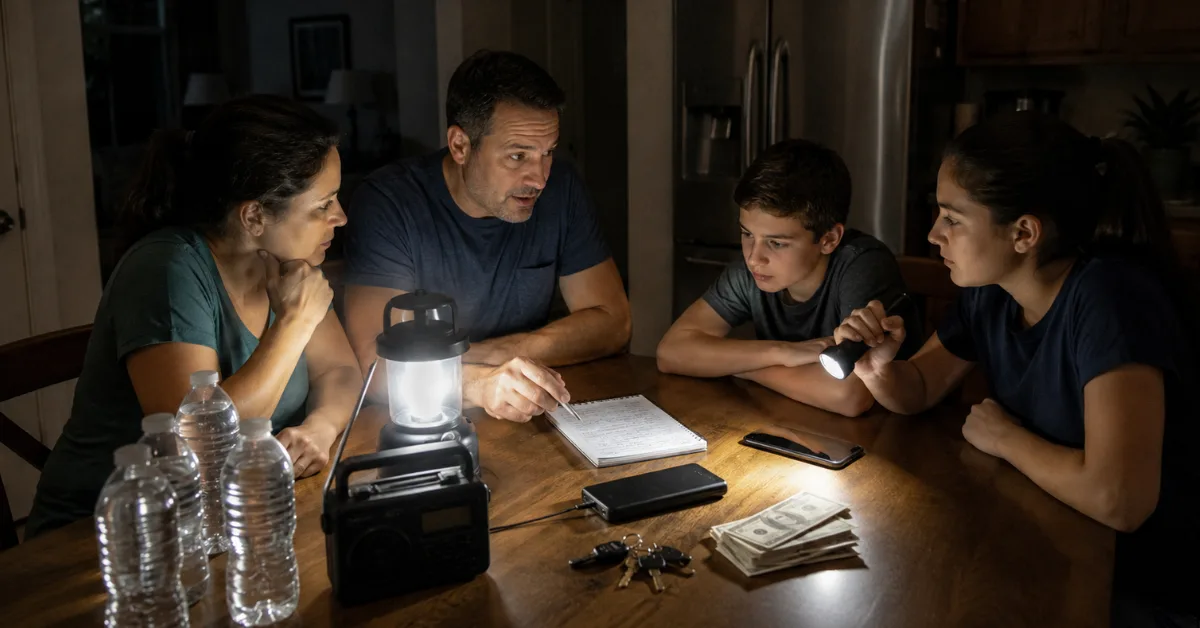
Place your basic emergency items in one central spot: flashlight or LED lantern, radio, power bank, water, medication, some cash, keys and important phone numbers on paper. If several people live in the household, agree on one meeting point inside the home and one clear rule: nobody leaves without a real reason.
Use your phone sparingly. Send short messages instead of making long calls. Tell relatives briefly: We are safe, the power is out, we will report back later. This saves battery and reduces pressure on mobile networks.
If older neighbours, sick people or small children are nearby, check on them once it is safe to do so. Never use grills, gas cookers or generators indoors. Such devices belong only outside.
The first hour does not decide everything. But it often decides whether a power outage becomes organised waiting or a chaotic problem.
Guides
General
28.06.2026
Tip: Use the first hour of a grid-wide outage wisely
The first hour of a major outage is the moment to stay calm, save battery power, protect refrigerated food and avoid unnecessary risks.