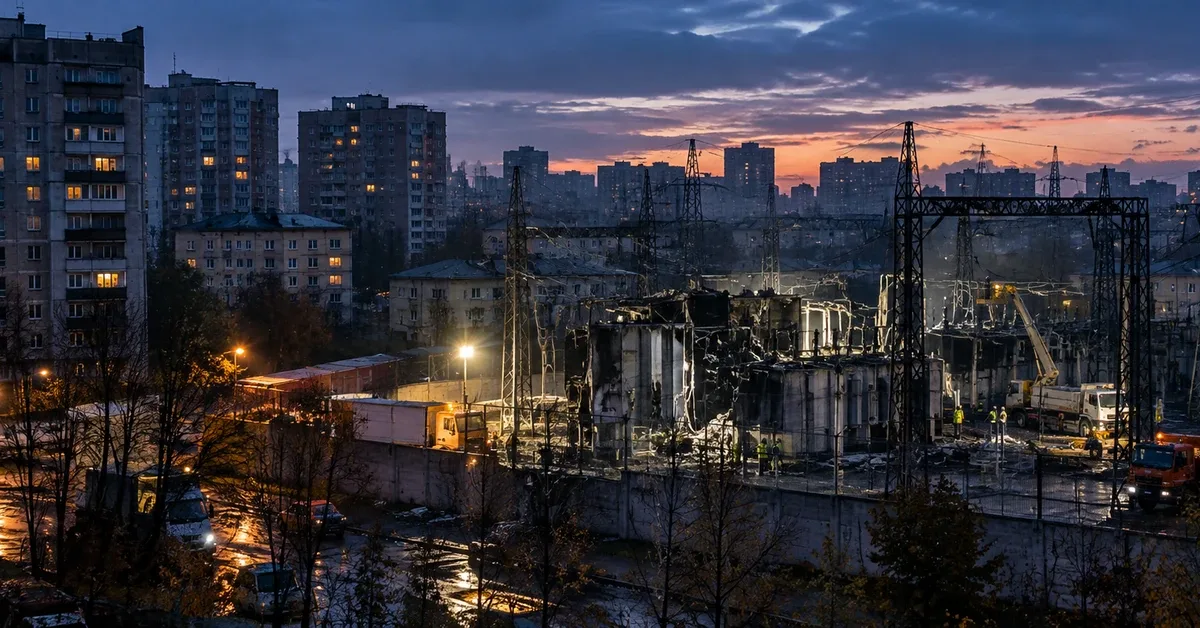
On the night of 29 to 30 September 2026, Russia carried out a large combined missile and drone attack on Ukraine’s energy infrastructure, according to Ukrainian authorities. Kyiv and the surrounding region were among the areas most affected. Reuters and the Associated Press reported on 30 September that energy facilities had been damaged, power supplies disrupted and additional restrictions imposed on the grid. For households, the event is particularly relevant because it shows how damage to individual facilities can quickly affect several essential services at the same time.
Ukrainian Prime Minister Serhii Koretskyi said energy facilities in Kyiv, the Kyiv region and other parts of the country were struck. He described it as the first combined attack on the energy system on this scale since the end of the previous heating season. Ukrainian authorities reported outages in the morning in parts of Kyiv and in the Dnipropetrovsk, Donetsk, Sumy and Kharkiv regions. The Trypillia thermal power plant was also reported to have been damaged.
Power company DTEK said more than 8,000 customers on Kyiv’s left bank had their electricity restored after infrastructure damage. Repair crews continued working at the same time. The situation tightened again in the early evening: on orders from transmission system operator Ukrenergo, emergency power cuts were introduced in parts of Kyiv and in the Kyiv, Chernihiv and Zhytomyr regions. Equipment overload following the attacks was given as the immediate reason.
Later, the emergency cuts in Kyiv were lifted and replaced by scheduled outages. That distinction matters. Emergency cuts can happen without warning and do not follow a normal timetable. Scheduled stabilisation outages allow households to prepare at least part of their day. Authorities urged consumers to follow official information from their local distribution operators and to use electricity sparingly whenever supply was available.
The effects were not limited to lights and sockets. Kyiv authorities warned that, where electricity was unavailable, water pressure on upper floors could also be affected. Public transport, lifts, mobile communications, refrigeration and other electrically powered systems can be disrupted as well. A regional power cut can therefore become much more than an electrical problem for a household.
Russia’s account is also part of the picture. The Russian Defence Ministry said its targets included energy facilities in the Kyiv region that it claimed were used for military production. Regardless of that stated justification, Ukrainian operators and authorities confirmed damage to energy infrastructure and resulting supply interruptions.
For private preparedness, the lesson is practical. People living with unstable electricity need more than a torch. Charged phones and power banks, drinking water, a plan for electrically powered pumps or lifts, safe lighting and current information from the grid operator all matter. If emergency cuts are replaced by scheduled outages, the available periods of power can be used to recharge devices, store water and complete essential tasks.
The 30 September attack did not cause a nationwide total blackout. It did, however, show how damaged energy facilities, overloaded equipment and repair work can produce changing outage regimes within only a few hours. For households, the message is to prepare not only for one large blackout, but also for shorter, repeated and difficult-to-predict interruptions.
Sources: Reuters; Associated Press; DTEK; Ukrenergo and the Ministry of Energy of Ukraine via Ukrinform and Ukrainska Pravda. Updated: 1 October 2026.
Latest updates
General
01.10.2026
Ukraine: major attack on energy facilities triggers emergency cuts in Kyiv
A large missile and drone attack damaged Ukrainian energy facilities on 30 September. Kyiv and several regions experienced power failures and emergency cuts.