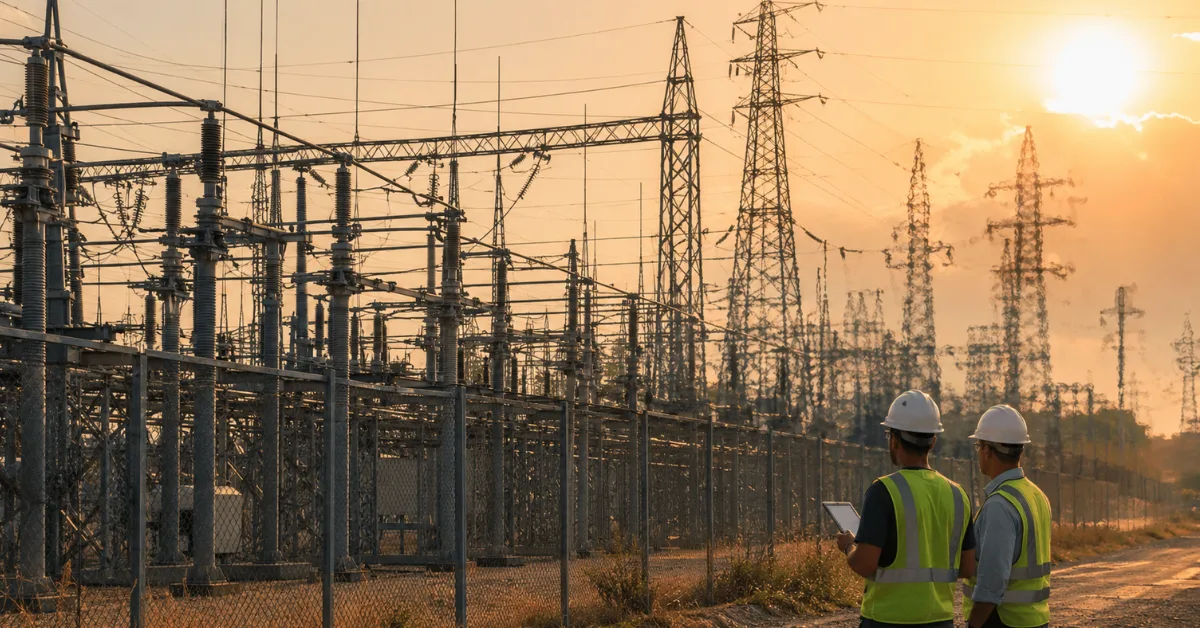
On 3 July 2026, the eastern United States received a very real warning from its electricity grid. During a brutal heatwave, PJM, the largest grid operator in the United States, ordered emergency measures because electricity demand was moving dangerously close to record levels. PJM serves about 67 million people across parts of the East and Midwest, so this was not a small local fault. It was a major stress test for one of the most important power systems in North America.
The reason was not mysterious. Millions of air conditioners were running at the same time, several generators were unavailable, transmission lines were heavily loaded, and the heat kept pushing demand higher. According to Reuters, PJM's load came close to the old record of 165.6 gigawatts. Preliminary data showed a peak of about 163 gigawatts on Thursday. In plain language: the system was operating very close to its limit.
PJM therefore activated emergency demand reduction. Customers enrolled in demand-response programmes were told to cut electricity use. These programmes sound technical, but the idea is simple. During a grid emergency, participating large consumers and some households reduce demand so that the whole system does not have to move to harsher steps such as voltage reductions, rolling outages or wider blackouts. It is not a casual request to save energy. It is a signal that the grid is under real pressure.
New York also showed how quickly heat can turn into daily-life trouble. Con Edison said it had restored service to more than 60,000 customers affected by scattered outages since the heatwave began. That detail matters because blackout risk is not always a single dramatic national collapse. Often it is a mix of heat, high demand, ageing infrastructure and local failures. For the people affected, the result is the same: no power, no cooling, spoiled food, dead phones and uncertainty.
This is especially serious during summer. A power cut in hot weather is not just about darkness. It can affect drinking water, refrigeration, medication, lifts, communication, sleep, pets and vulnerable people. A family with a charged power bank, bottled water, battery light and a clear cooling plan is in a much better position than a family that only starts thinking after the lights go out.
The good news is that a large-scale blackout appears to have been avoided. The bad news is that avoiding it required visible emergency action in the largest US grid. That is why this event matters for preparedness. Blackout planning is not fantasy. It begins on days like this, when heat, demand and infrastructure all push in the same dangerous direction.
Sources: Reuters, 3 July 2026, Eastern US power grid operator orders emergency curbs as electricity use nears record. PJM, 2 July 2026, PJM Hot Weather Operations Update. Con Edison, 3 July 2026, Con Edison Working To Restore Service To Customers Impacted By Extreme Heat.
Latest updates
General
04.07.2026
Largest US power grid under pressure: emergency steps against blackouts
A fierce heatwave pushed electricity demand in the eastern United States close to record levels. Grid operator PJM ordered emergency demand cuts to prevent wider outages.