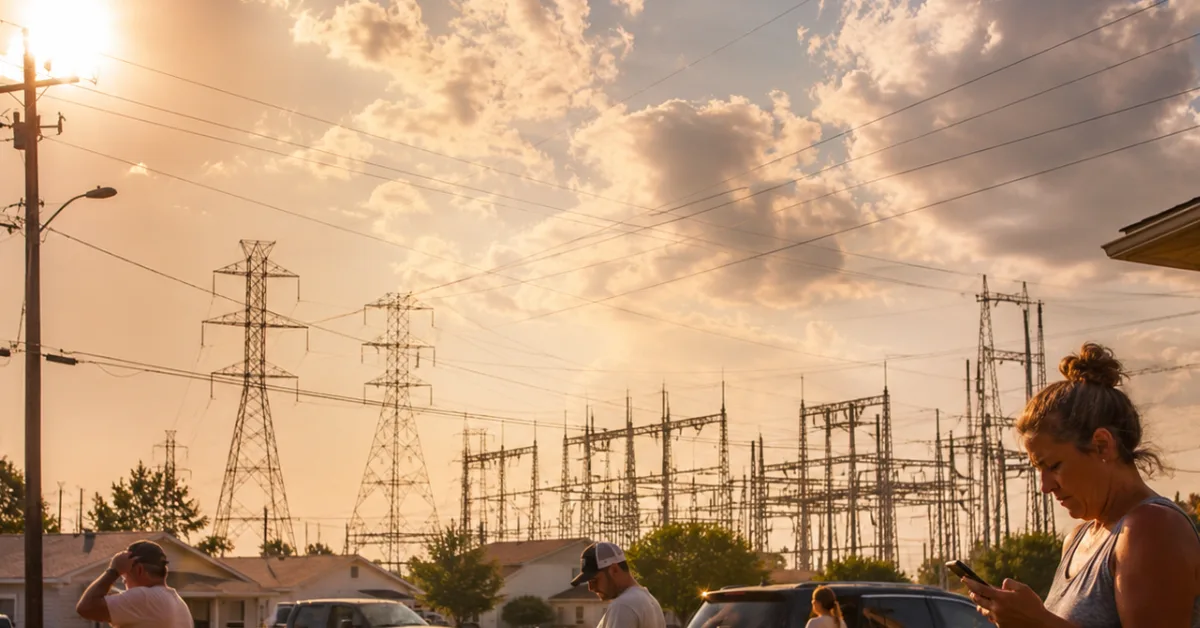
The western United States came dangerously close to controlled power shutoffs on Monday evening, 20 July 2026. Regional grid operator Southwest Power Pool, or SPP, declared the highest emergency level, EEA3, for its western balancing area at 5:07 p.m. local time. This level means that available operating reserves have largely been exhausted and that load shedding may become necessary as a last resort.
The emergency was triggered by a dangerous combination of heavy electricity demand, weak wind generation and additional outages at power plants. SPP had already announced a Conservative Operations Advisory the day before. Conditions then deteriorated quickly on Monday afternoon. Air conditioners were running at full power during intense summer heat while less electricity than expected was available.
The alert did not apply equally to SPP’s entire large footprint. It specifically affected the Western Balancing Authority Area. The eastern area remained under a resource advisory while still operating under generally normal conditions. Even so, EEA3 was a clear alarm signal. The operator had very little room left to absorb another generating-unit failure, a transmission problem or a further increase in electricity use.
The worst outcome was initially avoided for consumers. Local utilities were still told to remain alert because a regional load-shedding order could have affected individual grids, homes and businesses with very little notice. SPP stated that it had not directed any controlled service interruptions. Grid and generation operators were instructed to report every limitation, fuel shortage and technical concern immediately. Available reserves and emergency support mechanisms were used to keep supply and demand in balance.
The most critical phase lasted less than two hours, but it was far from harmless. At 6:00 p.m., SPP lowered the emergency to EEA2. At 6:50 p.m., it was downgraded again to EEA1. Conditions had improved, yet the message remained clear: a few more plant outages or slightly higher demand could have turned the warning into a real blackout involving controlled shutoffs.
Power failures become especially dangerous during extreme heat. Without air conditioning or fans, indoor temperatures can rise quickly. Refrigerators lose cooling capacity, electric water pumps stop and medical devices may depend on batteries or emergency generators. Mobile communications, card payments, elevators and traffic lights can also be affected during longer interruptions.
The incident also shows that vulnerable grids are not limited to poorer countries with aging infrastructure. Highly developed electricity markets can also come under severe pressure when heat, near-record demand, variable renewable generation and unplanned plant outages occur at the same time. The decisive questions are whether sufficient reserve capacity is available and how quickly grid operators can react.
The lesson for households is simple. An EEA3 remains invisible to most people as long as engineers keep the system stable. If that final line of defense fails, however, electricity can disappear within minutes. Charged power banks, battery-powered lights, drinking water, shelf-stable food, some cash and a plan for medication or refrigeration should therefore be in the home before a blackout, not after one.
This time, the United States narrowly avoided controlled outages. The emergency in SPP’s western system ended before entire neighbourhoods went dark. For authorities and utilities, however, the event remains a serious stress test ahead of the next hot days. Monday evening showed how narrow the gap between normal summer operations and a genuine power emergency can become.
Source: Southwest Power Pool, Current Grid Conditions, 20 July 2026: https://spp.org/markets-operations/current-grid-conditions/
Additional source: Reuters, 21 July 2026, “Grid operator in US central states warns of potential rolling blackouts”.
Latest updates
United States
21.07.2026
US narrowly avoids blackouts: Level 3 grid emergency declared in the West
Extreme heat, heavy demand and power-station outages pushed SPP’s western grid to its highest emergency level on 20 July 2026. Controlled cuts were narrowly avoided.