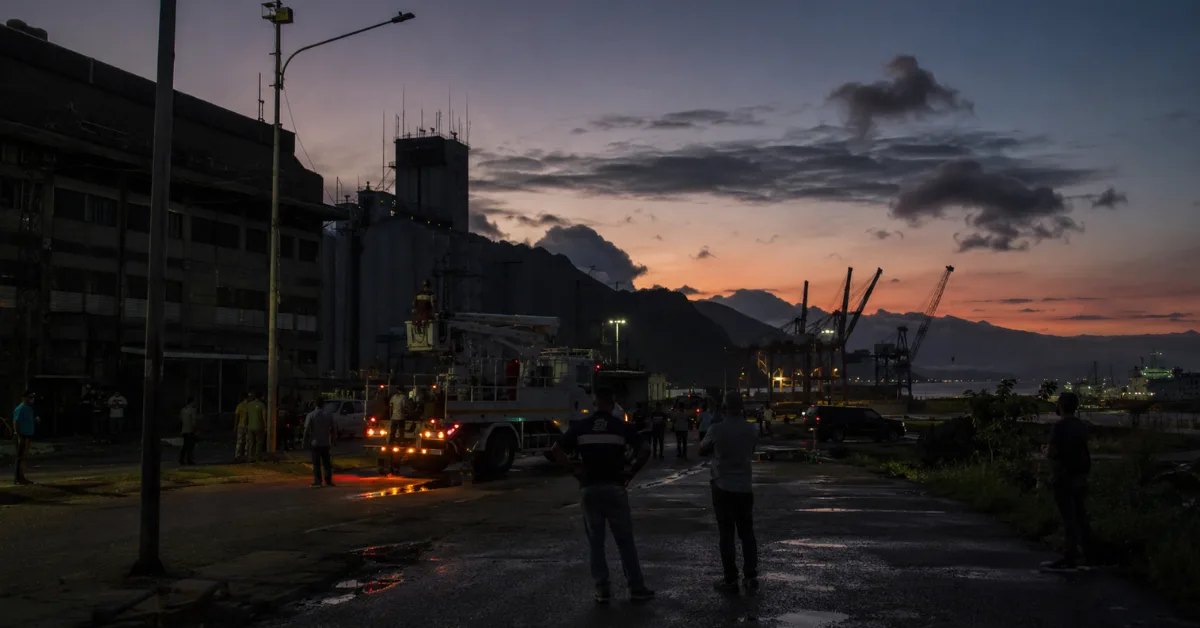
Venezuela is still struggling with the consequences of the severe earthquakes for power supply, ports and important industrial facilities. While many reports first focused on collapsed buildings, injuries and rescue operations, a second problem is now becoming visible: without stable electricity, even the relief effort moves slowly.
According to Reuters, initial damage to oil, gas and refining facilities appeared limited. That does not automatically make the situation calm. Many plants and processes still depend on electricity, communications, pumps, control systems and working transport routes. When power does not return reliably, even facilities that are physically intact can become a problem.
The situation is especially sensitive around important port and industrial sites. Puerto Cabello port, the El Palito refinery and the Moron petrochemical complex were named in reports as areas where power outages and restrictions can slow the restart or operation of key processes. For a country that is already under economic pressure, this is a dangerous mix: earthquake damage, emergency supply needs, interrupted infrastructure and then power cuts on top.
For ordinary people, this means far more than dark apartments. If electricity fails after an earthquake, water pumps, refrigeration, mobile networks, traffic lights, cash machines, fuel stations and hospitals can all come under pressure. In the first hours after a disaster, the question is not only whether cables can be repaired. It also matters whether people receive information, charge their phones, get clean water and keep medicines cool.
There is another point that many households underestimate: after an earthquake, electricity itself can become dangerous. Damaged cables, wet walls, broken sockets or fallen appliances increase the risk of short circuits and fire. When power suddenly returns, that does not mean everything is safe. That is why the fuse box, a flashlight and a clear family plan matter more than improvised heroics.
This event shows once again why blackout preparedness is not only about one huge nationwide outage. A regional outage after an earthquake, storm, flood or technical failure can paralyse daily life very quickly. Anyone who has water, light, a radio, power banks, batteries, simple food, medicines and some cash at home is not immediately left empty-handed.
Put bluntly: the quake was the first hit, the power outage the second. This second hit is often underestimated. Buildings can remain standing and yet almost nothing works properly because electricity, networks and logistics are missing.
For households, the lesson is clear. Emergency preparedness does not start when the whole world goes dark. It starts with the question of whether you can get through two or three days without a socket, supermarket and stable connection in a reasonably calm way. Venezuela is painfully showing how fast a natural event can become a supply crisis.
Source: Reuters, 25 and 26 June 2026, reports on earthquake impacts, power outages, ports, refineries and industrial facilities in Venezuela.
Latest updates
General
27.06.2026
Venezuela after the quakes: power outages slow ports and industry
After severe earthquakes in Venezuela, power outages are becoming the second blow: ports, industrial sites and public supply are under pressure.