In cold weather, a power outage can quickly become a health risk. However, not every device that produces heat is suitable for a living space. The design, exhaust route, fuel, ventilation and fire protection all matter. Decide before an outage which heat source may be used indoors and which equipment must remain outside.
The safest first level needs no fuel. Choose a small room with few outside walls and windows, close doors to unused rooms, and block draughts with towels or blankets without covering required vents. Wear several loose layers, a hat and dry socks. Sleeping bags, wool blankets and hot-water bottles filled with safely heated water often retain body heat better than trying to warm the entire house. People and pets can share one designated warm room.
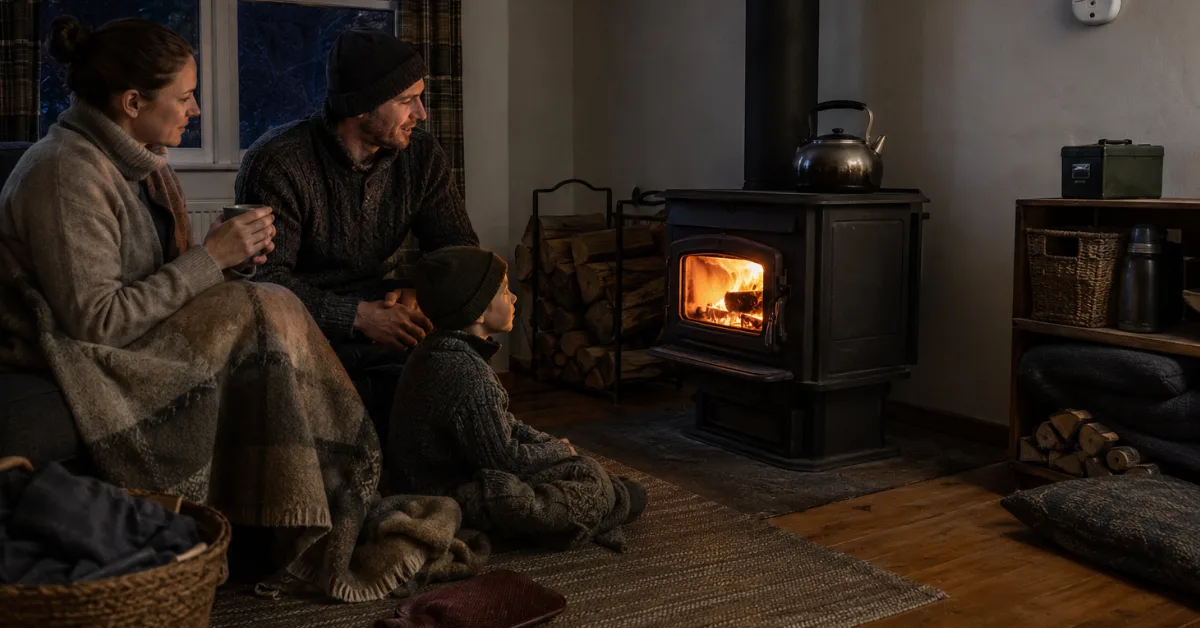
A permanently installed fireplace or wood-burning stove can be suitable when it has been professionally installed, inspected regularly and connected to a clear, working chimney. Burn only dry fuel intended for the appliance. Do not burn paper, rubbish, treated wood or flammable liquids. Use a metal or glass screen to contain sparks. Keep curtains, furniture, clothing and supplies about one metre away. Fully extinguish the fire before everyone goes to sleep or leaves the room.
Portable propane, paraffin or kerosene heaters are only a possible emergency option when the manufacturer specifically approves them for indoor use, local rules allow them, and every operating and ventilation instruction is followed. A patio, camping or construction heater does not become safe for a home merely because a window is open. Put an approved heater on a stable, non-combustible floor, keep children and pets away, and never refuel it while it is hot or running.
Every fuel-burning heat source requires working battery-powered smoke and carbon monoxide alarms. Carbon monoxide is invisible and odourless. Headache, dizziness, nausea, weakness or unusual tiredness can be warning signs. Move everyone into fresh air immediately and contact the emergency services. Never sleep in a room with an unattended, unvented fuel-burning heater.
An electric fan heater or oil-filled radiator only makes sense when safe grid power, a sufficiently sized battery system or a properly installed backup supply is available. Heating appliances draw substantial power and can empty small power stations quickly. Plug an electric heater directly into a suitable wall outlet, never into a power strip or an unsuitable extension lead. Choose models with overheat and tip-over protection, and switch them off when leaving the room or going to sleep.
Unsafe choices include a gas cooker or oven, charcoal or gas barbecue, camping stove, fire bowl, patio heater and a running vehicle engine inside a garage or carport. These can cause carbon monoxide poisoning, fire or oxygen depletion. A collection of candles is not safe room heating either; it mainly increases the fire risk. A portable generator must always remain outside and well away from doors, windows and air vents.
Set a clear point at which the plan must change. If the room keeps getting colder despite clothing and blankets, no safe equipment is available, or someone shows signs of hypothermia, move in time to relatives, friends or an official warming centre. Babies, older adults and people with heart, breathing or mobility problems must not depend on improvised heating. The best emergency heat source provides enough warmth, is approved for the location and introduces neither fire nor poisonous exhaust gases into the home.
Sources: Centers for Disease Control and Prevention, guidance on power outages and safe heating; U.S. Environmental Protection Agency, Power Outages and Indoor Air Quality; U.S. Consumer Product Safety Commission, heater and carbon monoxide safety; U.S. Fire Administration, Heating Fire Safety; American Red Cross, safe heating guidance for winter weather.
Guides
General
29.07.2026
Choosing safe heat sources during a blackout
Fireplace, blankets, electric heater or portable fuel heater: not every source is safe during an outage. Learn what is suitable indoors and how to avoid fire and carbon monoxide.