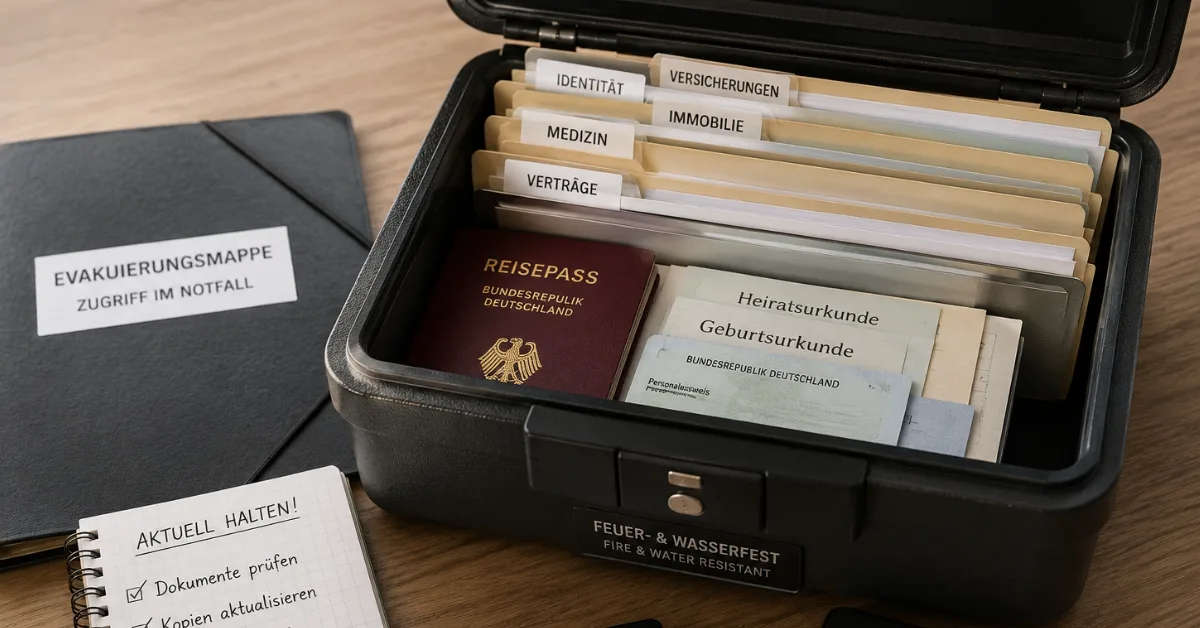
When a blackout is accompanied by severe weather, fire, flooding or a possible evacuation, important documents can suddenly become more valuable than almost anything else in the household. Without identification, insurance numbers, medical information or proof of ownership, it may be harder to request assistance, obtain medication, arrange accommodation or document damage. Good document preparedness therefore does not consist of a single folder in a cupboard, but of several independent backups.
Start with a clear selection. Your emergency records should include copies of passports and identity cards, birth and marriage certificates, residence or work permits, driving licences, vehicle documents, rental or ownership papers and important insurance policies. Add bank and contact details only to the extent that they are genuinely needed in an emergency. Include medication lists, prescriptions, allergies, blood groups, information about medical devices and telephone numbers for doctors, insurers, banks and close relatives. For pets, vaccination records, microchip numbers and veterinary contact details are useful.
Do not keep original documents in the mobile emergency bag. Store them in a lockable, preferably fire-resistant and waterproof container in a dry, elevated place. A basement is unsuitable where flooding is possible, while an attic may be vulnerable to heat, fire or storms. The container should not stand directly on the floor and should not be visible to every visitor. Also check what your safe actually protects against; many simple furniture safes only deter quick access and are not rated for fire or water.
For evacuation, prepare a second, slim document folder. It should contain clearly readable paper copies, a list of essential numbers and only the information you may need while away from home. Use a waterproof document pouch and store it with your emergency supplies. Do not write names, account numbers or clues about the contents on the outside. Make sure all adult household members know where the folder is and who will take it in an emergency.
Digital copies form the third layer of protection. Scan every document completely and clearly as a PDF. Photographed pages are only useful if all edges, numbers and reverse sides can be read. Store the files in encrypted form on a USB drive or small external SSD. A second encrypted drive can be kept with a trusted person at another location. Cloud storage is an additional option, but it should never be the only backup: access may fail during a blackout, network outage or password problem.
Sensitive files should never be left unprotected on an ordinary USB drive. Use a strong password created only for this purpose and keep a secure recovery method. Do not write the password on a note beside the storage device. Instead, agree with a trusted person how access can be obtained in an emergency without unnecessarily exposing all of the data.
Add photographs or a short video of your home, important appliances and valuable belongings. Record serial numbers, purchase receipts and the condition of rooms. This evidence can make insurance claims easier after fire, burglary or flooding. Store it separately from the originals.
Review the emergency folder at least twice a year and after moving home, marriage, a birth, a vehicle change, a new insurance policy or changes to medication. Remove outdated copies and destroy them securely. A document backup is only useful if it is current, readable and accessible when it is needed.
Source: FEMA/Ready.gov, “Safeguard Critical Documents and Valuables”; American Red Cross, “Survival Kit Supplies”; British Red Cross, “Prepare an emergency kit”.
Guides
General
30.07.2026
How to store important documents for a blackout
One folder in a cupboard is not enough. Protect originals, emergency copies and encrypted backups from outages, fire, water and evacuation.