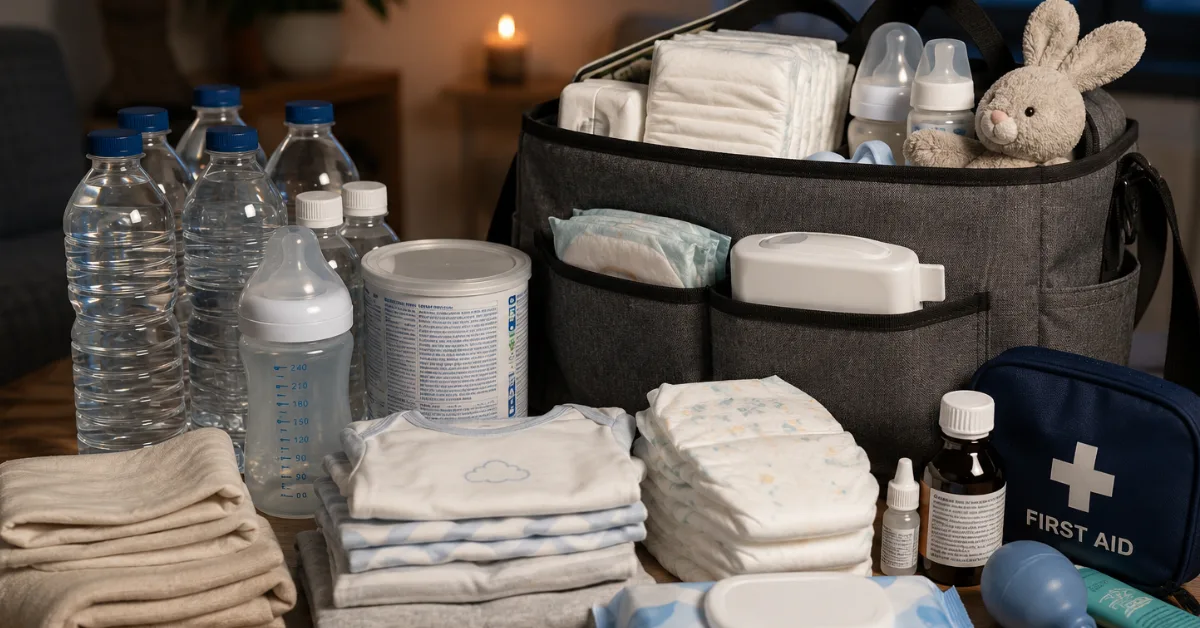
A power outage is inconvenient for adults, but for a baby it can become a serious supply problem within a short time. Bottle warmers, refrigerators, kettles, night lights and baby monitors suddenly stop working. At the same time, infants still need regular feeding, a clean environment, suitable temperatures and reliable care. Baby supplies should therefore not simply be mixed into the household emergency stock. Keep them together as a separate unit that can be reached quickly.
Pack a baby emergency box with enough supplies for at least three days. Include diapers, wet wipes, washcloths, trash bags, barrier cream, changes of clothing, a sleeping bag, light and warm blankets for travel, age-appropriate food, bibs and familiar comfort items. Add a flashlight and spare batteries so that nobody has to use candles beside the changing area at night. Check sizes and expiry dates regularly because babies grow quickly and stored items can become unsuitable without anyone noticing.
When the baby is breastfed, the mother should have enough to drink and eat and should be given as much rest as possible. Stress can temporarily make milk flow more difficult, but it does not automatically mean that breast milk has stopped. When infant formula is used, ready-to-feed liquid formula in small, unopened single portions is especially practical during an emergency because it does not need to be mixed with water. Store only a product the baby already tolerates. Never add extra water or extra powder to make supplies last longer. Use only safe water and follow the manufacturer’s instructions exactly.
Without running water, cleaning bottles and nipples becomes difficult. Keep clean spare bottles, disposable cups or other feeding aids recommended by the pediatrician. Wash or disinfect hands before every preparation and make only the amount that is needed immediately. Leftovers from a bottle that has already been used must be discarded because germs can multiply quickly. Chilled food and expressed breast milk should not be judged by smell or appearance after a prolonged loss of cooling. When there is doubt about safety, throw it away.
Temperature and the sleeping place also need special attention. Dress the baby in several thin layers so clothing can be adjusted. Check warmth at the neck or upper body and avoid both chilling and overheating. Heaters, grills, charcoal stoves and generators must never be operated in enclosed rooms. For sleep, place the baby on its back on a firm, flat surface. Loose pillows, thick blankets, hot-water bottles and improvised padding do not belong in the sleeping area.
Keep medicines, a thermometer, saline solution, prescribed specialist formula and a copy of important health information together. Write down the pediatrician, nearest hospital, emergency numbers, allergies, medicines and special needs on paper because mobile phones and the internet may fail. Do not change medicine doses without professional advice. Breathing problems, unusual drowsiness, seizures, clear signs of dehydration or a high fever require medical help.
Prepare a small bag for a rapid evacuation as well. It should contain food, water for preparation, diapers, clothing, a baby carrier, copies of documents and a note with contact details. Agree within the family who carries the baby, who takes the bag and where everyone will go. A clear routine saves vital minutes in darkness and stress.
This guide does not replace individual advice from a pediatrician, midwife or the responsible authorities.
Sources: Centers for Disease Control and Prevention, Infant and Young Child Feeding in Emergencies Toolkit; Ready.gov, Build a Kit; World Health Organization, guidance on infant and young child feeding.
Guides
General
14.07.2026
Baby during a blackout: How to keep care safe
Babies need special preparation during a power outage. A separate supply of food, hygiene items, warmth, safe-sleep equipment and medicines prevents dangerous improvisation.