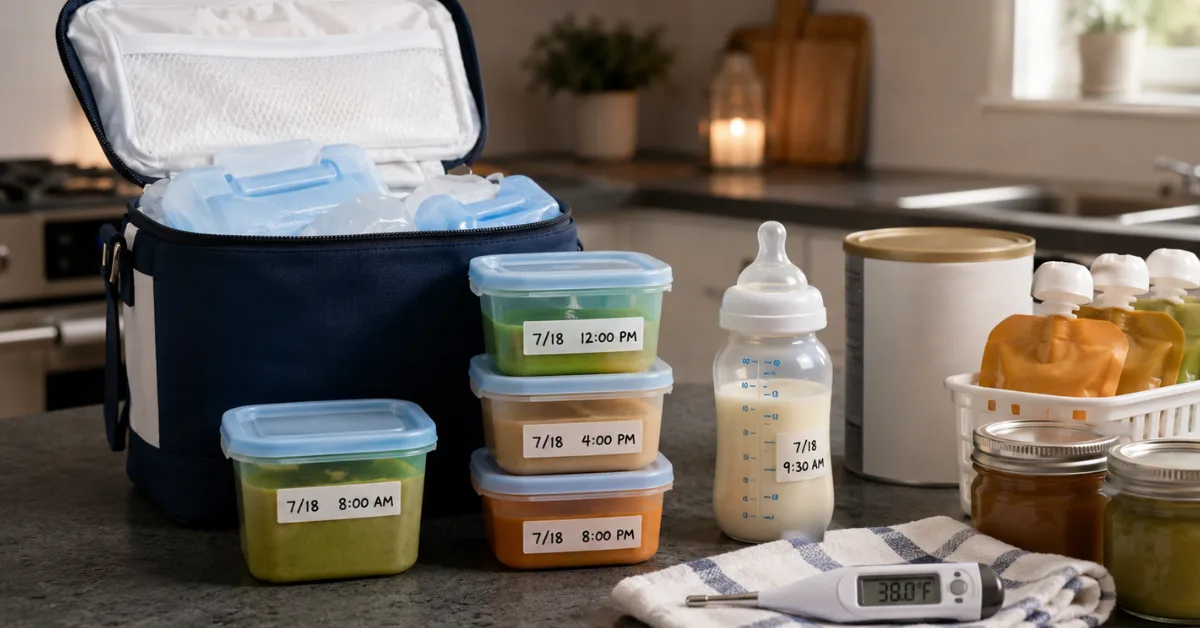
Baby food is more sensitive than many other foods. During a power outage, checking only the best-by or use-by date is not enough. Temperature, cleanliness, time, and whether the baby has already drunk from the bottle or eaten from the container are what matter. A clear storage plan prevents unsafe leftovers from being used again under stress.
Keep unopened jars, pouches, and cans in a cool, dry, dark place. Do not store them next to the stove, water heater, a sunny window, or in a hot vehicle. Check lids, seals, and packaging regularly. Do not use swollen, leaking, badly dented, or damaged containers. Powdered infant formula should be kept dry at normal room temperature, not in the refrigerator. After opening, follow the manufacturer’s directions; many containers must be used within one month. Write the opening date clearly on the lid.
Prepare formula as close as possible to feeding time. According to the CDC, prepared infant formula must be used within two hours of preparation. Once the baby starts drinking, the limit is one hour. Throw away anything left in that bottle because saliva can introduce germs. If a freshly prepared bottle has not been used, refrigerate it immediately and use it within 24 hours. Never add extra water or extra powder by guesswork to stretch supplies or make the feeding stronger.
The same principle applies to baby purée: take out only the amount needed with a clean spoon. Do not feed directly from a storage jar if the remainder will be saved. Opened or freshly made fruit and vegetable purées usually keep in the refrigerator for two to three days. Food containing meat or egg is more delicate and, depending on the recipe, should be used within one day or no later than one to two days. Homemade baby food is best placed right away in small, clean portion containers, labeled with the contents and date, and quickly chilled or frozen.
For a blackout, a refrigerator thermometer is more reliable than instinct. Chilled baby food should be stored at no more than 40°F or 4°C. A closed refrigerator can keep food cold for about four hours during a power outage, so open the door only when necessary. If the outage lasts longer, move the most important baby portions to a prepared cooler with frozen ice packs. Check the temperature and keep baby food separate from raw meat, leaking packages, and dirty items.
Opened formula or other highly perishable baby food that has been above 40°F or 4°C for more than two hours should be discarded. When the surrounding temperature is above 90°F or 32°C, one hour is already the critical limit. Do not rely on smell, appearance, or a taste test. Harmful organisms may be present even when the food seems normal. For an infant, throwing doubtful food away is safer than experimenting.
For emergencies, keep small unopened portions available: ready-to-feed formula that the baby already tolerates, shelf-stable jars or pouches, safe water as required by the manufacturer, clean bottles or cups, disposable spoons, paper towels, trash bags, and a waterproof marker. Large containers are inconvenient during a blackout because cooling and handling leftovers become more difficult once they are opened.
The main rule is simple: record the opening time, cooling temperature, and start of feeding instead of estimating them. This creates a practical routine: use small portions, remove food cleanly, chill it quickly, keep doors closed, and discard unsafe leftovers without hesitation.
This tip does not replace individual advice from a pediatrician, midwife, or the responsible health authorities.
Sources: Centers for Disease Control and Prevention, Infant Formula Preparation and Storage, updated May 14, 2026; U.S. Food and Drug Administration, Handling Infant Formula Safely; FoodSafety.gov, People at Risk: Children Under Five and Food Safety During Power Outage.
Guides
General
19.07.2026
Storing baby food safely during a blackout: chill, portion, and discard on time
Infant formula, purées, and opened jars can spoil quickly. Clear time limits, small portions, and a cooling plan help protect your baby from harmful germs.