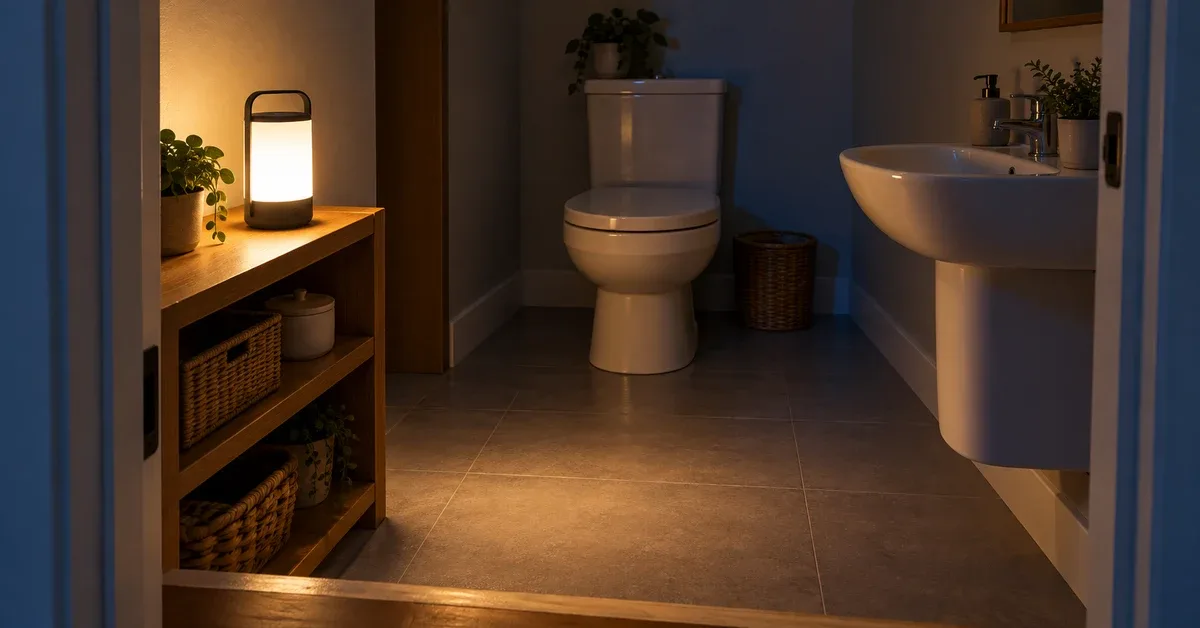
During a power outage, a bathroom without a window can become completely dark. Even a short visit to the toilet requires a dependable light. Prepare a fixed location for a portable battery light you already own. The aim is a simple aid that is easy to find for this room. A phone flashlight may help temporarily, but avoid making it the only planned option when the phone also serves other purposes.
Before choosing the light, read the instructions for that particular device. Battery power does not make a light waterproof. Protection against moisture depends on the model, and a protection rating applies only under its stated conditions. Use the light according to its manufacturer’s instructions. This tip concerns a portable device; it does not describe installing equipment or changing the electrical fittings in a bathroom.
Choose a dry, stable, accessible location outside areas exposed to water and splashing. A basin or bathtub edge and loose fabric are unsuitable resting places. The light should not easily fall. If the room has no suitable position, keep it at a known dry location in the hallway and bring it with you. Do not run charging cables or extension leads through the wet area for this arrangement.
Start by looking at everyday life in your own home. Who uses each room, who needs help, and where are the supplies you already own? A small paper overview can reveal unfinished tasks. What matters is whether equipment is accessible and easy to operate, rather than how much has been bought. Discuss particular needs with the people concerned instead of choosing untested arrangements on their behalf.
Check existing lights calmly while normal power is available. Does the switch work, do the batteries match the device, and is its instruction manual available? Follow the manufacturer’s charging instructions for rechargeable batteries. Keep spare batteries dry and organized in a known location. A brief function check does not establish the full operating time. Also check the information for the brightness setting you intend to use.
Agreements turn separate objects into useful preparation. Everyone at home should know the designated location of a light and where it belongs after use. A clear route makes access easier. If someone borrows the device for another task, they should return it afterward. Review these simple arrangements together occasionally and change them when rooms, everyday habits, or a person’s support needs change. Make the agreement understandable to those using it.
Test the position in a controlled way while normal power is available. Switch off only the usual room light, keep a second light ready, and stand on a dry floor. Check whether the switch, threshold, and walking route are clearly visible. Watch for glare from mirrors. Nobody needs to grope around or take an unsafe route in darkness. Adjust the position with the room light back on.
Include the people who actually use the bathroom or toilet. Accessibility and ease of operation may differ when viewed from different positions. Charge or replace batteries according to the instructions in a suitable dry location. A damaged light or one that has become wet is not a reason to improvise a repair. After use, return the working device to its agreed position so it remains available for the next visit.
Guides
General
10.10.2026
Bathroom lighting: prepare a safe place for a portable light
Keep a portable light dry and accessible, check its position, and agree how everyone at home will use it.