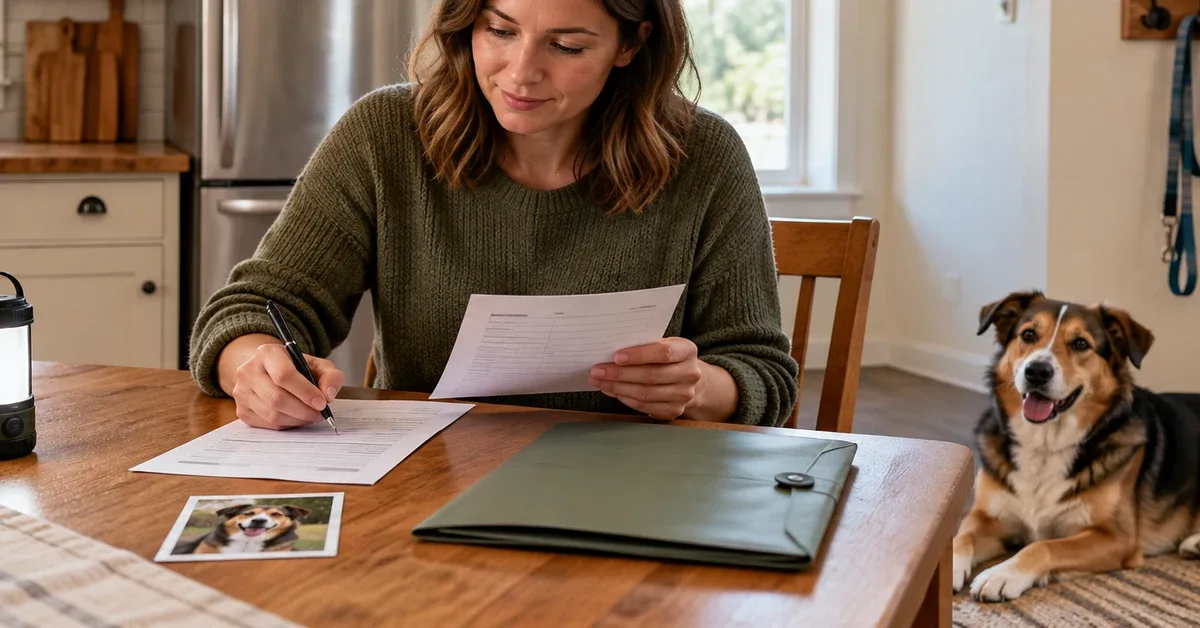
During a power outage, pet care can become harder when essential details are stored only on a phone. A flat battery or unavailable connection may prevent another person from checking them. Prepare a short paper care sheet. It should describe familiar routines clearly and remain accessible with existing pet records. This task does not require complicated new equipment; it mainly involves organizing information you already know.
Start with the animal’s name, species, and recognizable features. A current printed photograph helps identify the right pet, especially in a household with several animals. Add the responsible person’s name and phone number, plus verified contact details for the veterinary practice. Include a local emergency veterinary service only after checking its actual details. A number written on paper cannot guarantee that a service will be reachable during an outage.
Write down established feeding times and the amounts currently used. Identify the usual food clearly instead of saying “as normal.” Briefly add any already agreed special requirements. Copy medical information only from current veterinary instructions and clarify uncertainty with the practice beforehand. The sheet organizes care; it does not provide directions for new treatments, changed doses, or improvised replacement feeding. Keep the instructions understandable to the person who will use them.
Also note where food, allocated drinking water, bowls, and suitable transport equipment are kept. Depending on the pet, these may include a leash, harness, or appropriate carrier. The caregiver needs to find existing supplies and know how to use them safely. “Bottom drawer in the hallway” is more useful than “with the pet things.” Electricity-dependent care and particular housing requirements need their own suitable preparation, with relevant professional guidance.
Ask a trusted person whether they can and want to take responsibility. An unspoken assumption is insufficient. Review the tasks together while normal services are available and introduce the animal, its habits, and the equipment. Agree how authorized access to the home will work. Do not put entry codes or hidden-key locations on an openly displayed sheet or in a public message. Share practical arrangements directly with the agreed person.
Date the sheet and keep it in a protected folder that is easy to find. Copies of existing vaccination or treatment records can accompany it; originals retain their secure storage place. Give the designated caregiver only the information they need. An additional digital copy may help but does not replace the paper. People at home should know the folder’s location without private details being displayed for visitors to read.
Review the documents together without using the internet. Can the backup caregiver find the folder, identify the pet, and understand the tasks? Can they locate the listed equipment? Neither electricity nor phones need to be switched off for this check. Correct unclear wording, old numbers, and uncertain responsibilities now. If something remains unanswered, mark it as an open question rather than inventing an apparently suitable answer for the sheet.
Update the sheet when contacts, food, or agreed routines change, and remove obsolete copies. The American Red Cross recommends including pets in emergency planning and keeping care information and veterinary contacts available. Germany’s BBK checklist includes pet food and important phone numbers on paper. This suggested care sheet puts preparation into practice: gather known information, agree who is responsible, and check usability before an outage.
Guides
General
11.10.2026
Pet care during an outage: keep essential details on paper
Agree on pet care in advance and keep the animal’s routine, key details, and contacts available without a phone.