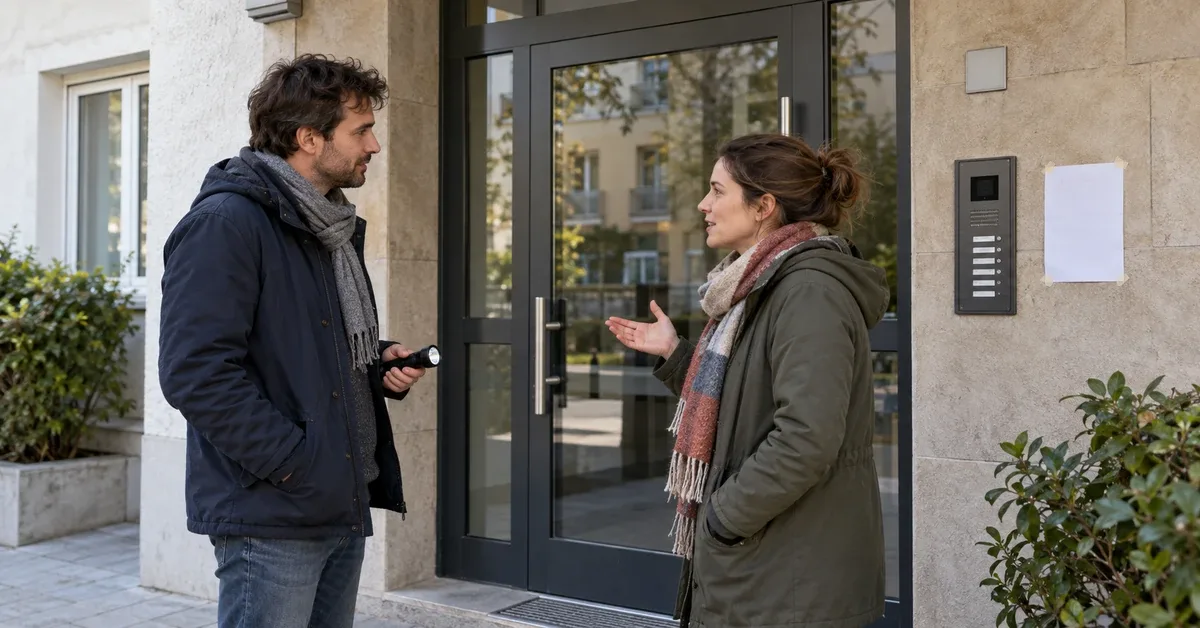
During a power outage, a doorbell may remain silent even when somebody is home. An intercom may also stop working; connected devices can have additional dependencies. The actual behavior depends on the installation and any backup supply. One simple question helps with preparation: how will we notice an expected visitor if the usual call does not reach us? An agreed routine is more useful than repeatedly pressing the same button.
First ask the building manager or owner which functions the entrance equipment actually requires. Ringing, speaking, video transmission, and opening the door are separate tasks. A working display does not prove that everything else works. Ask about the intended behavior during an interruption and permitted operation. Do not open housings, alter wiring, or try other people's access codes. This is a task of organizing a visit, not a repair task.
Agree on a manageable time window and a meeting point outside the correct entrance. Decide how long both sides will wait and what happens if someone is late. One option is a brief agreed check at the entrance within that window. This is a voluntary arrangement, not an obligation to wait there continuously. Make the trip only if the route and lighting are safe and your mobility allows it.
A phone call or message may provide an additional option, but it should not be the only assurance. Internet and mobile services may be disrupted during a larger outage. Write names and agreed times on paper beforehand. Keep that list inside the home or with the people involved. Also plan for receiving no reply: will the visitor wait, come back later, or postpone the appointment? Agree on that rule beforehand.
For someone unable to reach the entrance safely, limited assistance can be arranged with a trusted person. Explicitly agree on consent and who is responsible. Nobody should unexpectedly become responsible for every apartment. Relatives or regularly visiting services should know the agreed alternative contact. Keep phone numbers and specific assistance details private. A public notice does not need to reveal health information or the times when individual residents will be away from their homes.
If a notice at the entrance would help, agree on it with the responsible person. A short explanation that the bell may not work and a general agreed procedure are sufficient. Do not publish PINs, key locations, private phone numbers, or a list of people living alone. Explain the arrangement in a language people understand. Remove the notice once the disruption ends to avoid misleading later visitors.
The visit plan must preserve building security. Do not wedge a door open or modify locking or fire-safety equipment. Do not admit unfamiliar people solely because they claim to have an official role. Receive expected visitors using the normal permitted procedure. Keep escape routes clear and do not improvise an electrical door release. If access cannot be achieved safely, rearrange the appointment or contact the responsible building manager.
After electricity returns, check normal functions with a second person where this is safe: does the call arrive, does conversation work, and can the entrance be operated as intended? Report any remaining fault by describing the specific function observed. The most useful preparation here is a clear agreement: the right people, the right time, a safe entrance, and minimal public personal information.
Guides
General
09.10.2026
Doorbell out: arrange visits during a power outage
A simple visit plan helps when a doorbell or intercom stops working. Agree on times while protecting building access and personal information.