A blackout can turn an ordinary kitchen into a room full of useless appliances within seconds. The electric stove, microwave, kettle and often the range hood stop working. Anyone who only then starts looking for an alternative can quickly reach for the wrong device. A safe plan therefore does not begin with a flame, but with three clear stages: eat cold food, use only appliances approved for indoor use, and move every other cooking device outdoors.
During the first few hours, you usually do not need to cook at all. Bread, shelf-stable spreads, canned food, nuts, dried fruit, granola bars and ready-to-eat foods save fuel and avoid unnecessary risks. Open the refrigerator and freezer as rarely as possible. During a longer outage, you can deliberately use perishable food first, provided it has remained safely chilled. It is better to plan one hot meal per day than to waste fuel on every small item.
Only appliances whose manufacturers expressly permit indoor use may be used inside the home. Depending on its design, a gas stove may still work without grid electricity, but it must be lit only according to the operating instructions. If you smell gas, do not use it. A fondue set with fuel paste or a small food warmer can heat limited quantities, but neither replaces a full stove. Place every appliance securely on a noncombustible surface, keep curtains, paper and children away, and never leave an open flame unattended. Regular ventilation is still necessary.
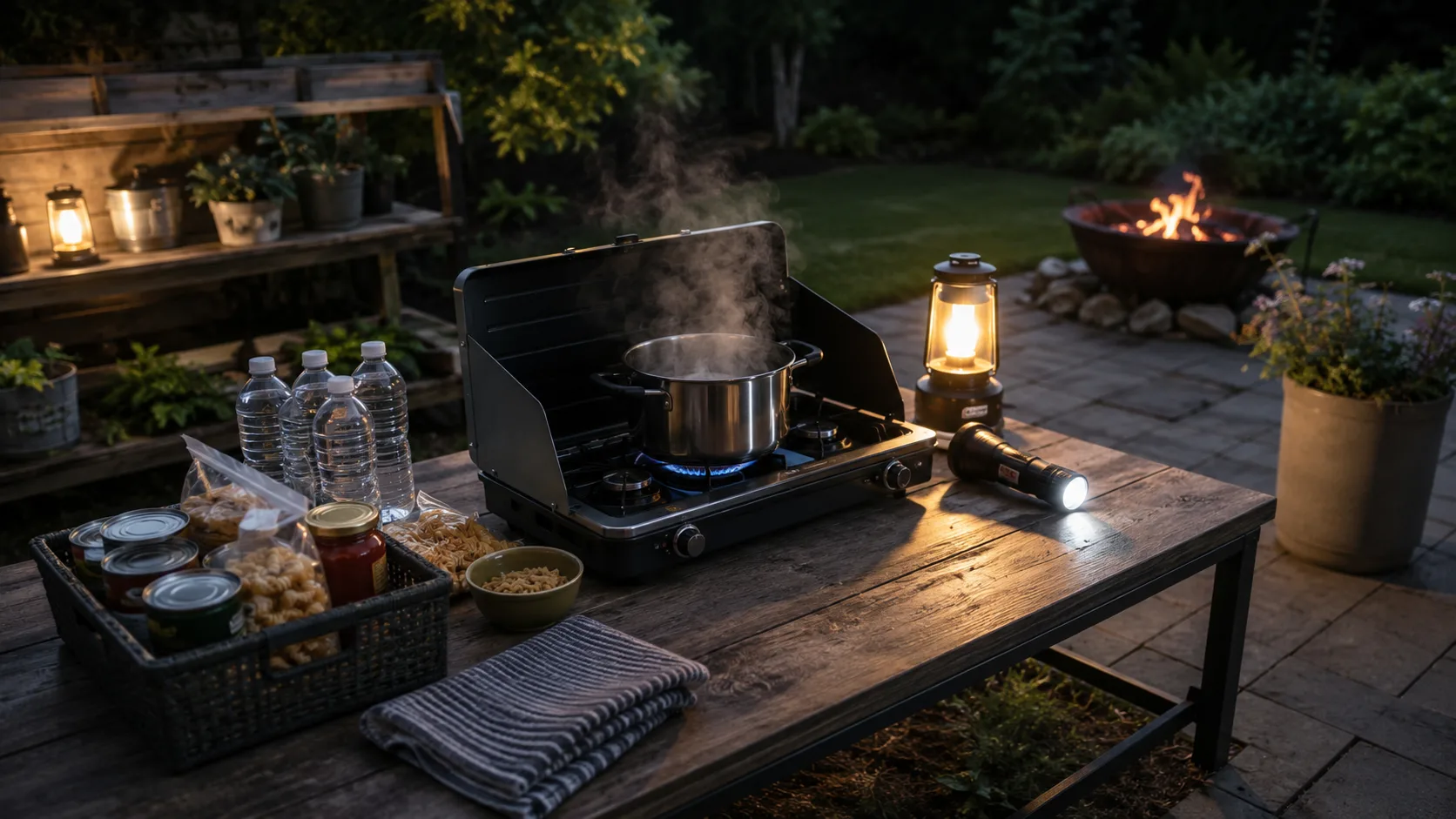
Camp stoves, portable gas burners without indoor approval, charcoal grills and gas grills belong outdoors. Never operate them in a home, basement, garage, tent or partly enclosed area, even with a window or garage door open. Carbon monoxide is invisible and odorless. Exhaust can also enter the building through doors, windows and vents. Choose an open, stable location well away from the house. A balcony is suitable only when the appliance, building rules and local regulations allow it and fumes cannot enter living spaces.
Headache, dizziness, weakness, nausea or confusion can indicate carbon monoxide poisoning. Do not calmly switch off the appliance first or debate the cause. Everyone must move into fresh air immediately, and the local emergency number must be called. A battery-powered carbon monoxide alarm is a useful additional safeguard, but it can never make an unsuitable indoor appliance safe.
Save fuel with simple meals. One pot, a well-fitting lid and ingredients cut into small pieces reduce cooking time. Couscous, oatmeal, thin pasta, soups, canned foods and precooked legumes require less energy than dry beans or large pieces of meat. Measure water carefully, prepare several portions together and keep the flame no larger than necessary. Fuel canisters, fuel paste and fire starters must be stored cool, dry and according to the manufacturer’s directions, never beside the cooking flame.
Decide on your emergency cooking station before an outage occurs. It should include a suitable stove, the correct fuel, a lighter and matches, a manual can opener, a sturdy pot, oven mitts, a fire blanket or fire extinguisher, and a bad-weather plan. Test the appliance beforehand in the intended safe location. Anyone who knows how it works, how much fuel it uses and where it can be operated can cook calmly during a blackout instead of experimenting with open fire.
Sources: German Federal Office of Civil Protection and Disaster Assistance, guidance on cooking without electricity and carbon monoxide; Centers for Disease Control and Prevention, power outage safety and carbon monoxide prevention.
Guides
General
15.07.2026
Cooking without electricity: A safe three-stage plan for hot meals
Cold meals, indoor-approved appliances and safe outdoor cooking areas: prepare food without underestimating carbon monoxide or fire hazards.