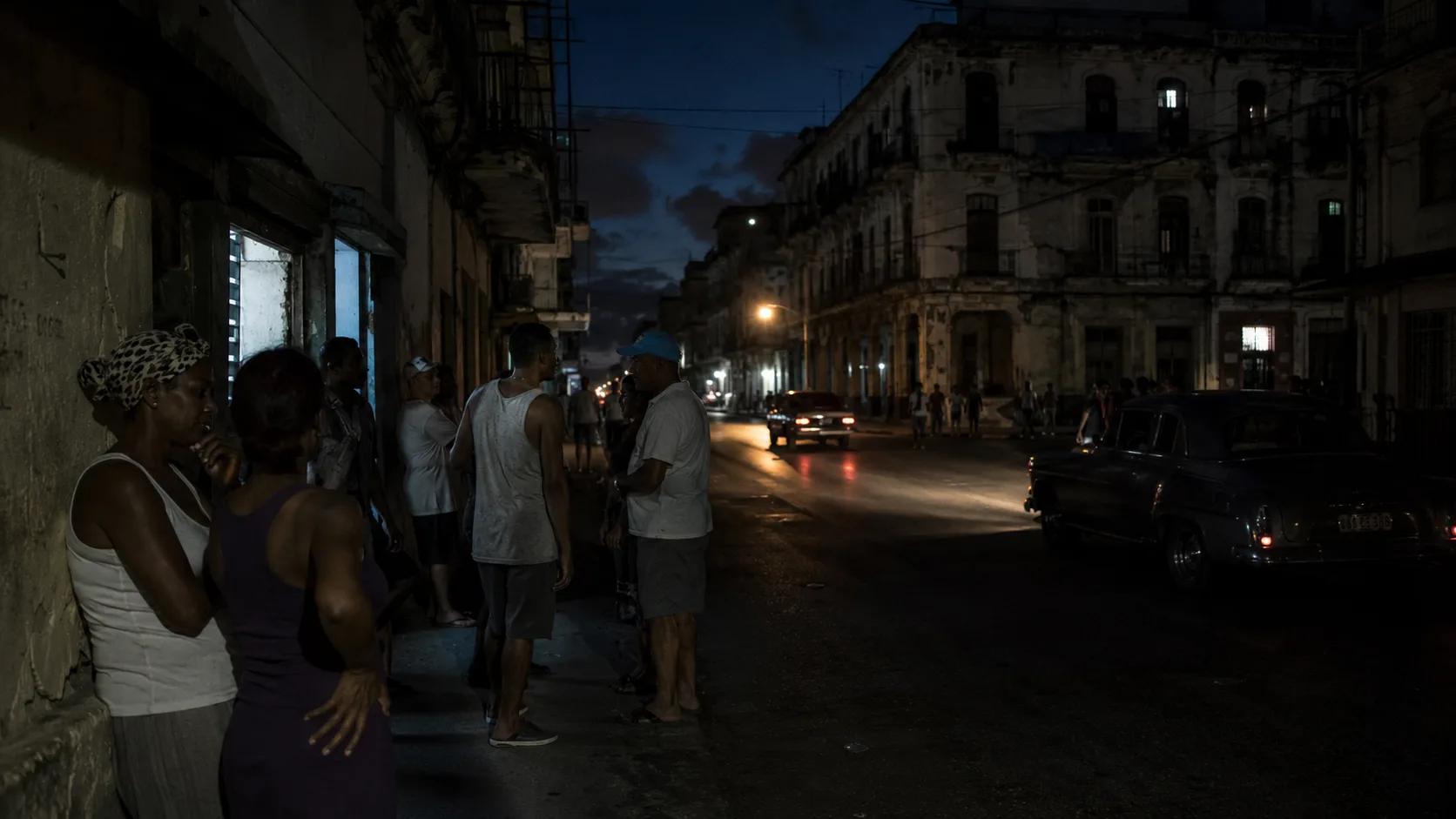
The lights went out across Cuba again on Tuesday, July 14, 2026. At 11:05 a.m. local time, the entire national electricity system disconnected from the grid. This was not an outage affecting only a few neighborhoods or provinces: nearly ten million people suddenly lost their regular electricity supply. It was the island's third nationwide collapse in only eight days, a sequence alarming even for Cubans already accustomed to long power cuts.
According to the state-owned Unión Eléctrica, the sudden shutdown of a generating unit in the eastern province of Holguín caused a sharp frequency fluctuation. The delicate balance between electricity generation and demand broke down, and the entire Sistema Eléctrico Nacional switched off. Authorities immediately activated restoration protocols. The process begins by creating small, separate power islands intended to supply hospitals, water facilities and food-processing plants. Technicians then try to reconnect these microgrids step by step until a stable national system can be rebuilt.
By the afternoon, however, it was clear how difficult that process would be. Authorities said that only about four percent of customers in Havana had regained electricity. Power was initially directed to hospitals in Guantánamo and Cienfuegos, while at least the historic center of Matanzas was reconnected. For most residents, the blackout still meant no fans in tropical heat, water pumps standing still, interrupted telephone and internet services, and refrigerators whose contents became more vulnerable with every passing hour.
Images from Havana told more than any statistic. People collected water from public taps, children tried to cool down in doorways, and portable batteries were carried through the streets like precious everyday possessions. Traffic lights failed, generators hummed outside individual buildings, and electric motorcycles or tricycles were among the few vehicles that could still move. What would be a state of emergency elsewhere is increasingly becoming a bitter routine in Cuba. Reuters also reported growing frustration and small night-time protests in which residents banged pots and pans to draw attention to their situation. Anger has been directed both at the authorities and at United States sanctions.
The latest collapse struck a power system that has suffered for months from fuel shortages, aging generating plants and almost no reserve capacity. According to the Associated Press, Cuba produces only about 40 percent of the fuel it needs. Political tensions and tighter United States measures have also made additional energy imports much more difficult. The result has been long daily power cuts, restricted public transport, shorter working hours and severe pressure on health services.
The speed at which these failures are repeating is particularly dramatic. After nationwide blackouts on July 6 and 10, another total collapse followed. Every restart strains equipment and personnel, while households have little time to refill water containers, recharge batteries or cool food again. The question is therefore no longer only when electricity will return. Many Cubans are asking how long the system can remain stable once it has been restored.
The case shows how quickly a technical failure can become a nationwide supply crisis. When electricity, water, communications, refrigeration and transport fail at the same time, every prepared reserve matters. For Cuba, Tuesday brought another battle for every megawatt, while millions of people faced another night hoping that the lights would stay on longer this time.
Source: Reuters, Associated Press, Unión Eléctrica, Granma. Information current to July 15, 2026.
Incidents & analysis
General
15.07.2026
Cuba plunged into darkness again: third nationwide blackout in just eight days
Cuba's power grid collapsed completely again on July 14, 2026. It was already the third nationwide blackout in just eight days.