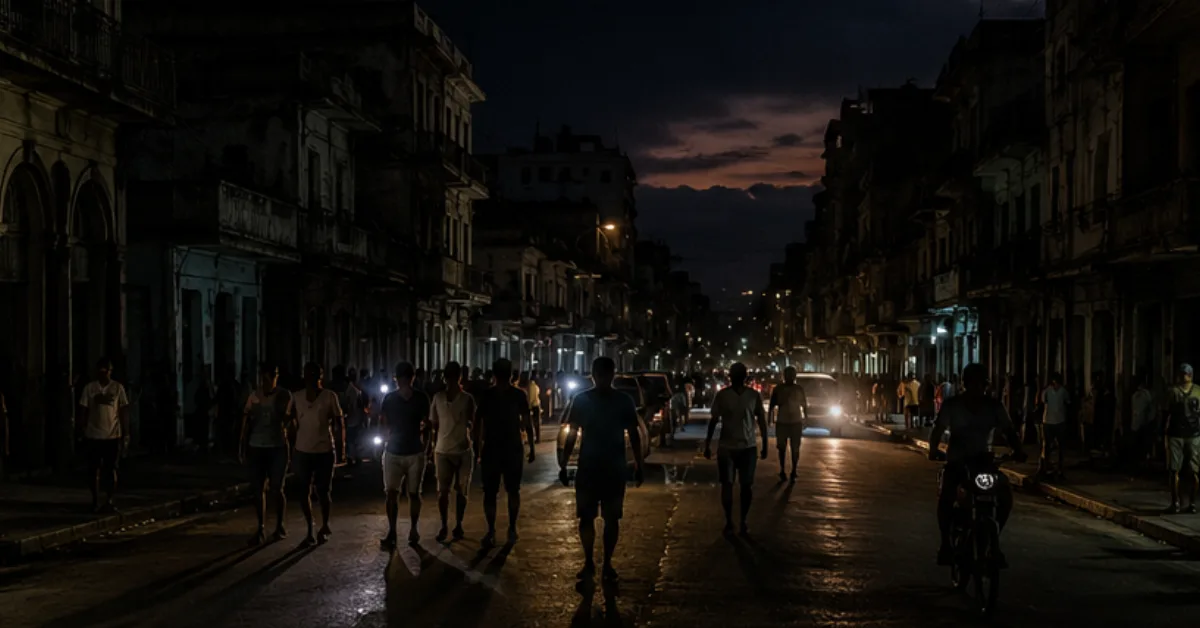
Cuba has been plunged into darkness yet again: the national electric grid collapsed completely late Sunday evening, August 2, 2026. Around ten million people were suddenly left without regular power service. According to the state-owned grid operator Unión Eléctrica de Cuba, the National Electric System was totally disconnected. No precise technical cause was initially announced.
The timing could hardly have been worse. Only a few hours earlier, electricity had been restored in parts of western Cuba, including Havana, following a regional grid failure. Then came the next major blow. Within a very short time, lights, air conditioners, refrigeration equipment and many communication links failed again. In the tropical summer heat, every additional outage becomes another severe test for the population.
The latest collapse is not an isolated incident. Cuba experienced three nationwide blackouts in July alone. It is becoming increasingly clear just how unstable the electric system has become. Many power plants are old, spare parts are scarce and fuel supplies are insufficient to meet demand reliably. Even when individual transmission lines and generating units return to service, the system remains vulnerable to fresh faults and cascading failures.
For residents, the blackout means far more than dark homes. Refrigerators and freezers stop working, food spoils more quickly, water pumps may shut down and charging cell phones becomes difficult. Stores, workshops and small businesses lose income, while hospitals and other essential facilities must depend on emergency generators. Yet generators are useful only for as long as enough fuel remains available.
Risks also increase on the streets. Traffic lights can fail, public lighting remains dark and an already strained public transportation system faces further disruption. Families try to preserve the remaining charge in their phones, store water and prepare meals before supplies become unusable. Anyone without a generator, solar equipment or a charged power bank is almost entirely dependent on the speed of repair and restoration work.
The energy crisis is being intensified by severe shortages in fuel imports. Venezuela was one of Cuba’s most important oil suppliers for many years, but those deliveries have fallen sharply. Imports from Mexico have also recently stopped. At the same time, United States sanctions and political pressure make it more difficult to purchase fuel, spare parts and modern technology. Cuba’s government primarily blames Washington for the crisis. Critics also point to decades of delayed investment and the poor technical condition of many facilities.
On Monday morning, it was still unclear how quickly the nationwide grid could be stabilized. After a total collapse, engineers generally try to establish small island networks, restart power plants step by step and prioritize essential users such as hospitals, water utilities and communication systems. This so-called black start is complicated: generation and consumption must be balanced precisely at every moment. A single mistake can set the recovery process back again.
Even a successful reconnection therefore does not mean that normal service has returned. After previous collapses, electricity came back only gradually, while individual regions continued to face long outages. The current crisis shows that repairing one line or restarting one generating unit does not solve the underlying problem: the entire system lacks sufficient reserves.
Cuba now begins another day marked by heat, darkness and uncertainty. The decisive question is no longer simply when the electricity will return. More and more people are asking how long a grid can survive when it repeatedly collapses completely within only a few weeks.
Source: Reuters, August 3, 2026.
Latest updates
General
03.08.2026
Cuba goes dark again as national power grid collapses
Cuba has suffered another nationwide blackout. About ten million people are affected as fuel shortages, aging power plants and a lack of reserves push the grid to its limits.