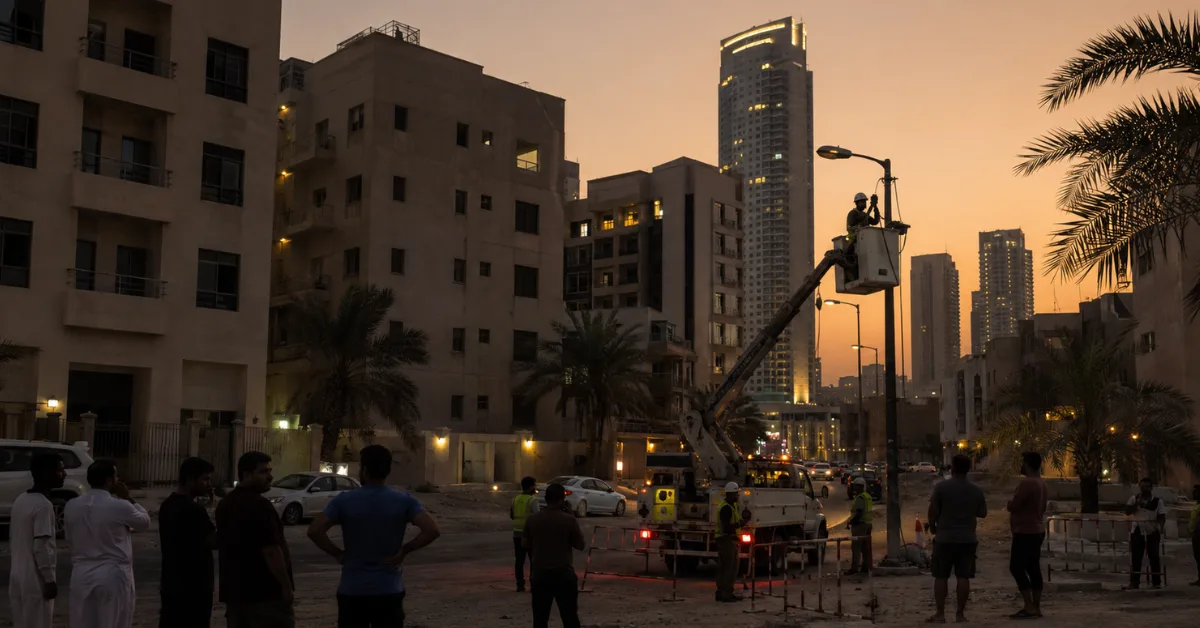
The lights went out in the Gulf – in a region many people associate with glittering towers, air-conditioned shopping malls and almost unlimited energy. Kuwait said on Wednesday that electricity had been restored to all residential areas affected by outages. Before that, several overhead transmission lines had gone out of service. The result was power cuts in scattered parts of the country.
According to Reuters, Kuwait's Ministry of Electricity, Water and Renewable Energy said emergency teams had completed work to re-feed the affected areas from the grid under an approved emergency plan. On paper, that sounds like a technical routine. For people on the ground, it was anything but trivial. In a hot Gulf country, electricity does not just mean light. It means air conditioning, refrigeration, elevators, water pumps, internet, card payments and, in many situations, personal safety.
Almost at the same time, Bahrain also reported a limited power outage in several areas of the kingdom. Bahrain's Electricity and Water Authority said, according to the state news agency BNA, that supply had been fully restored to all affected areas. So this was not a long national catastrophe and not a total collapse. But it was a sharp little reminder that modern infrastructure is never as untouchable as it looks.
These are exactly the kind of reports that are often underestimated. Once the power comes back, everything feels harmless again. But that is the trap. A power outage does not have to last for days or hit millions of people to cause real problems. Someone trapped in a lift, a family needing to keep medicine cool, parents with small children, or elderly people in a hot apartment will feel the pressure very quickly.
The Kuwait and Bahrain incident is therefore more than a small energy note from the Gulf. It shows that even states with money, technology and deep energy experience still depend on vulnerable networks. Overhead lines can fail. Parts of the grid can drop out. Emergency teams have to react. And while authorities speak of restoration, households may be sitting in the dark, waiting and hoping.
For private households, the lesson is simple. Water, reliable light, charged power banks, a battery-powered radio, a little cash and a clear family plan are not panic. They are basic common sense. Prepared people do not have to improvise wildly when the room suddenly goes quiet, the router dies and the fridge starts warming up.
Source: Reuters, July 8, 2026, "Kuwait restores power to all residential areas after outages; Bahrain says limited outage resolved".
Latest updates
General
08.07.2026
Kuwait and Bahrain power outages show how quickly the lights can go out
Kuwait and Bahrain reported power outages that were later resolved. The incident is a reminder that even wealthy, modern countries are not immune to grid trouble.