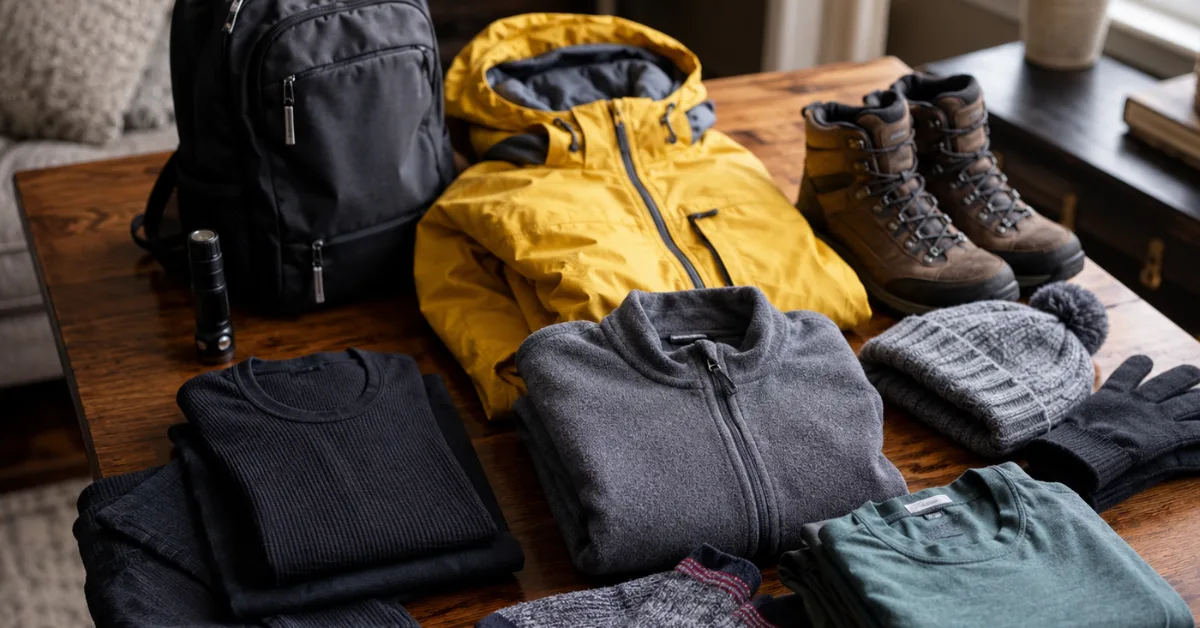
A blackout affects more than the lights. Air conditioning, fans and heating stop, elevators may be unavailable, and stairwells or streets can be dark. Unsuitable clothing makes it easier to become chilled, overheated or injured during cleanup work. A small, carefully prepared clothing set for every person is therefore a practical part of emergency planning.
Pack a complete change of clothing for each household member in a labeled bag or box that is easy to reach. Include underwear, a top, long pants, two pairs of socks, sturdy closed shoes and extra garments suited to the local climate. Do not store the bag in a difficult cellar or behind heavy supplies. Check it at least twice a year and adjust sizes, seasons and personal requirements. Children’s clothing and footwear need more frequent checks.
For changing temperatures, layers work better than relying on one very thick garment. The base layer should move moisture away from the skin, the middle layer retain warmth and the outer layer protect against wind and rain. Several loose layers can be added or removed as conditions change. Wet clothing should be replaced as soon as possible because moisture increases heat loss in cold conditions.
In extreme heat, choose lightweight, loose-fitting and preferably light-colored clothing. An airy long-sleeved top can protect against direct sun without trapping too much heat. Add a broad-brimmed hat or cap, a light neck cloth and dry spare clothing. Heavy, tight or dark garments can increase heat stress. Walking barefoot or only in thin sandals is also risky during a blackout because broken glass and other hazards are easily missed in the dark.
For cold regions or unheated homes, include thermal underwear, a warm fleece or wool mid-layer, a wind- and water-resistant jacket, hat, gloves and scarf or neck warmer. Clothing should not be too tight because trapped air between the layers provides insulation. Keep the head, hands and feet particularly dry. If you begin to sweat, open or remove a layer before the clothing becomes damp.
Sturdy footwear matters more than many people expect. Choose closed, already broken-in shoes with a grippy sole that can provide footing on wet stairs or among debris. Brand-new shoes that have never been worn do not belong in the emergency bag. Add two pairs of dry socks and keep the shoes where they can be reached immediately at night. A small reflective tag or strip on the shoes and jacket improves visibility.
For moving in darkness or working around the home, a high-visibility vest, reflective bands and robust work gloves are useful. The vest should fit over normal clothing. Work gloves protect when moving branches, rubble, metal pieces or broken objects, but they are not a substitute for professional protective equipment. Dusty cleanup may also require safety glasses and a suitable respiratory mask.
In homes using candles, camping stoves or other open flames, clothing needs extra attention. Wide sleeves, loose scarves and long drawstrings can catch fire. Keep clothing away from flames and hot appliances and wear close-fitting sleeves when cooking. Some synthetic fabrics can melt under intense heat and stick to the skin. No item of clothing makes it safe to operate a grill, generator or fuel-burning stove indoors.
Consider older people, babies, people with limited mobility and anyone using medical equipment separately. Fastenings must be easy to handle, shoes must fit securely and clothing must not obstruct tubes, dressings or mobility aids. Store every item clean and completely dry, preferably with an inventory list. A useful clothing reserve is not especially large; it fits properly, is accessible and is checked regularly.
Guides
General
24.07.2026
Emergency clothing for a blackout: Protection from heat, cold, and darkness
A prepared change of clothing can protect you during a prolonged power outage from heat, cold, rain, injury, and poor visibility.