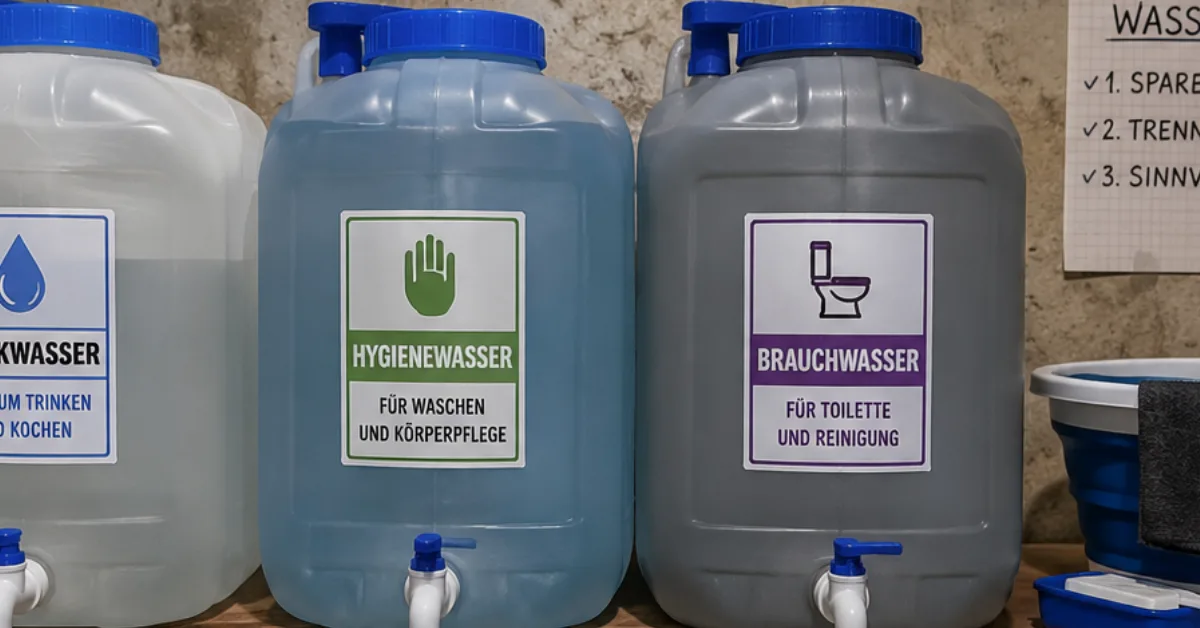
When pumps, pressure systems or water utilities fail during a blackout, clean drinking water quickly becomes the most valuable household supply. Water is still needed for toilets, floors, hands, dishes and basic cleaning. This is where non-potable utility water is useful. It must be kept clearly separate from drinking water so nobody accidentally drinks contaminated water or uses it for cooking.
The simplest system is a three-container plan. Container one is reserved exclusively for drinking water. Keep it closed and label it clearly “DRINKING WATER.” Container two holds non-potable water for relatively clean tasks, such as washing hands with soap, wiping surfaces or doing a limited sponge bath. Container three is only for toilet flushing or heavy cleaning. Mark it prominently “DO NOT DRINK” and store it away from the drinking-water supply.
Decide before an outage how much water may be used each day for each purpose. Drinking and food-preparation water always come first. Hand hygiene and essential cleaning follow. Toilet flushes, floor washing and other jobs should be reduced or combined. A simple daily allowance prevents the entire supply from being used on the first day.
Suitable non-potable sources can include tap water filled in advance, collected rainwater or water that has only been lightly soiled during washing. Cold water that normally runs down the drain while waiting for hot water can also be collected before a crisis. Use sturdy, clean buckets or water cans with lids. Never use containers that previously held fuel, pesticides or other toxic substances.
Not all used water can be reused. Water containing feces, diaper residue, blood, vomit, solvents, fuel, strong cleaning chemicals or raw-meat residue must not enter the utility-water supply. Water contaminated by chemicals cannot be made safe by boiling. Do not use it for washing, bathing or cleaning surfaces that come into contact with food.
For toilets, flush manually only when wastewater pipes and the sewer system are functioning and authorities have not issued different instructions. Many toilets can be flushed by pouring water quickly and directly into the bowl. Do not waste drinking water for this. If the sewer system has failed or backflow is possible, stop flushing. The household then needs a separate emergency-toilet setup using strong bags, absorbent material and a tightly closing waste container.
Cleaning also requires the right order. Remove dirt dry first with a broom, cloth or paper. Use water afterward and only in small amounts. Soap remains important for hands; visible dirt should not be handled with hand sanitizer alone. A washcloth and a small basin use far less water than running faucets or a shower.
Keep a small measuring cup or ladle beside each non-potable container. This prevents dirty hands from entering the water and makes the amount easier to control. Children and visitors must know which containers are off-limits. Different colors, large labels and separate storage locations prevent dangerous confusion.
When the supply returns, do not immediately assume the water is safe. Follow advice from the water utility, flush pipes only as instructed and clean all used containers thoroughly. Discard leftover utility water of unknown or doubtful origin and never reclassify it later as drinking water.
Sources: CDC, How to Create an Emergency Water Supply and How to Find Clean Water in an Emergency; US EPA, Onsite Non-Potable Water Reuse Research.
Guides
General
03.08.2026
Non-potable water during a blackout: A three-container plan for toilets and cleaning
Three clearly separated and labeled containers protect drinking water and organize non-potable water safely for hygiene, cleaning and toilet flushing.