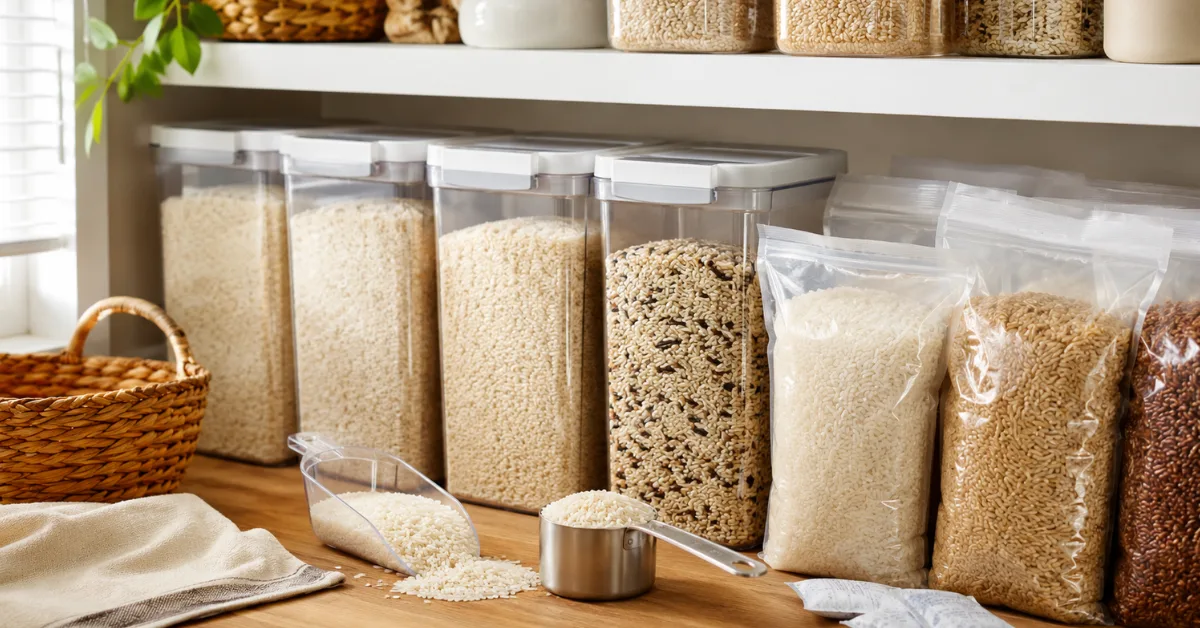
At first glance, rice looks like the perfect food for a blackout supply: inexpensive, filling, widely available and easy to store in a small space. That is exactly why many households buy a large bag of rice, put it somewhere on a shelf and consider the job done. That is not enough. Rice only helps in an emergency if it stays dry, clean and cookable. Moisture, heat, pests and strong odors can turn a sensible supply into a problem very quickly.
For longer-term storage, white rice is usually the better choice. This includes parboiled rice, jasmine rice and basmati rice. In white rice, the germ and outer layers have largely been removed. It therefore contains less fat and turns rancid much more slowly. Brown rice and wholegrain rice may be nutritionally interesting, but they are more difficult as a long-term emergency supply. The natural oils in the outer layer can oxidise. The rice may then smell musty, stale, oily or bitter. Do not try to save it, wash it or talk yourself into using it. Throw it away.
Do not leave rice in a thin plastic bag after opening. Transfer it to food-safe containers that close tightly. Screw-top jars or sturdy storage boxes are fine for smaller amounts. For larger quantities, use food-safe buckets with seals or Mylar bags. The decisive point is not expensive packaging, but keeping out moisture, insects and dust. The storage place should be cool, dry, dark and clean. Rice should not stand directly on the floor, against a damp wall, or next to detergent, paint, fuel, onions, garlic or strong spices. Rice absorbs odors more easily than many people realize.
Check rice before storing it. Look for holes in the packaging, damp clumps, webbing, small beetles, larvae, dust and unusual smells. Anything suspicious should not go into your emergency supply. Label every container with the variety, purchase date and best-before date. Use the oldest rice first and refill the supply. A stock that is never rotated is not a system; it is a gamble.
In humid or tropical regions, splitting the supply is especially important: one small everyday container for regular cooking and several sealed reserve containers. Do not open the reserve all the time. If you want to store rice for a long time, you can use food-grade oxygen absorbers in suitable Mylar bags. But this does not replace dry rice and clean storage. Brown rice should still be bought in smaller amounts and used regularly.
For a blackout, also think about water and a way to cook. Rice is dry, but it is not ready to eat. Without clean water, a pot, a heat source and a little salt, it quickly becomes a nice theory on the shelf. Cook a simple rice meal once without mains electricity. Then you will know whether your supply really works.
Sources: USA Rice, guidance on storing uncooked and cooked rice; Utah State University Extension, recommendations for long-term storage of white rice; USDA FSIS, basics of shelf-stable foods.
General preparation
General
08.07.2026
Tip: Store rice safely for your blackout supply
Rice is a useful emergency food, but only if it is kept dry, tightly sealed and protected from moisture, odours and pests.