A power outage can begin while someone is still away from home: commuting, shopping, or waiting to collect a relative. A prepared travel plan helps. The aim is to distinguish essential journeys from trips that can wait and to remain organized without a continuous telephone connection, rather than rushing out as soon as the lights go off.
Start with your household’s regular journeys. Write down who is usually where and who needs assistance getting home. Children, older people, and people with limited mobility may need different arrangements from independent adults. Decide who handles each pickup. That prevents two people from leaving simultaneously while nobody remains at the agreed place to wait or communicate an unexpected change.
Choose a specific meeting point and a backup arrangement for every important journey. A recognizable, publicly accessible location is more useful than a vague description such as “near the parking lot.” Check whether it remains accessible without powered doors or elevators. Schools and care facilities have their own collection procedures; discuss changes with staff rather than sending children to an improvised meeting point.
Inspect the route in daylight. Locate major intersections, underpasses, construction sites, and narrow sidewalks. Consider an alternative requiring fewer difficult crossings. The shortest route is not necessarily the most suitable one. Download an offline map and keep a paper note with the address and meeting point. Navigation may still work without mobile data, but current disruptions and detours might not be available.
During an outage, first check the situation through whatever official information channels are available. Postpone nonessential shopping and visits. If travel is necessary, allow more time and follow local traffic rules, signs, and police instructions. There is no single worldwide right-of-way rule for an unlit traffic signal. Do not apply a rule from another country automatically to the place where you live.
Walking also requires attention and visibility. Use suitable sidewalks and safer crossing points. Do not step into a roadway merely because a signal is dark or one vehicle has stopped. Wait when the situation is unclear and consider another route. A flashlight and reflective clothing can improve visibility after dark; avoid shining the light into other road users’ eyes.
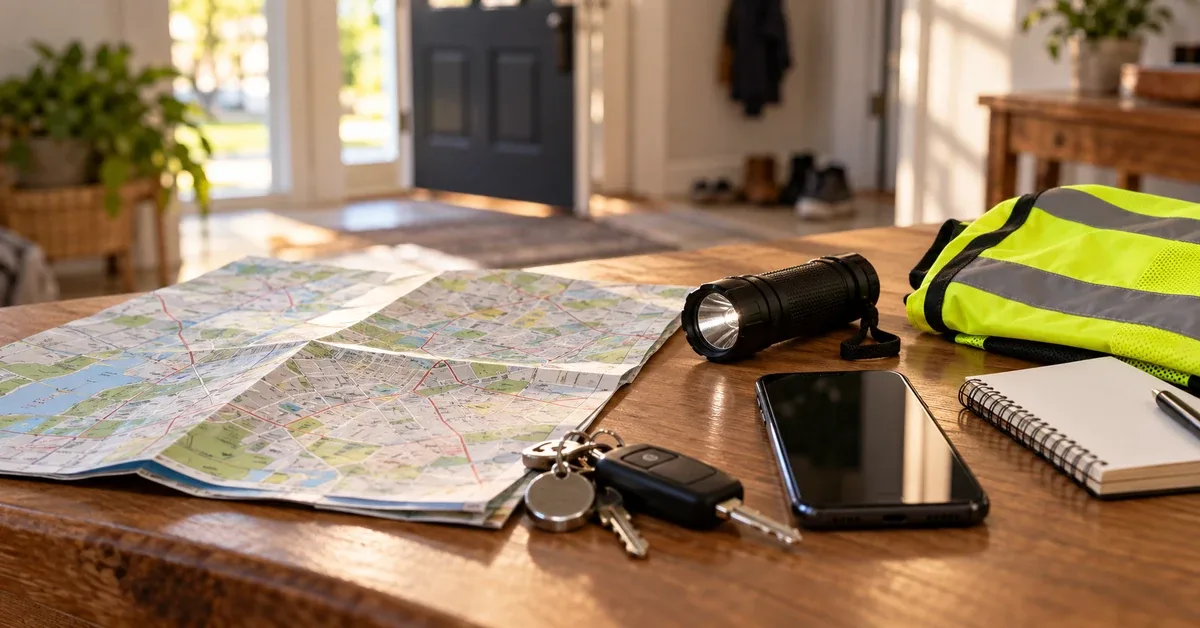
You do not need a large additional kit. Keep keys, essential telephone numbers, a little cash, a charged flashlight, and your route note ready. A power bank can charge a phone but cannot guarantee a working mobile network. Agree beforehand how long to wait at the meeting point and what happens if nobody can be reached. Adjust that waiting time to the person and their care needs.
Discuss the plan together and test the route under normal conditions. Review responsibilities and meeting points after a move, construction work, or changes in care arrangements. Anyone needing assistance should not attempt the route for the first time during an outage. Identify a trusted backup person if the designated collector is delayed, contact them beforehand, and confirm their availability. Give each participant a copy. A few clear decisions about who travels, where, under what conditions, and with which alternative can reduce unnecessary searches and make the return home more predictable.
Guides
General
06.10.2026
Safe travel during an outage: plan pickups and the journey home
A simple travel plan helps families avoid unnecessary journeys and arrange pickups when traffic signals and normal communications fail.