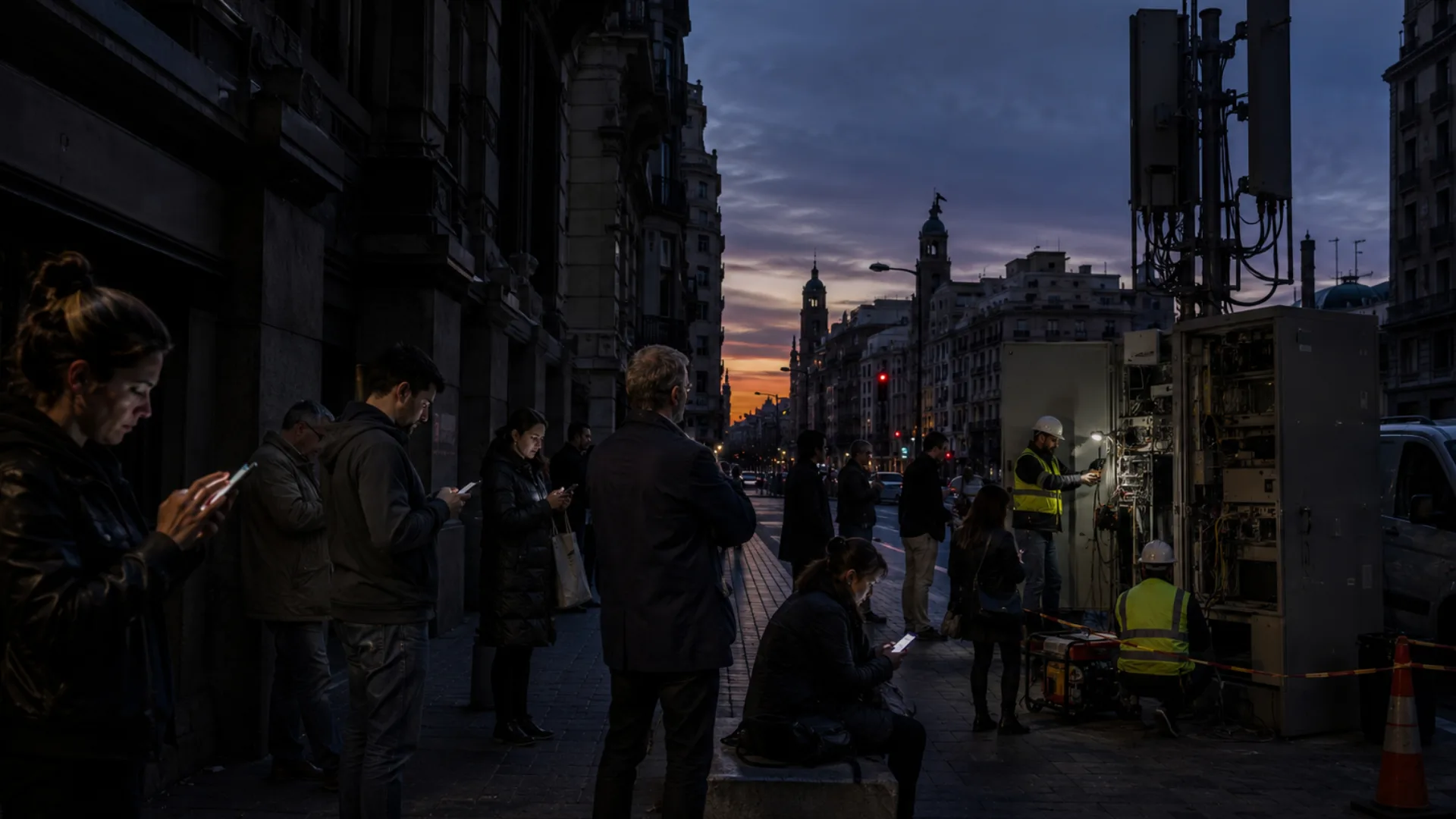
Spain is getting serious. After the historic power outage on the Iberian Peninsula, cell networks should no longer fall silent so quickly during future power outages. According to Reuters, Digital Transformation Minister Óscar López announced a new decree on June 25 2026. It is expected to be approved before the end of the year and will require wireless carriers to provide at least four hours of network coverage for large parts of the population during power outages.
That may sound like dry regulation, but it is actually a clear warning: a blackout is not only about lights, refrigerators and coffee machines. When the cell network goes down, many people lose their most important information channel. That was one of the major problems during the large blackout in Spain and Portugal in April 2025. Millions of people wanted to contact relatives, check news or organize help. But in exactly those moments, communication itself can become the weak point.
The Spanish plan is to be introduced gradually. In the first year, the emergency coverage requirement should apply to half of the population, in the second year to 65 percent and in the third year to 75 percent. The rules will not only affect classic wireless carriers. Operators of important digital infrastructure such as data centers, internet exchange points, satellite systems and submarine cables may also face resilience and security duties if they are large enough.
Network control centers must last much longer. Mid-level management centers should remain operational for at least twelve hours without normal power. Particularly critical control centers, whose failure could affect an entire country, should be able to bridge 24 hours. That shows how seriously Spain is taking the lessons from the blackout.
A more resilient cell network does not replace private preparedness. Four hours are better than nothing, but they are not a free pass. Batteries can run empty, mobile towers can become overloaded, internet services can fail and emergency call centers can come under pressure. Anyone who relies only on a smartphone in the first minutes of a power outage is relying on technology that itself needs electricity, data links and functioning infrastructure.
For households, the message is simple: the phone matters, but it must not be the only plan. Important phone numbers should be written down on paper. A family meeting point should be agreed in advance. A battery-powered radio remains useful. Power banks should be charged. Important information should also be available offline.
Spain is now responding politically to an experience many people felt very directly at the time: during a blackout, silence can be more dangerous than darkness. When nobody can be reached, uncertainty, rumors, stress and chaos grow quickly. That is exactly why communication belongs in every serious blackout plan.
Source: Reuters, June 25 2026, Spain to require minimum four-hour mobile coverage in power outages.
Latest updates
Spain
25.06.2026
Spain hits the emergency brakes after the blackout: cell networks must last four hours
After the severe Iberian blackout, Spain wants wireless carriers to keep networks alive longer during power outages. For households, the message is clear: communication needs a plan B.