After a storm, strong winds or a sudden power failure, the first reaction should not be to walk outside immediately and search for the cause. Damaged trees, loose branches and downed electrical lines are among the most dangerous consequences of a weather-related outage. A simple storm-and-power safety check helps a household assess the situation in a fixed order without taking unnecessary risks.
Start indoors. First determine whether only a breaker has tripped or whether neighboring homes and streetlights are also dark. If you smell burned plastic, hear unusual crackling or see sparks, do not handle the electrical panel unnecessarily. If there is smoke or a fire risk, leave the building and call emergency services. Use a flashlight rather than an open flame.
Next, look outside from a protected window or doorway. Do not search for damaged wires in darkness. If you see a cable on the ground, in a tree, across a vehicle or touching a fence, keep a large distance. A line can remain energized even when it is motionless and produces no visible sparks. Do not touch branches, metal fences, vehicles or standing water that could be in contact with it.
Create a clear safety zone for the household. Children and pets remain indoors or in another protected area. Nobody walks beneath damaged trees. Do not move a vehicle if a conductor lies over it or immediately beside it. Report the hazard to the utility or fire department and describe the location as precisely as possible.
Only after the immediate surroundings are safe should the normal outage routine begin. Switch off or unplug sensitive electronics. Leave one light switch on so you notice when power returns. Open the refrigerator and freezer as little as possible. Use power banks deliberately and reduce unnecessary mobile-data and screen use.
If you own a generator, never operate it inside the home, garage or near windows. Carbon monoxide is odorless and can be fatal. Generators belong outdoors at a safe distance from buildings. Connection to household wiring should only be made through a properly installed transfer system. Improvised backfeeding through an outlet can kill residents and utility workers.
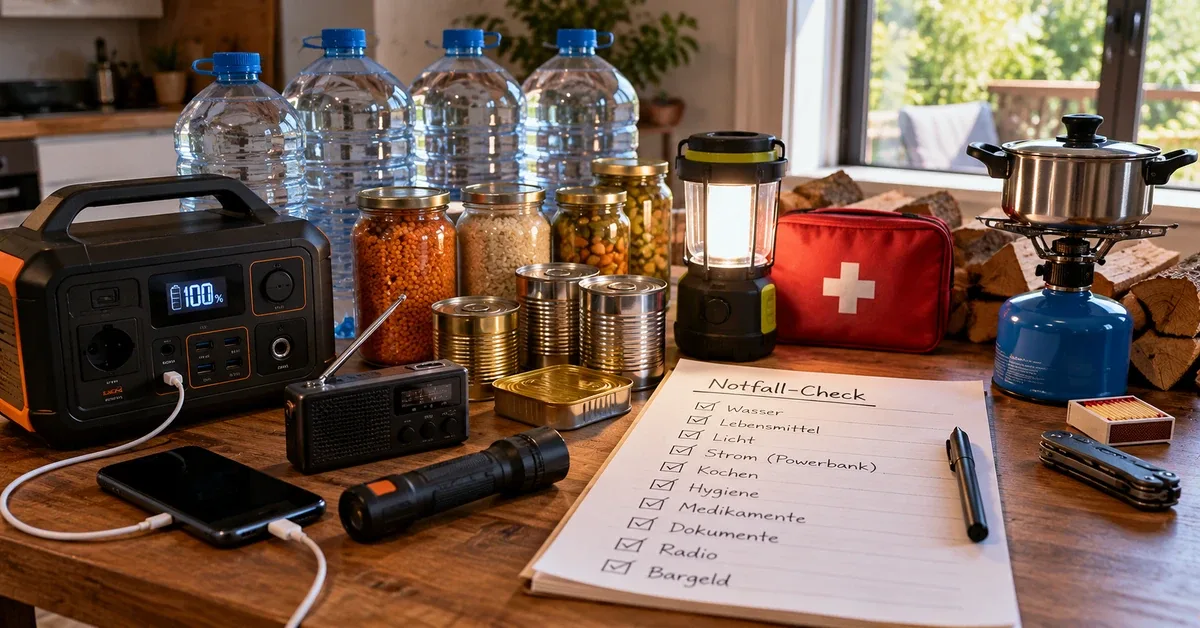
Keep a small storm-power checklist with your emergency documents. Include the utility number, emergency services and important contacts, followed by five steps: check indoors, observe outside only, stay away from lines, report hazards, then begin the outage routine. In a stressful situation nobody has to invent the sequence.
After power returns, inspect the surroundings again in daylight. Damaged branches can fall later, repairs may be temporary and wet areas can remain dangerous. Restart larger appliances one at a time and check any device that behaved unusually before continuing to use it.
The essential rule is simple: treat every downed line as dangerous until the utility confirms otherwise. Blackout preparedness is therefore not only about supplies and batteries. It is also about following the right order after storms and outages and avoiding preventable hazards.
Guides
General
05.10.2026
Storm power check: how to stay safe around damaged lines
A fixed safety routine after storms and outages helps households avoid downed lines, damaged trees and unsafe generator use.