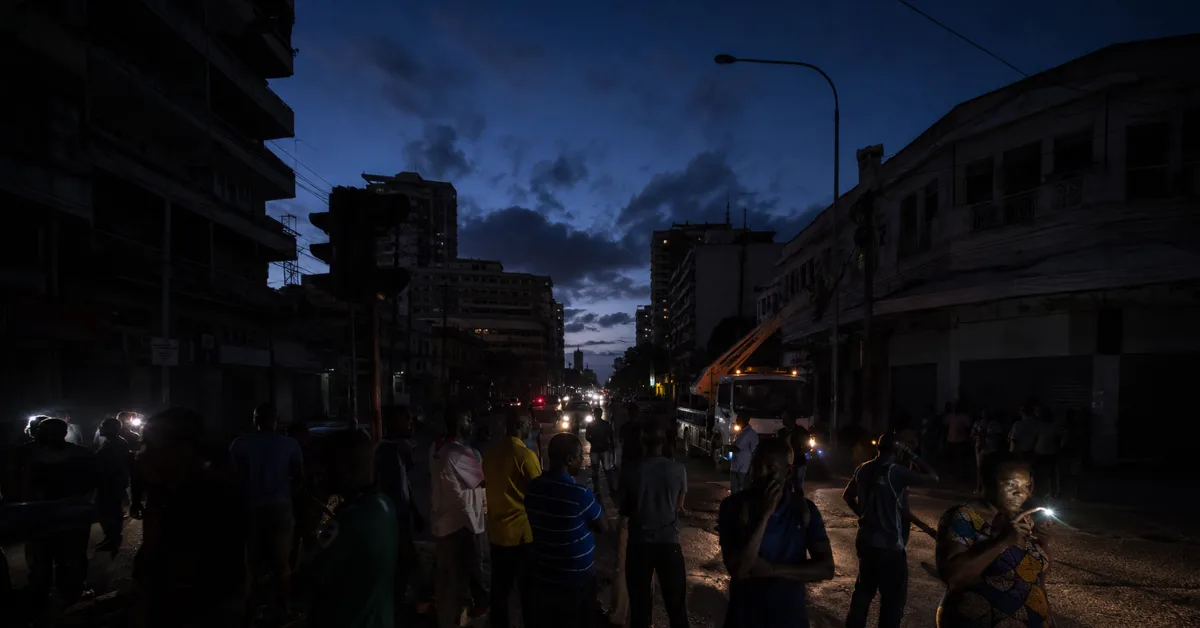
Tanzania suddenly slipped into the dark on the evening of 27 June 2026. According to reports by Reuters and Bloomberg, a technical fault hit the country’s national electricity grid. Regions supplied through the national grid were affected. For households, shops and public services, that means the familiar nightmare: lights out, devices dead, communication uncertain and daily life forced onto pause.
The story may feel far away, but it is exactly the kind of event that makes blackout preparedness useful. It shows once again that a major outage does not always need a war, a cyberattack or a dramatic disaster. Sometimes one technical failure in the wrong place is enough to put an entire grid under pressure. The dangerous part is the confusion at the beginning: people often do not know whether only their street, their city or the whole country is affected.
TANESCO, Tanzania’s state-owned power utility, was named in the reports as the source of the grid information. Reuters also noted that it could not immediately verify the report independently at the time of publication. That detail matters. In the first hours of a major power cut, information is often incomplete, slow or contradictory. Prepared households do not have to react in panic during this uncertain phase.
For the population, the main question is not only when the power comes back. The real question is what still works in the meantime. Is the mobile network stable? Can banks and cash registers keep operating? Is fuel available? Are traffic lights, hospitals, water pumps, refrigeration and public transport still running? A wide-area outage never hits only the socket. It hits habits, routines and the small feeling of safety that everything will always be available.
Situations like this are especially difficult for people who must keep medicine cool, rely on powered medical devices or care for small children. Small businesses also feel an outage immediately: cash desk, cooling, lighting, internet and security systems often depend directly on electricity. The larger the affected grid area is, the harder it becomes to get quick help or reliable information.
Put bluntly: one technical fault can turn an ordinary Saturday evening into a national stress test. For authorities and grid operators it is a technical incident. For families it is much more practical: Do we have light? Do we have water? Do we have some cash? Do we know whom to call or where to meet?
The lesson from Tanzania is simple and uncomfortable: preparedness does not start when sirens wail or headlines turn red. It starts beforehand, with a flashlight in a fixed place, charged power banks, drinking water, a small food reserve, important phone numbers on paper and a plan for the first few hours.
Whether the outage ends quickly or lasts longer does not change this rule. Anyone who gets through the first hours without improvised chaos has already gained a lot.
Source: Reuters/Bloomberg report of 27 June 2026, citing TANESCO.
Incidents & analysis
General
28.06.2026
Tanzania in the dark: Grid failure triggers nationwide blackout
A technical fault in Tanzania’s national electricity grid caused a major blackout on 27 June 2026. The incident shows how quickly normal life can stall.