Pasta is one of the simplest foods for a blackout supply. It is affordable, easy to portion, available almost everywhere and can become a real meal with canned food, dried herbs, oil or a simple sauce. That is why pasta quickly ends up in many pantries. The mistake often starts afterward: the package is put somewhere and then ignored for years. A useful supply can quietly turn into a problem.
For long-term storage, dry pasta without filling is the best choice. Fresh pasta, refrigerated tortellini, filled ravioli or moist ready-made pasta products do not belong in a shelf-stable emergency supply. Whole grain pasta and egg noodles should also be rotated more carefully because they can react more sensitively to long storage. For a basic supply, plain durum wheat pasta, spaghetti, macaroni, penne, small soup pasta and similar shapes are the easiest options.
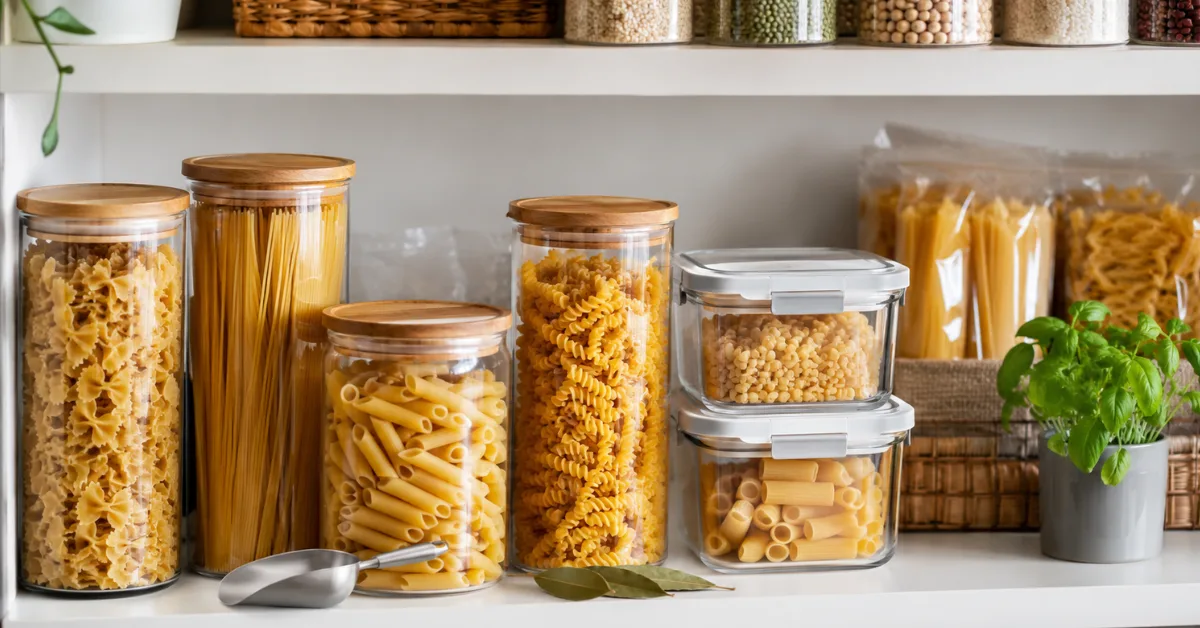
The main enemies are moisture, heat, pests and strong smells. Pasta does not belong next to the stove, in a hot storage room, on a balcony or directly on a damp basement floor. The ideal place is dry, cool, dark and clean. In tropical or very humid regions, a cardboard box is usually not enough. There, pasta should be transferred into tightly closing containers made of glass, metal or food-safe plastic.
The original packaging is fine for a while, but it is not a safe. Cardboard and thin plastic only offer limited protection against humidity, ants, beetles or moths. When you transfer pasta, write the purchase month and best-by date on the container. It is even better to store small and medium portions separately. If one container gets damp or pests appear, the whole supply is not lost at once.
Order matters more than volume. New packages go to the back, older ones to the front. Use the pasta regularly in everyday cooking and refill it afterward. A supply that nobody eats will eventually be forgotten. A supply that rotates stays fresh, familiar and useful.
Check your pasta at least once a month. Clumps, a damp or musty smell, mold, small holes in the package, webbing, larvae or beetles are clear warning signs. Do not argue with yourself and do not try to save it. Throw affected food away, clean the shelf and check the remaining packages. With pantry pests, false economy is not preparedness. It is an invitation to the next problem.
Also think about cooking. Pasta needs water, heat and usually salt. Anyone storing pasta for a blackout should also plan drinking water, cooking water, a safe cooker, fuel and simple sauces. Small pasta shapes are often more practical than very large ones because they cook faster and are easier to prepare in one pot. Pasta is not a luxury in storage. Stored correctly, it is a quiet, cheap and very useful base for several warm meals.
Sources: USDA FSIS, Shelf-Stable Food Safety; FoodSafety.gov, FoodKeeper; University of Minnesota Extension, Pantry Pests.
Guides
General
09.07.2026
Storing pasta properly: the supply that really helps in a blackout
Dry pasta is excellent for a blackout supply, but only when it is stored dry, cool, dark and protected from pests.