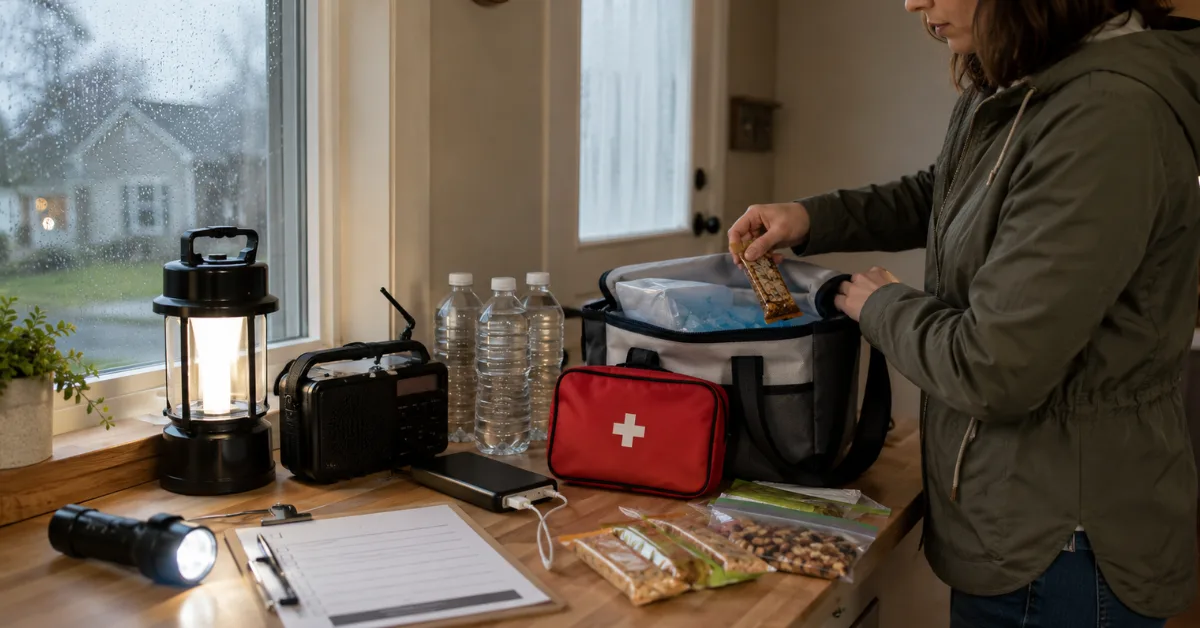
If the power goes out after a thunderstorm, do not rush into panic mode. The first 30 minutes should create order, not chaos.
First check whether only your home is affected or whether neighbours and street lights are also dark. Do not spend too long working around the fuse box in the dark. If you smell burning, see sparks, find water near electrical equipment or notice damaged wires, keep away and contact the proper emergency or utility service.
Next, secure safe light. Use a flashlight or LED lantern. Do not rely on open flames as your main light source. Candles are only a last resort and must never be left unattended.
Now protect communication. Switch your phone to power-saving mode, connect a power bank and use mobile data only when necessary. Send one short message to a trusted person saying that you are safe. Then avoid constantly loading videos or refreshing news feeds.
Keep the refrigerator and freezer closed. Every unnecessary opening lets cold air escape. Plan to use food that could spoil first, but never risk eating food that smells, looks or feels unsafe.
In hot weather, keep curtains closed during the day, avoid heavy activity and drink enough water. Children, older people, sick people and pets need special attention.
Generators, camping stoves, grills and similar devices must never be used inside a home, garage or partly enclosed space. Carbon monoxide has no smell and can kill.
If it is clear after 30 minutes that the outage may last longer, activate your household plan: check the utility outage notice, speak briefly with neighbours, review medicines and use battery-powered devices only when they are really needed.
Guides
General
23.06.2026
Tip: The first 30 minutes after a thunderstorm power outage
When the power suddenly goes out after a storm, the first minutes decide whether the situation stays calm or turns chaotic.