A power outage becomes far more stressful when phone, internet or mobile networks fail at the same time. That is why every household should have a simple offline communication plan.
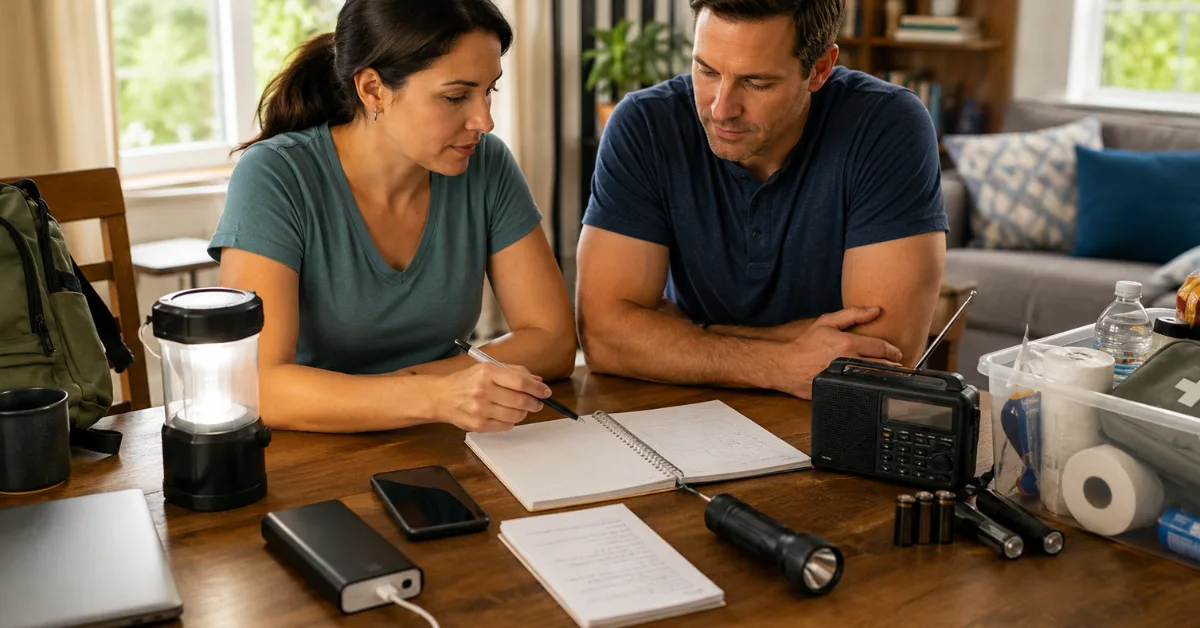
Write the most important phone numbers on paper: family, neighbors, doctor, electricity provider, school, care contacts and local emergency numbers. Keep the list in a fixed place, for example next to the flashlight, radio and power bank. Save it as a photo on your phone as well, but do not rely on that alone.
Agree on a family meeting point. One should be close to home, a second outside your neighborhood. This helps if roads are blocked, public transport stops or nobody can be reached by phone. Children should know where they are allowed to go and who they can ask for help.
Set a simple message rule too. Use short text messages instead of calls, send only important information, save battery, and switch off mobile data when it is not needed. SMS can sometimes still get through when mobile internet is already overloaded.
A battery-powered radio belongs in this plan. It provides information without cell service and without Wi-Fi. Keep suitable batteries ready or use a hand-crank radio. Power banks should be charged and easy to find before the lights go out.
Talk to neighbors as well. Older people, people living alone and families with small children often benefit from a simple agreement: who checks on whom, who has a radio, and who can share medicine, water or important information?
The key point is simple: decide these things in advance. During a power outage it is too late to search for numbers, debate meeting points or look for chargers. A good communication plan is small, written down and known to everyone in the household.
Guides
General
25.06.2026
Tip: Your offline communication plan for a power outage
When electricity, internet and cell networks all become unreliable, preparation matters more than a full contact list on your phone. This tip shows how to stay reachable without blindly relying on the network.