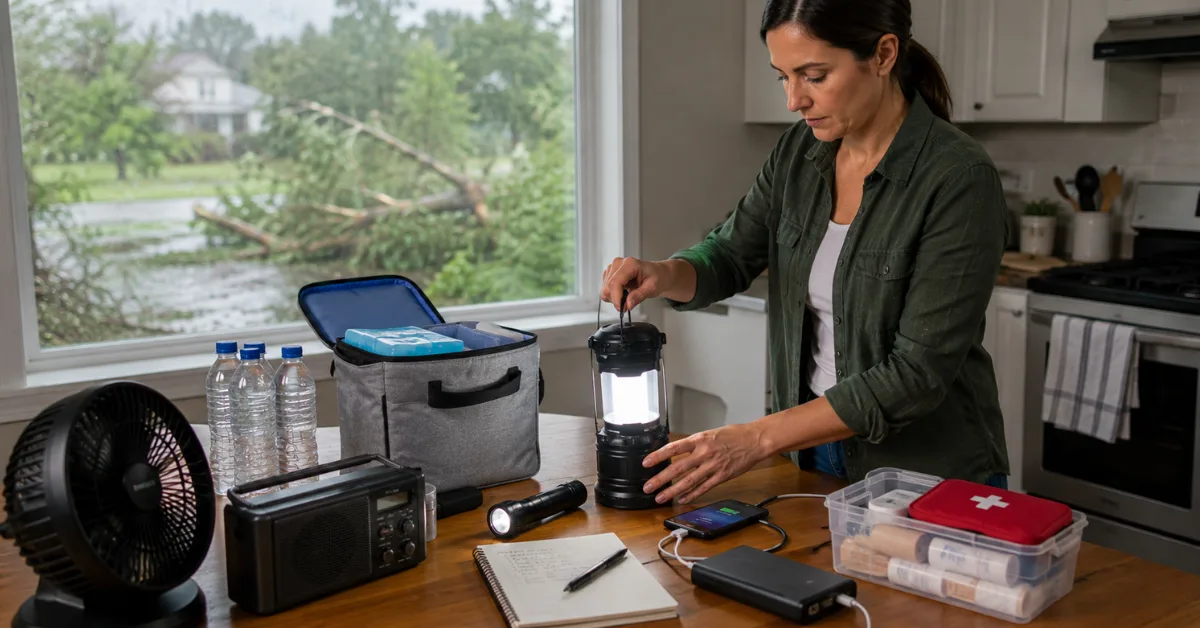
During a power outage, many people think first about lights, phones and the fridge. That is understandable, but water is often more important. In some homes, tap water may keep running for a while because there is still pressure in the network. In other buildings, pumps, pressure systems or electric controls are needed. Then an ordinary power outage can quickly become a water problem.
That is why the first 30 minutes matter: secure water while it still comes from the tap. Fill clean drinking bottles, jugs, pots and food-grade water containers first. Do not use containers that previously held cleaning products, chemicals, oil or unknown liquids. That may look practical, but it can be dangerous. Drinking water belongs only in clean, tightly closing containers that are easy to recognize.
Once you have enough drinking water, think about water for other uses. A clean bucket, tub or container can hold water for toilet flushing, simple washing or cleaning. Keep this water clearly separate from drinking water. If in doubt, write directly on the container: drinking water or utility water. In a stressful situation, this simple label prevents stupid mistakes.
Plan more generously in hot weather. Authorities recommend, depending on the country, around two liters to one gallon of water per person per day as a basic minimum. In high temperatures, illness, for children, older people or physical work, that may not be enough. Drinking comes before coffee, pasta, rice or washing dishes. In the first hours, avoid cooking anything that uses a lot of water if you do not know when supply will return.
If contamination is reported, tap water is not automatically safe. Use bottled water or follow official instructions. Boiling can kill germs, but it does not remove chemicals, oil or heavy metals. Water filters and purification tablets can be useful, but they must match the problem and be used exactly as the manufacturer says. Cloudy, smelly water or water affected by flooding is not something to experiment with.
Saving water does not mean giving up hygiene. Use wet wipes, hand sanitizer and paper towels sparingly but deliberately. Wash hands, dishes and surfaces only where it is really necessary. Toilets can often be flushed with a bucket of water, but that also needs planning. If everything is used immediately, there will be no reserve later.
The best water plan is not created during the blackout. Store some bottled water permanently, check it regularly and keep foldable containers or clean water bags ready. Choose a fixed place for your water reserve and explain to everyone in the household what to do first. Darkness is unpleasant. No water is serious.
Sources: CDC, FEMA/Ready.gov and the German Federal Office of Civil Protection and Disaster Assistance (BBK), recommendations on emergency water supply and water storage.
Guides
General
06.07.2026
Tip: Water first – your 30-minute plan during a power outage
When the power goes out, tap water may also come under pressure. Here is how to secure drinking water while it is still available.