An emergency meeting point is useful only if it remains safe and reachable under difficult conditions. A parking lot, public park or familiar junction may initially seem practical. During a tornado, heavy rain, fire or widespread power cut, however, that same place may become dangerous because of fallen trees, downed power lines, flooding, broken glass or blocked access roads. Choose a meeting point by using a fixed safety check, not merely because it is convenient.
First distinguish between three purposes. The immediate meeting point is outside your own building and is used after a fire, smoke or rapid evacuation. A second point is outside the neighborhood in case roads are closed or the home cannot be entered. A third fallback location is in another district or neighboring town. An official emergency assembly point is different: it is announced by the local authority and may replace private arrangements at any time.
Inspect the surroundings of the proposed location. Avoid areas beneath large trees, power lines, advertising signs, construction cranes and damaged facades. Gas stations, substations, industrial premises, large glass fronts and narrow streets between tall buildings are also poor assembly points. After heavy rain, underpasses, stream banks, low-lying ground, underground parking lots and bridge approaches are unsuitable. A place that appears safe in sunshine can become a trap during a storm or flood.
The meeting point should be reachable from at least two directions. A single bridge, tunnel or narrow access road can quickly become blocked. Plan a main walking route and an alternative. Check whether older people, wheelchair users, young children and people using walking aids can reach it without a elevator, escalator or electric gate. Pets must not make the journey or the stay there impossible either.
Choose a permanent, unmistakable landmark. “In the park” or “at the shopping centre” is too vague. A precise description is better, such as the stone bench at the northern entrance, the flagpole outside the municipal building or the bus stop on the pharmacy side. Do not rely on illuminated signs, electronic displays or automatic doors. Those exact orientation aids may fail during a blackout.
There must be enough room without obstructing emergency routes. The meeting point must not be directly outside a fire station exit, hospital entrance or narrow junction. People should be able to wait briefly without standing in the road. A covered area can be useful in rain, but it must not be beneath a damaged structure. Seating, shade and nearby drinking water are advantages, not essential requirements.
Set a clear alternative for every primary meeting point. If location A becomes dangerous, closed or officially evacuated, nobody should go there regardless. Everyone moves to location B according to the same previously agreed rule. Official warnings, barriers and evacuation instructions always take priority. A private meeting point is never a shelter and is never more important than the current hazard.
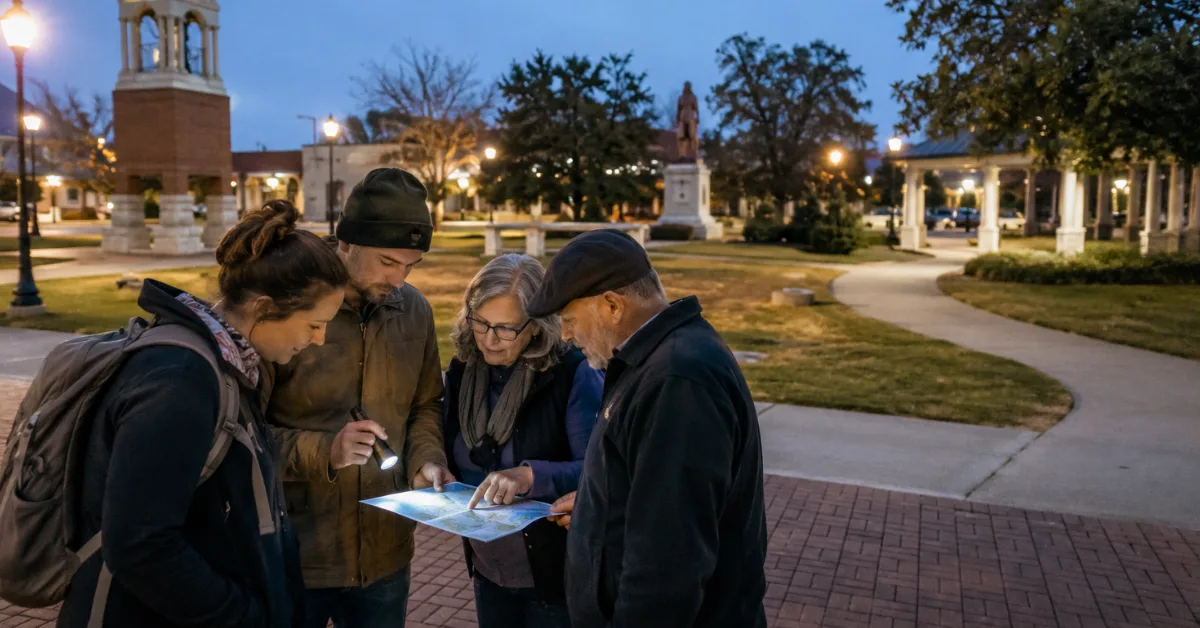
Test the locations twice a year, both in daylight and after dark. Walk both routes and check again after major building works, new fences, changed bus lanes or flooding. Write the exact description on paper and keep it in wallets, school bags and the household emergency file. The best meeting point is not the nearest one, but the place everyone can identify, reach safely and leave immediately when conditions become dangerous.
Sources: Ready.gov, Family Emergency Communication Plan; Federal Emergency Management Agency, guidance on choosing meeting places and avoiding hazardous routes; American Red Cross, recommendations for meeting points outside the home and outside the neighborhood; U.S. Fire Administration, Home Fire Escape Plans.
Guides
General
28.07.2026
Choosing blackout meeting points: safety before convenience
A meeting point helps only if it remains safe during storms, flooding, failed traffic lights and blocked roads. Check hazards, access routes, clear landmarks and fallback locations in advance.