A power outage can affect more than lighting and refrigeration. If pumps, pressure systems or controls fail, tap water may become scarce or contaminated after a loss of pressure. Drinking any available water simply because it looks clear creates an unnecessary risk. The correct order is essential: assess the source, remove dirt, kill germs and store the finished water safely. In tropical regions especially, heat and an interrupted supply can turn safe water into the most urgent problem within only a few hours.
Use commercially bottled water with an intact seal first. If none is available, follow notices issued by authorities and the water supplier. Water from flooded areas, containers of unknown previous use, or water with an oily film, chemical smell, unusual color or heavy algal growth must not enter the drinking-water supply. Boiling, tablets and ordinary camping filters do not remove fuels, pesticides, heavy metals or salt. If chemical contamination is suspected, find a different water source.
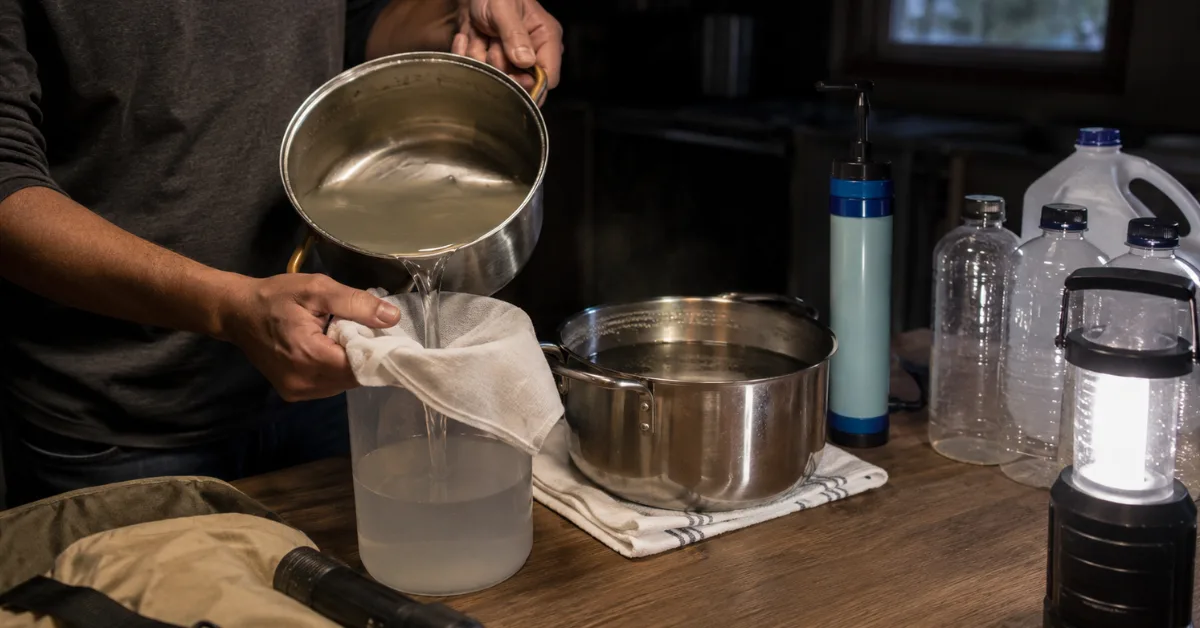
Cloudy water must be clarified before disinfection. Leave it standing until larger particles settle, then carefully pour off the clearer upper layer. Next, pass it through a clean cloth, paper filter or coffee filter. This step improves later treatment, but it does not make the water safe to drink by itself.
Boiling is the most reliable method for dealing with disease-causing germs. Bring the water to a full rolling boil and keep it boiling for at least one minute. At altitudes above roughly 2,000 meters, three minutes are recommended. Allow the water to cool in a clean, covered container. Use a stove or burner only outdoors or in an area expressly designed and adequately ventilated for it. Because of the danger of carbon monoxide, charcoal grills and generators must never be used inside homes, garages or partly enclosed spaces.
When boiling is not possible, approved water-disinfection tablets may be used. Follow the manufacturer's dosage, water quantity and contact time exactly. More chemical does not automatically mean greater safety. Household bleach should be used only under specific instructions from local authorities because concentrations vary. Never use scented bleach, gel products, color-safe bleach or products containing additional cleaners. Never mix chlorine with acids, vinegar, ammonia or other cleaning products.
A portable water filter is useful, but not every filter removes viruses or all parasites. Check the manufacturer's claims and, when the source is uncertain, follow filtration with boiling or suitable disinfection. An improvised cloth filter removes only visible particles.
Handle treated water carefully as well. Put it into clean, food-grade containers with tight lids, label them as drinking water and record the treatment date. Keep untreated and treated water separate. Do not dip hands or used cups into the supply; pour the water instead.
Treated water is needed for more than drinking. Use it for brushing teeth, making ice, preparing infant formula, taking medicines and preparing foods that will not be cooked. Extra care is required for babies, older people and anyone with a weakened immune system.
Prepare a small water kit before a blackout: two clearly labeled containers, a pot with a lid, clean cloths or filters, approved disinfection tablets and a tested water filter. Dirty water does not automatically become safe, but this equipment turns improvisation into a controlled process.
Sources: Centers for Disease Control and Prevention (CDC), United States Environmental Protection Agency (EPA) and World Health Organization (WHO), guidance on emergency water treatment and safe storage.
Guides
General
11.07.2026
Safe drinking water during a blackout: filter, boil, and store it correctly
Clear water is not necessarily safe. Following the correct sequence of source assessment, prefiltration, disinfection, and storage reduces the risk.