
Canning recipe
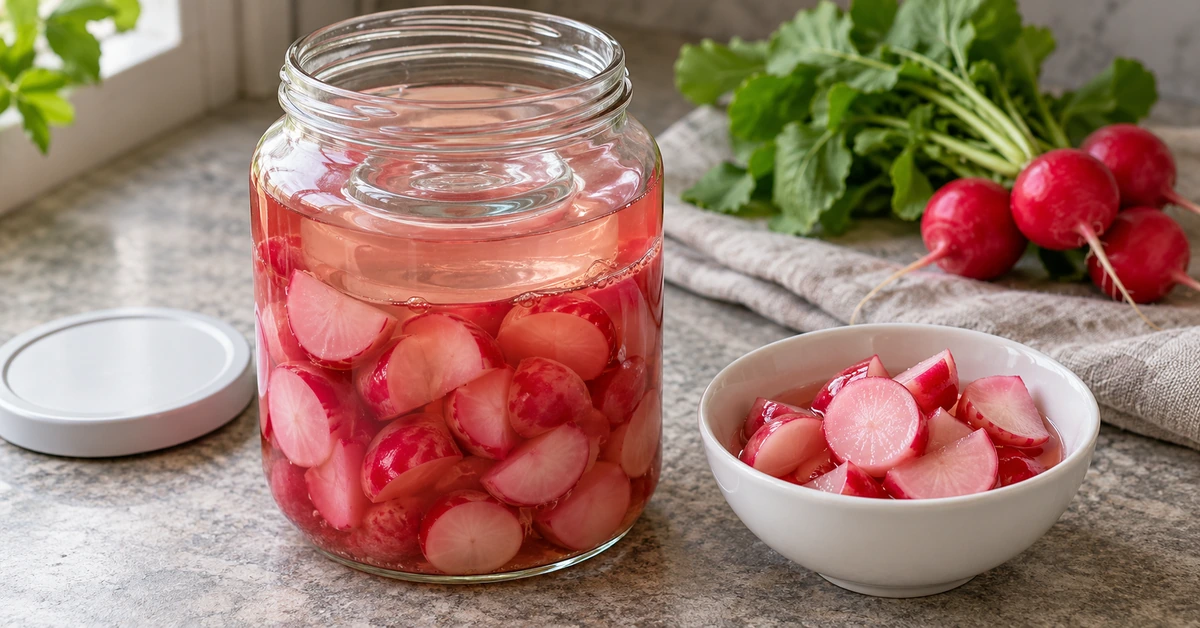
Fermented radishes in brine
Crunchy, gently tangy radishes preserved by natural lactic acid fermentation. Fermented with a measured salt brine and refrigerated after confirmed acidification.
20 min.
-
10
1
Medium
Ingredients
500 ml soft, chlorine-free drinking water
15 g non-iodized pickling salt
Preparation
2. Wash the radishes under running water. Remove leaves and root tips; discard damaged or spoiled radishes. Do not peel. Halve or slice and weigh out 500 g.
3. Completely dissolve 15 g salt in 500 ml water. The brine must be at 20–22 °C before filling.
4. Pack the radishes into the jar and add enough brine to cover them by 25–50 mm. Keep them fully submerged with the glass weight. Leave space above the brine for fermentation gases; fill the jar no more than three-quarters full. Fit the airlock according to the manufacturer. Discard unused brine.
5. Ferment in darkness at a steady 20–22 °C. Check temperature, liquid level and acidity daily. If more brine is needed, dissolve 15 g salt in 500 ml water and add only the amount required. Never top up with plain water. Gas must be able to escape through the airlock.
6. Ferment for at least 360 hours; complete fermentation often takes 504–672 hours. The ferment is ready only when the meter gives an acidity value of 4.6 or lower and bubbling has stopped. If the value remains higher, continue fermenting and monitoring. Time, smell or taste alone do not confirm safe acidification.
7. After successful fermentation, immediately refrigerate at 4 °C or below. Record the date, keep the radishes submerged and use clean utensils. Do not can.
Storage
After completed, verified acidification, continuously refrigerate at 4 °C or below. Keep the radishes submerged. Check for changes before serving; do not store unrefrigerated on a pantry shelf.
Shelf life
Up to 9 months after successful fermentation, with clean handling and uninterrupted refrigeration. Use sooner if quality declines. This storage period does not apply without reliable refrige
Safety note
Do not reduce the salt. Keep vegetables completely submerged and the airlock working; do not tightly seal actively fermenting jars without pressure relief. Check temperature and acidity. Do not eat without confirmed sufficient acidification. Discard the whole batch without skimming or tasting if there is mold, colored or furry growth, sliminess or a rotten smell. Slightly cloudy brine alone is not proof of spoilage. Pressure canning is not required for this refrigerated preserve.